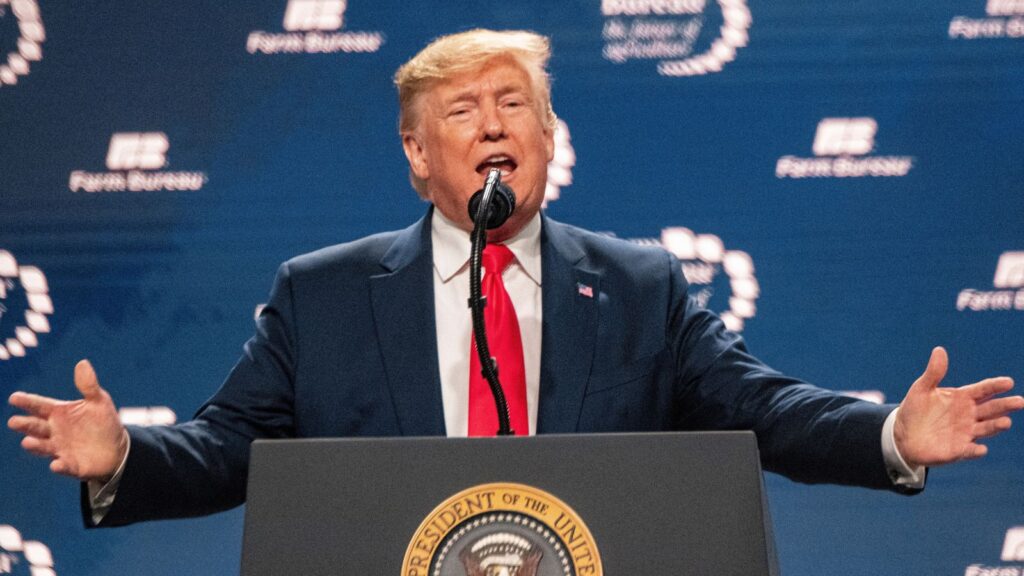
Washington is sending two very different trade signals at almost the same moment. After President Donald Trump hosted Chinese President Xi Jinping in Washington, the United States and China agreed to reduce tariffs on roughly $30 billion of non-sensitive goods in each direction. At the same time, U.S. Trade Representative Jamieson Greer said the Trump administration feels “no urgency” to reach a deal with Canada.
The contrast is striking because Canada remains one of America’s most deeply integrated economic partners. Yet the Canadian dispute is moving toward additional restrictions, while Washington and Beijing have found room for a selective easing of their own trade confrontation. The difference says as much about the shape of Trump’s current trade strategy as it does about the individual relationships.
The China Tariff Cut Is Real, but It Is Narrow
The U.S.–China agreement emerged from Xi’s September 23–25 state visit to the United States. According to the White House, the two governments reached consensus on more favourable tariff treatment covering $30 billion of “non-sensitive” goods in each direction. Products covered on the American export side include agricultural goods, seafood, wood products, cosmetics and medical devices. Chinese exports receiving more favourable U.S. treatment include consumer products such as small appliances, toys, holiday decorations and children’s car seats. Chinese government statements similarly described the agreement as a $30-billion reciprocal tariff reduction arrangement that the two leaders instructed their officials to implement.
That makes the agreement meaningful, but far from a comprehensive U.S.–China trade settlement. Washington and Beijing still have major disagreements over technology, industrial policy, critical minerals and market access. The White House specifically acknowledged that the two governments are continuing discussions over rare-earth and other critical-mineral supply problems. The summit also advanced a new trade board, investment discussions and an artificial-intelligence dialogue, showing that the immediate objective appears to be managing selected areas of the relationship rather than removing the broader economic rivalry.
Washington Is Sending Canada a Very Different Message
Only a day after the Trump-Xi meetings concluded, the public message toward Canada looked markedly less accommodating. U.S. Trade Representative Jamieson Greer said the administration was comfortable with the existing Canada trade standoff. He noted that substantial commerce is still moving across the border, including oil, natural gas, potash and agricultural products, and said Canadian officials continue to make occasional contact about possible agreements. Nevertheless, Greer said there was “no urgency” on the American side to reach a new deal.
That does not mean diplomatic communication has stopped. Greer specifically described continuing conversations, and neither government has formally ruled out returning to negotiations. What has changed is the sense of immediate pressure. Washington is publicly signalling that it believes the current trading relationship can continue even without a broader settlement. For Canadian exporters facing tariffs or looming import restrictions, that stance matters because it weakens expectations that relief will necessarily arrive quickly simply because both economies remain highly interconnected.
Both Governments Blame the Other Side for the Breakdown
The current impasse follows a negotiating collapse in August, and the two governments describe what happened very differently. Reuters reported that the proposed agreement would have reduced the top U.S. tariff on Canadian cars and light-duty trucks from 25% to 15% and lowered steel and aluminum tariffs from 50% to 25%. Talks ultimately failed amid disagreements that included whether tariff relief would extend to medium- and heavy-duty trucks. Ottawa subsequently said the United States had demanded concessions that were not in Canada’s economic interest and announced that Canada had suspended negotiations.
Washington’s account is almost the mirror image. Greer has said Canada walked away from what he described as a near-final agreement that offered unusually favourable treatment. The Canadian government, meanwhile, says the proposed terms asked too much while providing too little in return. Those competing accounts are important because they demonstrate that the dispute is no longer simply about finding a tariff percentage acceptable to both sides. It increasingly involves disagreements over market access, specific industries, retaliatory measures and how much either government is prepared to concede to restore a more predictable trading relationship.
The Tariff Fight Is Already Affecting Billions of Dollars in Trade
The confrontation is not confined to negotiating rooms. Canada says the United States imposed 50% tariffs on $27.6 billion worth of Canadian goods beginning August 22. Ottawa responded with counter-tariffs covering the same value of U.S. imports, with rates of 15%, 25% and 50% taking effect September 8. The Canadian measures cover products in sectors including steel and aluminum, dairy, appliances, agricultural equipment, pulp and paper, plastics and electronics. Ottawa also announced a $7.5-billion package of additional support measures for affected workers and businesses.
Further U.S. restrictions are approaching. White House proclamations scheduled import bans on specified Canadian products to take effect at 12:01 a.m. Eastern time on September 29, including measures affecting certain alcoholic beverages, dairy products and goods connected to the motor-vehicle dispute. Trump has separately threatened to raise tariffs on Canadian cars, trucks and automotive parts to 50% on January 1, 2027, while maintaining heavy pressure on steel. That January move remains a threatened future action rather than a tariff already in force, leaving several months in which policy could still change.
Autos Explain Why the Canadian Dispute Carries So Much Risk
Few industries illustrate the stakes better than automotive manufacturing. The Canadian government says more than 90% of Canadian-made vehicles and roughly 60% of Canadian-made auto parts are exported to the United States. Canada produced more than 1.2 million passenger vehicles in 2025, while the domestic automotive manufacturing industry supports approximately 125,000 direct jobs. Statistics Canada separately found that more than 93% of Canadian motor-vehicle exports went to the U.S. market in 2025.
The dollar figures reinforce that dependence. Innovation, Science and Economic Development Canada data show Canadian exports of motor vehicles, bodies, trailers and parts to the United States totalled about C$67.8 billion in 2025. The relationship also works in both directions: Canadian factories depend heavily on American components, customers and manufacturing networks. That interconnected structure is why a tariff can affect more than the company technically paying it at the border. A component may move through several stages of a North American production chain before a finished vehicle reaches a dealership, creating potential cost and planning problems on both sides.
Canada Still Supplies Things the United States Considers Difficult to Replace
Greer’s comment that the United States is still getting what it needs from Canada is particularly relevant in energy and agriculture. The U.S. Energy Information Administration says American crude-oil imports from Canada averaged about 3.9 million barrels per day in 2025, making Canada the largest foreign source of U.S. crude. Total American energy imports from Canada were worth approximately US$111 billion that year, with crude oil representing the largest component of cross-border energy trade. U.S. natural-gas imports from Canada also averaged about 8.6 billion cubic feet per day.
Potash creates another unusually concentrated relationship. The U.S. Geological Survey estimates that the United States relied on imports for roughly 92% of its apparent potash consumption in 2025. Canada accounted for 79% of U.S. potash import sources over the 2021–2024 period, far ahead of Russia, Israel and other suppliers. These numbers help explain why large amounts of essential trade can continue even while tariffs and political tensions rise elsewhere. They also clarify Greer’s argument: from Washington’s perspective, the absence of a comprehensive trade deal has not stopped the flow of several strategically important Canadian commodities.
Canada Is Diversifying, but Replacing the U.S. Market Is a Huge Task
Canada has already begun moving more trade toward markets outside the United States. Statistics Canada reported that the U.S. share of Canadian merchandise exports fell from 75.9% in 2024 to 71.7% in 2025. Canadian exports to non-U.S. destinations rose 17.2% during 2025. More recently, Global Affairs Canada said exports of goods to countries outside the United States reached a record C$25.6 billion in July 2026 after increasing 7.4% from the previous month. Those figures suggest diversification is happening rather than existing only as a political objective.
Ottawa wants to accelerate that process dramatically. The federal government’s strategy calls for doubling non-U.S. exports over the next decade, which it estimates would generate roughly C$300 billion in additional trade. Canada is advancing negotiations with ASEAN, the Philippines and India; Canada-ASEAN merchandise trade reached C$52.5 billion in 2025, while Canada and India are pursuing an objective of C$70 billion in annual two-way trade by 2030. Even so, replacing a market that still absorbs more than seven out of every ten Canadian merchandise-export dollars cannot happen quickly.
Uncertainty May Be Almost as Important as the Tariff Rate
The Bank of Canada has repeatedly emphasized that unpredictable trade policy can influence companies even when a particular business is not directly covered by a tariff. Governor Tiff Macklem said in September that the newest U.S. measures target products representing roughly 5% of Canadian goods exports to the United States. That suggests the direct economy-wide effect may remain manageable, although companies in the targeted industries can face much more severe consequences. The Bank has also noted that federal support programs should offset part of the immediate damage.
The broader concern is investment. Businesses deciding whether to expand a factory, hire employees or establish a new supply chain often make plans covering several years. When tariff rates, exemptions and trade rules repeatedly change, those calculations become harder. The Bank of Canada has warned that renewed uncertainty could cause businesses to delay investment and hiring decisions. Its 2026 financial-stability assessment says Canadian companies remain generally healthy, including many manufacturers, but that continuing trade uncertainty is increasing financial risks for some firms.
The Dispute Is Happening While the Future of USMCA Remains Unsettled
The Canada fight is also tied to a much larger argument about the future rules governing North American trade. On July 1, the United States, Mexico and Canada conducted the required six-year joint review of the U.S.-Mexico-Canada Agreement. USTR announced afterward that Washington had declined to renew the agreement in its existing form. Importantly, that did not immediately terminate USMCA: USTR said the agreement remains in force while the governments continue discussions or until the agreement is eventually terminated under its provisions.
Washington has meanwhile conducted separate bilateral discussions with Mexico on subjects including autos, steel and aluminum, labour, agriculture and economic security. That approach means some of the biggest questions affecting Canadian companies are now being negotiated against a broader debate about what North American trade rules should look like. For industries built around continental production, the distinction matters. The immediate dispute concerns tariffs, but the longer-term uncertainty includes rules of origin, regional content requirements, market access and whether today’s highly integrated supply chains will receive the same preferential treatment in the years ahead.
The China Comparison Is Striking, but It Should Not Be Oversimplified
The temptation is to describe Washington as choosing China over Canada, but the documented developments support a more complicated interpretation. Trump and Xi have agreed to lower tariffs on a limited group of non-sensitive goods while leaving much of the strategic U.S.–China competition intact. At the same time, the administration is maintaining or escalating pressure on selected Canadian sectors while allowing enormous volumes of energy, agricultural and industrial trade to continue. In both relationships, tariffs are being applied selectively rather than disappearing altogether.
For Canada, however, the near-term contrast is difficult to miss. Beijing secured a fresh reciprocal tariff-reduction arrangement while Ottawa was being publicly told that Washington saw little urgency in reaching a deal. The next concrete milestones will help determine whether that gap widens: implementation of the U.S.–China tariff agreement, the September 29 U.S. import restrictions on specified Canadian products, any resumption of Canada-U.S. negotiations and Trump’s threatened January 1 increase in automotive tariffs. Until one of those conditions changes, Canadian businesses are being asked to operate under a trade relationship that remains enormous, essential and unusually uncertain.
