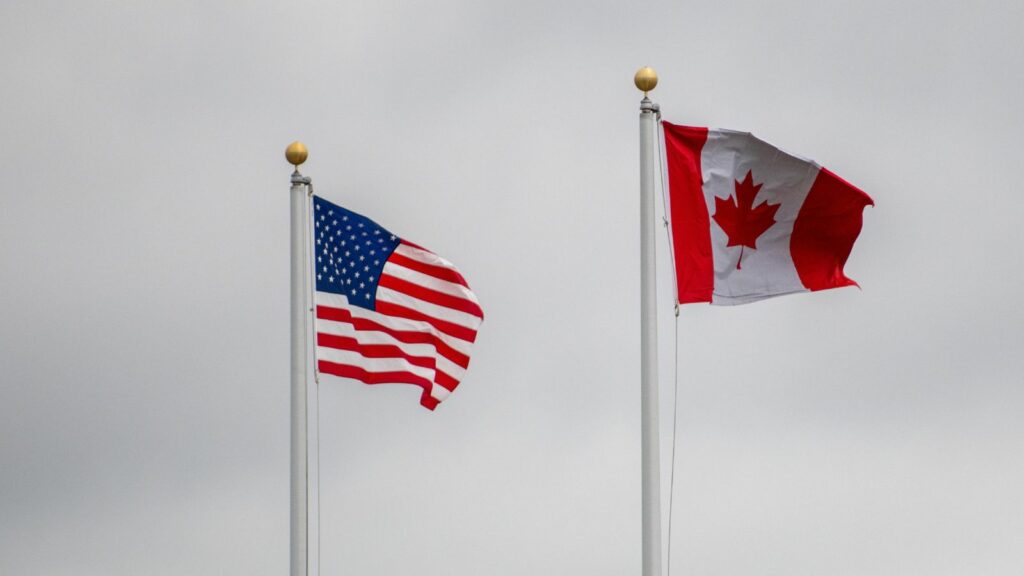
Maine’s long commercial relationship with Canada is turning into a pressure point for some of the state’s most traditional industries. The sharpest example is logging, where contractors say the price of equipment, replacement parts and heavy trucks has risen 30% to 50% since the latest wave of tariffs began reshaping import costs. The increase is an industry estimate rather than a statewide measure, and it reflects broader tariff pressure on imported machinery and components, not a single tariff line alone. Still, the consequences are concrete: delayed parts, idle machines, tighter margins and harder decisions for small firms. With Canada supplying a large share of Maine’s imports and buying a major share of its exports, the dispute is reaching well beyond border crossings and into investment, municipal budgets and the cost of keeping businesses running.
The 30% to 50% Figure Comes From the Woods
The most striking number in Maine’s tariff debate comes from the Professional Logging Contractors of the Northeast. Executive director Dana Doran told the Guardian that loggers have reported equipment, parts and truck prices rising between 30% and 50% since tariffs were first announced. Many contractors rely on Canadian suppliers for heavy machinery and replacement components, so even a relatively narrow tariff can land on an expensive purchase. A machine that already costs hundreds of thousands of dollars does not need a dramatic percentage increase to destabilize a small operator’s capital budget.
The impact becomes more human when machinery stops moving. Molly London and her husband, Alex, built WW London Woodlot Management Company nearly a decade ago, but the Guardian reported that their equipment sat idle while they waited for parts that were no longer kept in local stock because of higher costs. They closed the business in August after years of rising expenses. Their decision cannot be attributed to tariffs alone, but it shows how a new trade cost can become the final strain for a firm already dealing with expensive fuel, financing and equipment.
Maine Is Unusually Exposed to Canadian Trade
Canada is not a marginal market for Maine. State economic data for December 2025 showed Canada accounted for about 68.6% of Maine’s imports and 34.6% of its exports that month. By February 2026, Canada’s share was even larger, representing 77.1% of imports and 50.1% of exports in the state economist’s monthly snapshot. Those shares move from month to month, but the broader pattern is stable: no other foreign market comes close to Canada’s role in Maine’s goods trade.
Geography helps explain why. Maine shares a 611-mile border with Quebec and New Brunswick, and the state government said Maine and Canada traded more than $6 billion in goods in 2024. Much of that commerce involves inputs rather than finished retail products. Businesses buy machinery, energy, paper inputs, wood products and other materials across a border that, for many northern communities, functions as part of the local economy. When tariffs make that flow more expensive, the effect is less like losing a distant export market and more like raising the cost of a regional supply chain.
The Latest Tariff Round Is Targeted, but Steep
The current dispute is not a blanket 50% tax on everything Canada sells to the United States. The Trump administration used Section 338 actions to impose 50% duties on selected Canadian products after accusing Canada of discriminatory policies affecting U.S. motor vehicles, dairy and alcoholic beverages. After subsequent changes to the measures, Canada’s Department of Finance described the U.S. action as covering $27.6 billion in Canadian goods. The administration says the duties are intended to offset what it considers unequal treatment of U.S. commerce.
Canada answered with counter-tariffs that took effect September 8. Finance Canada says the response applies rates of 15%, 25% or 50% to approximately $27.6 billion in U.S. products, with targeted sectors including steel, dairy, appliances, agricultural equipment, pulp and paper, plastics and electronics. That matters for Maine because the state both imports production inputs from Canada and exports goods into the Canadian market. A business can therefore face higher costs on what it buys while also losing price competitiveness on what it sells.
Forest Products Are Carrying a Disproportionate Share
Forestry is where Maine’s exposure becomes especially concentrated. In late August, Senator Susan Collins’s office estimated that about $170 million in Maine goods would be subject to the announced Canadian counter-tariffs, with roughly 62% coming from the forest-products sector. Her office also cited an industry footprint of approximately 30,000 jobs and more than $8 billion in economic activity. Those estimates illustrate why a tariff schedule that may look limited at the national level can be far more significant in a state built around a handful of export-heavy industries.
The pressure does not stop at the border. Doran has said machinery is among the biggest concerns because many logging contractors purchase heavy trucks and equipment from Canada, while paper products face Canadian duties on the export side. Contractors often operate as price takers, meaning they cannot simply raise what mills pay them every time a machine, tire, hydraulic component or truck becomes more expensive. That mismatch—higher input costs without equivalent pricing power—is one reason the forest economy is feeling the dispute more quickly than many service businesses.
Energy Dependence Makes Every Other Cost Harder to Absorb
Maine’s energy system adds another layer of vulnerability, even when the fuel itself is not part of the same tariff line hitting a piece of machinery. A Maine state energy analysis found that roughly 90% of the petroleum products consumed in the state are imported from Canada, while state officials have repeatedly said more than 80% of Maine’s heating fuel and gasoline comes from its northern neighbour. Maine has no crude-oil production or refinery base of its own, making a rapid shift to alternative regional supply difficult.
At the same time, businesses are dealing with a separate fuel-price shock. Maine Public reported earlier in 2026 that about 85% of freight in Maine moves by truck and that diesel prices had jumped more than 30% in a month during the Iran-related energy disruption. By September 21, Maine’s average delivered heating-oil price stood at $6.02 a gallon. Those fuel increases are not caused by the Canada tariffs, but they matter because tariffs are landing on companies that already have elevated transportation and operating costs. For a logger, hauler or contractor, the pressures accumulate on the same balance sheet.
Carveouts Can Save Towns and Firms Real Money
The tariff lists have already changed in response to concerns raised by affected industries and local officials. On September 8, Collins announced that road salt and cement had been exempted from the new U.S. tariffs on Canada. Her office said one Maine ready-mix company had warned that the tariff would have added about $150,000 a month to its costs. The same release cited the town of Frenchville, near the Canadian border, which expected to spend approximately $10,000 more on road salt if the tariff remained in place.
Those examples help show why tariff debates can look very different from Washington than they do inside a small municipal budget. Road salt is not a discretionary winter purchase in Maine, and concrete producers cannot always switch to a domestic source at short notice if regional supply is limited. Earlier in August, Collins’s office said Maine imports approximately $2 billion in non-petroleum goods from Canada annually and estimated that the proposed tariff list could have touched about 5.5% of those imports. Exemptions narrowed that exposure, but they also demonstrated how individual product decisions can rapidly alter local costs.
Lobster Escaped the Latest Retaliatory Round
Maine’s lobster industry briefly looked like it would become one of the biggest casualties of Canada’s response. Canadian officials initially included seafood in the retaliatory package, raising the prospect of a 25% tariff during the important fall fishing season. Maine industry groups warned that the timing would be particularly damaging because Canada is a major buyer and processor of Maine lobster. The Portland Press Herald reported that Maine seafood exports to Canada were worth almost $300 million, making the market critical to the state’s coastal economy.
Canada later removed seafood and fish products from the counter-tariff list. Bangor Daily News reported that the change was intended to limit broader economic harm to Canadian businesses as well as U.S. suppliers, since the lobster trade is tightly integrated across the border. The exemption is significant for two reasons. It spared Maine fishermen from an immediate new duty, and it demonstrated that the tariff regime is not fixed. For businesses making inventory, hiring and investment decisions, however, that flexibility can also mean important rules change after plans have already been made.
The Hidden Problem Is How Often Goods Cross the Border
Maine’s Canada trade is best understood as a shared production system rather than a simple exchange of finished goods. Wade Merritt, president of the Maine International Trade Center, told a state commission that Maine and Canada often “make things together.” Some products or components cross the border more than once for processing, finishing or distribution. In that kind of system, a tariff can be felt at several points in the production chain rather than only when the final product reaches a customer.
That is why companies worry about more than the headline duty rate. Merritt has warned that higher trade barriers can lead to disrupted supply chains, delayed purchasing decisions and reduced competitiveness. A company may postpone replacing machinery, carry more inventory in case a component becomes harder to source, or search for a supplier farther away. Each response carries a cost. A Campobello Island brewery that explored moving operations to Lubec in September offered a vivid example of how geography can override national boundaries: its owners relied heavily on American inputs because U.S. supply routes were more practical than Canadian ones.
Small Firms Have Fewer Ways to Absorb the Shock
Large manufacturers can sometimes spread tariff costs across multiple plants, suppliers and markets. Many Maine logging contractors cannot. The sector is dominated by small and family-run firms with expensive machines, narrow margins and limited bargaining power. Doran has said contractors are increasingly looking at construction, earthwork and other lines of business because they cannot count on logging and trucking to provide consistent returns. That kind of diversification is a survival strategy, but it also indicates that the economics of the core business are becoming harder for some operators to manage.
The closure of WW London Woodlot Management Company shows how several pressures can converge. The business had been dealing with rising costs for years, so it would be misleading to say the tariff dispute alone forced it to close. Yet replacement-part delays and higher machinery costs arrived at a moment when the owners were already stretched. For a small contractor, one disabled machine can mean lost production immediately, while financing a replacement at a sharply higher price can lock in years of additional expense. Tariffs therefore matter not only as an import charge, but as a constraint on when firms can repair, replace or expand equipment.
The Policy Environment Is Still Moving
As of September 27, the U.S.-Canada trade framework remains in flux. The White House has already modified the product scope of several 50% tariff actions, while road salt and cement received exemptions and Canada removed seafood from its counter-tariff list. At the same time, the administration has announced that certain Canadian motor-vehicle products and alcoholic beverages currently subject to 50% duties will be excluded from U.S. importation beginning September 29. Those changes mean the practical rules confronting a business can shift within a matter of weeks.
For Maine companies, the immediate challenge is therefore both price and predictability. A logger deciding whether to order a truck, a municipality buying winter supplies or a mill negotiating a cross-border contract needs to know not only today’s tariff rate but whether the product will remain covered, be exempted or face a stricter restriction. The Trump administration says its actions are designed to answer discriminatory Canadian trade practices, while Canada describes its countermeasures as a dollar-for-dollar response to U.S. tariffs. Whatever happens in negotiations, Maine’s experience already shows how quickly a national trade dispute can translate into equipment bills, purchasing delays and investment decisions at individual businesses.
