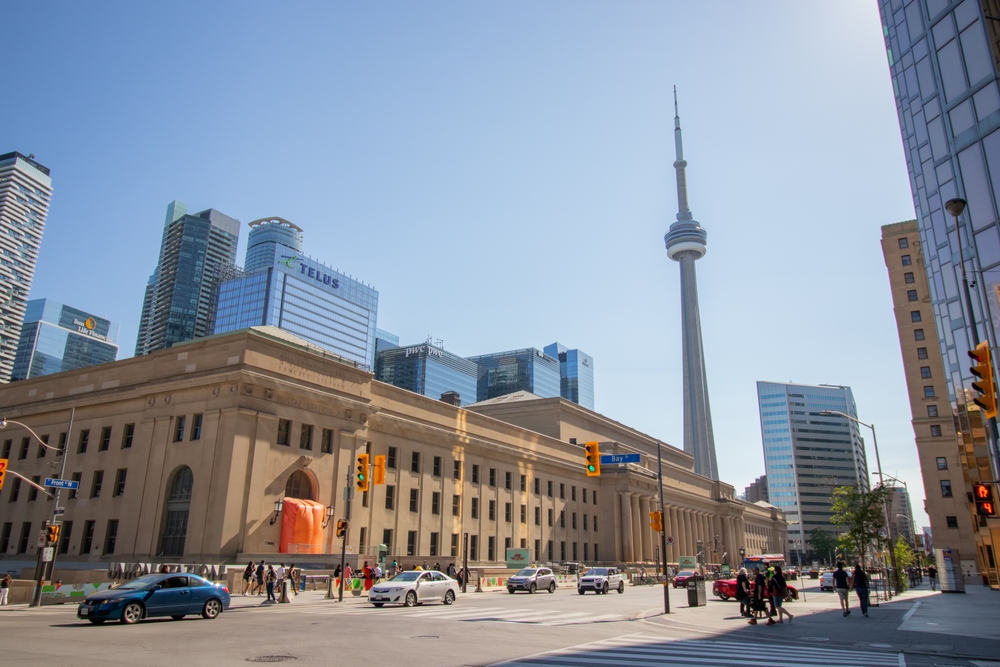
The sound around Toronto Stadium is bigger than a matchday roar. It is the sound of a country stepping into a moment it has never hosted before in the men’s World Cup: Canada opening on home soil, in front of its own supporters, with the eyes of the tournament fixed on Toronto.
Canada’s meeting with Bosnia and Herzegovina arrives with celebration, pressure and an unusually complex public-safety footprint. Around the stadium, Fan Festival sites, transit hubs, Liberty Village and Fort York, Toronto’s preparations have become as much a story as the kickoff itself. The city is trying to deliver two promises at once: a historic football celebration and a secure, orderly event in a dense downtown corridor already known for traffic, crowds and neighbourhood tension.
Canada’s Home-Soil Moment Finally Arrives
Canada’s opener against Bosnia and Herzegovina is more than a group-stage fixture. It marks the first men’s FIFA World Cup match played on Canadian soil, a milestone decades in the making for a national program that once stood far from football’s biggest stage. The setting adds to the symbolism: Toronto Stadium at Exhibition Place, a venue temporarily expanded and upgraded to meet tournament standards, sits beside neighbourhoods where streetcars, condo towers, rail lines and waterfront traffic all collide.
The emotional weight is hard to separate from the logistics. Fans who grew up watching World Cups from living rooms, cafés and community halls now have a Canadian match in their own city. For newcomers and second-generation families, the game carries layered loyalties too, especially in a place as multicultural as Toronto. The result is a matchday that feels both local and global, with Canada’s red jerseys mixing beside visitors, diaspora supporters and casual fans pulled toward a once-in-a-generation civic event.
A Security Operation Built Beyond the Stadium
Toronto’s security plan extends well past the turnstiles. Officials have made clear that public safety coverage includes Toronto Stadium, the FIFA Fan Festival, the “Last Mile” pedestrian corridor, training sites, transportation hubs, Liberty Village and Fort York. That means the operation is not simply about screening ticket holders; it is about managing movement, crowds, emergencies and neighbourhood access across several connected zones before, during and after the match.
The scale explains why police visibility is expected to be unusually high. The operation is backed by federal security funding for Toronto and Vancouver, with Toronto’s share described as primarily intended for policing expenses. Public officials have framed the tournament as one of the most complicated sporting events Canada has hosted, not only because of the number of matches but because of the need to coordinate police, paramedics, firefighters, crisis workers, transit agencies and event staff at the same time.
Federal Funding Raises the Stakes
Ottawa’s commitment of up to $145 million for World Cup public safety in Toronto and Vancouver underscores how seriously governments are treating the tournament’s risk profile. The funding sits on top of earlier federal support for the Canadian host cities and federal partners. For Toronto, the money is intended to reduce pressure on local budgets while supporting security operations tied to hosting matches, fan gatherings and related public events.
The political message is straightforward: Canada wants to look ready. Millions of fans are expected across the tournament, and the federal government has tied the event to economic, tourism and national-brand benefits. But security spending also invites scrutiny. Residents want to know whether public services elsewhere in the city will be stretched, whether road closures will overwhelm neighbourhoods, and whether the large police presence will feel protective or heavy-handed. That tension is now part of the opening-match backdrop.
International Officers Add a New Layer
Toronto Police have said officers from other countries will assist during the tournament by sharing intelligence and helping local authorities understand different fan cultures. Some will reportedly be embedded near fan groups, while others will work inside the Toronto Integrated Safety and Security Unit Area Command Centre. Their role is designed to provide situational awareness, not replace local policing, and to help avoid misreading supporter behaviour that may be normal in one football culture but unfamiliar in another.
That detail matters in a city hosting teams and supporters with very different traditions. A chant, march, flag display or sudden gathering can look intense without being dangerous. International officers can help distinguish ordinary fan expression from genuine concern. They may also help visitors deal with practical problems such as lost passports or confusion over local rules. In a tournament built around global movement, that softer form of crowd intelligence could be as important as the more visible security presence outside the gates.
Transit Becomes Part of the Safety Plan
Toronto’s matchday plan depends heavily on transit. With Exhibition Place, Liberty Village and Fort York already constrained by rail lines, arterial roads and dense residential development, driving near the stadium is being discouraged. GO Transit, UP Express, TTC service, streetcars, walking routes, cycling options and rideshare zones all sit inside the broader mobility strategy. The goal is to move tens of thousands of people without turning the west downtown into gridlock.
That is why the city’s road closures and parking restrictions are more than inconvenience notices. They are part of crowd control. By pushing fans toward transit and structured pedestrian routes, officials can reduce vehicle conflicts, keep emergency access open and create clearer flows to and from the stadium. For residents, however, the trade-off is real. Liberty Village and Fort York will experience restricted access, altered routes and unusual foot traffic, making communication and wayfinding crucial to keeping frustration from turning into disorder.
The Fan Festival Is a Celebration—and a Test
The FIFA Fan Festival at Fort York and The Bentway is designed to give Toronto a public gathering place beyond the stadium. With live broadcasts, entertainment and food vendors, it turns the World Cup from a ticketed match into a citywide experience. For fans who cannot get into Toronto Stadium, the festival is meant to be the communal alternative: big screens, shared reactions and a chance to feel close to the tournament without being inside the venue.
But public gatherings also test planning. On the eve of Canada’s opener, severe weather forced disruption at Toronto’s fan festival site, reminding organizers that safety threats are not limited to policing. Lightning, heat, storms, crowd density, medical calls and evacuation routes all belong to the same operational puzzle. A festival that feels spontaneous to visitors requires strict planning behind the scenes, especially when families, tourists, volunteers, vendors and residents are sharing the same limited downtown space.
Emergency Services Prepare for a Surge
Toronto’s emergency planning includes more than police deployment. City reports anticipate more than 230,000 additional daily visitors during the tournament, increasing pressure on medical response and transportation networks. Toronto Paramedic Services sought an integrated regional paramedic response model involving neighbouring services from Peel, York and Durham, aimed at preserving uninterrupted emergency coverage while helping the city respond to event-related demand.
That approach shows how World Cup hosting stretches normal municipal systems. A medical emergency near the stadium cannot be allowed to drain resources from the rest of Toronto, and a routine call in another neighbourhood cannot be delayed because paramedics are tied up in the event zone. The regional model is meant to create a buffer. It also reflects a practical reality of mega-events: the public sees the match, but the success of the day often depends on invisible coordination between dispatchers, crews, hospitals and command centres.
Rights, Accessibility and Crowd Management Are Under Scrutiny
Toronto’s human-rights plan says public safety operations are supposed to include de-escalation, crowd management and use-of-force procedures, along with privacy rules for surveillance tools such as cameras and remotely piloted aircraft systems. The same framework references peaceful assembly, press freedom, accessibility and emergency communication. That matters because World Cup crowds are not only fans; they can include protesters, journalists, vendors, workers, residents and people simply trying to move through the area.
Accessibility is another test. The city’s plans reference Wheel-Trans access, accessible parking, mobility assistance, accessible entrances at festival sites, captioning, sign-language interpretation, sensory services and accessible washrooms. In practical terms, a safe World Cup is not only about preventing serious incidents. It is also about whether a person using a mobility device can reach a viewing area, whether a visitor understands emergency instructions, and whether staff know how to respond when someone needs help in a crowded space.
Toronto Stadium’s Upgrades Carry a Legacy Question
Toronto Stadium’s temporary World Cup identity is backed by major upgrades designed to meet FIFA technical and broadcast requirements while supporting future use after the tournament. The project added thousands of seats and improved the venue for major events, but it also brought public cost into the conversation. City materials put the stadium upgrade project at $157.9 million, split between city funding and a contribution from Maple Leaf Sports & Entertainment.
The legacy question will linger long after Canada’s opener. If the stadium remains a stronger home for soccer, concerts and major events, supporters will argue the investment helped Toronto step confidently onto the global stage. Critics will ask whether the money, closures and disruption were worth it. The opener will not settle that debate, but it will shape first impressions. A smooth matchday would strengthen the case that Toronto can host at this level. A chaotic one would make the cost much harder to defend.
The Match Is Also a Civic Stress Test
For Canada’s players, the task is simple enough to state and difficult to execute: perform under home pressure against Bosnia and Herzegovina. For Toronto, the task is broader. The city must welcome visitors, move crowds, protect public spaces, maintain emergency service, support residents, manage weather risk and keep the celebration feeling open rather than locked down. That is a lot to ask from one afternoon.
Still, this is the kind of pressure host cities accept when they chase global events. Toronto has often sold itself as “The World in a City,” and this match gives that slogan a literal stage. The crowd will provide the emotion, the players will provide the drama, and the security operation will work best if most people barely notice it. Canada’s first home men’s World Cup match is a sporting milestone, but it is also a test of whether Toronto can make a mega-event feel both safe and alive.
