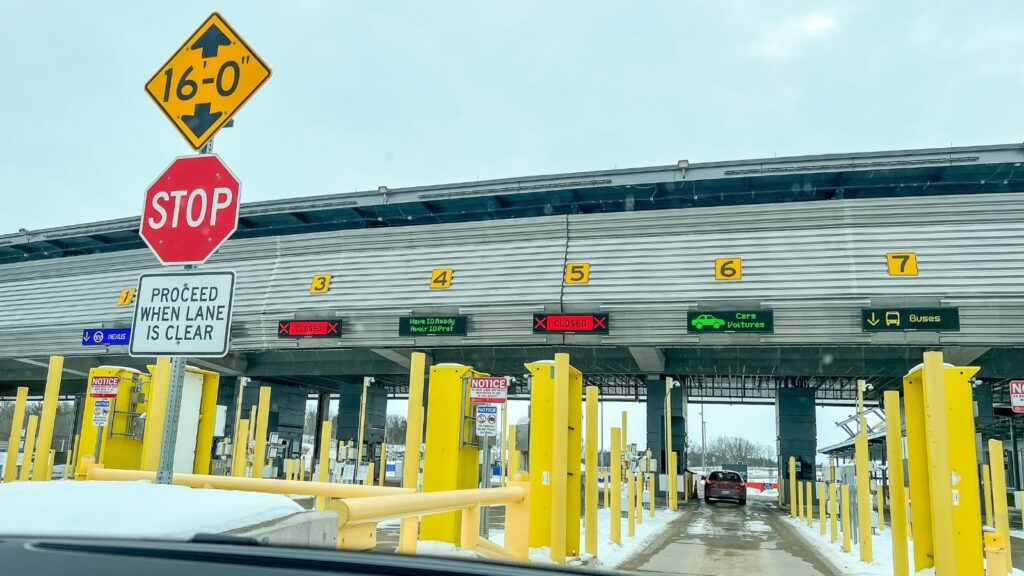
Canada’s decision to end seasonal clock changes across three western provinces is creating an unexpected adjustment at the U.S. border. Beginning November 1, 2026, the Canada Border Services Agency (CBSA) implemented revised operating hours at 26 land crossings in British Columbia, Alberta and Manitoba, affecting how travellers and commercial operators plan their journeys.
The changes follow the provinces’ adoption of permanent daylight saving time while neighbouring American states continue adjusting their clocks twice a year. Nine crossings in British Columbia, four in Alberta and 13 in Manitoba are affected, with winter schedules generally remaining in effect until March 14, 2027. Although the changes are intended to keep Canadian and American border services coordinated, travellers must pay closer attention to local opening hours, commercial restrictions and the growing time differences between neighbouring jurisdictions.
Aldergrove, British Columbia: Later Hours on the Canadian Clock
The Aldergrove crossing, connecting British Columbia’s Fraser Valley with Lynden, Washington, is among the most recognizable locations affected by the adjustment. Under the CBSA’s new winter schedule, both passenger and commercial traffic can enter Canada between 9 a.m. and 1 a.m., seven days a week. The closing time refers to 1 a.m. the next calendar day, providing a relatively long window for travellers returning from the United States.
The apparent shift is important because Washington still observes Pacific Standard Time during winter, while most of British Columbia remains on its new permanent Pacific Time, UTC-7. Consequently, 9 a.m. in Aldergrove corresponds to 8 a.m. in Lynden. The Canadian opening and closing times may appear an hour later, even though the objective is to maintain coordination with American border operations. For families returning from shopping trips or businesses arranging deliveries, the difference makes checking the correct country’s clock particularly important.
Carson, British Columbia: Commercial Traffic Faces Shorter Hours
Carson, opposite Danville, Washington, has introduced a different winter schedule for ordinary travellers and commercial vehicles. Passenger traffic is permitted between 9 a.m. and 9 p.m. daily, while commercial processing operates from 9:30 a.m. until 5:30 p.m., Monday through Friday, excluding holidays. Those differences may seem modest, but they can become significant when deliveries or business trips are arranged close to the opening or closing times.
For commercial operators, the schedule provides an eight-hour processing window that begins 30 minutes after passenger service opens and ends three and a half hours before it closes. A truck arriving at 6 p.m. would therefore be outside the posted commercial operating hours, even though ordinary passenger traffic could continue entering Canada. The adjustment also reinforces the importance of distinguishing weekday commercial service from weekend personal travel. With Washington and British Columbia observing different winter clock times, dispatchers should confirm that schedules refer to the Canadian port’s local time rather than relying on previously familiar hours.
Cascade, British Columbia: A Twelve-Hour Window for Travellers
The Cascade crossing, which connects with Laurier, Washington, will process non-commercial travellers from 9 a.m. until 9 p.m., seven days a week, under its revised schedule. Commercial operations have a shorter window, running from 9 a.m. to 6 p.m. on weekdays, excluding holidays. The arrangement gives motorists a twelve-hour daily opportunity to enter Canada, while businesses transporting commercial goods must work within more restrictive limits.
Cascade illustrates why the new arrangements involve more than simply changing the numbers displayed on a border sign. A traveller returning at 7 p.m. Canadian time remains within the published passenger schedule, while a commercial driver arriving at the same time would be too late for routine commercial processing. The difference also matters when arranging pickups, deliveries or other cross-border commitments. Since the American side continues to adjust its clocks seasonally, organizations operating on both sides need to distinguish between the actual opening hours and the different local times used to describe them.
Chopaka, British Columbia: An Eight-Hour Crossing Day
Chopaka, opposite Nighthawk, Washington, is among the crossings with the shortest operating windows in the new announcement. The Canadian port is open for ordinary travellers from 10 a.m. until 6 p.m. every day. Commercial processing follows those same hours but operates only Monday through Friday, excluding holidays. This creates an eight-hour window for most cross-border journeys, making advance planning especially important for anyone travelling on less frequently used regional routes.
Unlike larger border facilities that remain open around the clock, Chopaka does not offer the flexibility of arriving whenever a journey happens to finish. Travellers must account for the border’s posted closing time before choosing their departure time or deciding how long to remain across the boundary. Commercial operators face an additional restriction because weekend passenger access does not mean weekend freight processing is available. With the two countries now using different winter clock settings, even a straightforward afternoon journey requires checking which local time applies to a planned crossing.
Fraser, British Columbia: Alaska Adds Another Time-Zone Complication
Fraser is one of the more unusual locations on the list because its neighbouring American port is in Alaska rather than Washington. The Canadian crossing connects with the Skagway border facility and serves travellers using the northern highway corridor. Its revised operating hours are 9 a.m. to 1 a.m. daily for both personal and commercial traffic, offering a sixteen-hour service window that extends well beyond the normal working day.
The clock difference creates a distinctive challenge. British Columbia’s permanent Pacific Time is UTC-7, while Alaska observes UTC-9 during winter. That puts the Canadian clock two hours ahead of the Alaskan clock, compared with a one-hour difference during the period when Alaska observes daylight saving time. A Canadian departure scheduled for 10 a.m. therefore corresponds to 8 a.m. in Alaska during winter. Travellers moving between the Yukon, northern British Columbia and southeastern Alaska should pay particular attention to the time printed on reservations, transportation arrangements and border operating notices, rather than assuming neighbouring communities share the same clock.
Midway, British Columbia: Weekend Travel Remains Possible
Midway, opposite Ferry, Washington, is another crossing where the revised schedule separates personal travel from commercial activity. Ordinary travellers can enter Canada between 10 a.m. and 6 p.m., seven days a week. Commercial vehicles are accepted during the same hours on weekdays, excluding holidays. This means that while weekend travel remains available for individuals and families, ordinary commercial processing is not included in the published Saturday and Sunday schedule.
The distinction matters for businesses operating near the border, where a journey involving commercial goods cannot automatically be treated like an ordinary passenger trip. A driver carrying goods for business purposes needs to confirm that the correct category of service is available before arriving. The new operating hours are also expressed in British Columbia’s permanent Pacific Time, which is one hour ahead of Washington’s winter clock. Anyone organizing a cross-border meeting, collection or delivery should convert the time correctly and allow a reasonable margin before the crossing closes.
Nelway, British Columbia: Passenger and Freight Schedules Diverge
Nelway, in southeastern British Columbia, connects with Metaline Falls, Washington, and serves travellers moving between the Kootenay region and the northeastern part of the state. Under the revised winter schedule, passenger traffic can enter Canada from 9 a.m. to 7 p.m. daily. Commercial processing, however, operates from 9:30 a.m. until 5:30 p.m., Monday through Friday, excluding holidays. That leaves a ten-hour passenger window but only eight hours of weekday commercial service.
The difference is particularly relevant to people who travel for both personal and business reasons. A family returning from Washington in the early evening may still be able to use Nelway, while a commercial operator transporting goods could already be outside the allowable processing period. The schedules also show why the specific border facility matters more than broad assumptions about an entire province’s crossings. Operating hours vary considerably across southeastern British Columbia, and neighbouring ports do not necessarily provide identical services. Travellers should verify both the Canadian and American arrangements before committing to a particular route.
Pleasant Camp, British Columbia: A Remote Alaska Crossing Adjusts Its Schedule
Pleasant Camp, located on the Haines Highway about 175 kilometres south of Haines Junction, Yukon, connects with the Dalton Cache border facility in Alaska. Its revised hours are 9 a.m. to 1 a.m. daily for both travellers and commercial traffic. The crossing is especially important for journeys involving remote northern communities, where choosing an alternative route may be considerably more complicated than in southern British Columbia.
The time adjustment comes during a period of infrastructure investment at the port. In August 2026, the CBSA announced construction of a replacement facility under an $11.9-million contract, with completion expected in 2027. The agency reported that Pleasant Camp processes approximately 30,000 travellers and 1,200 commercial vehicles annually. Those figures show that even a relatively remote crossing can be an important transportation connection. The port’s posted schedule uses Canadian local time, while Alaska’s winter clock is two hours behind. For people travelling long distances through the region, correctly interpreting that difference can prevent unnecessary delays.
Waneta, British Columbia: An Earlier Deadline for Commercial Vehicles
Waneta, located along the British Columbia–Washington boundary opposite the Boundary port, has adopted an eight-hour daily schedule for ordinary travellers. Passenger traffic can enter Canada from 10 a.m. until 6 p.m., seven days a week. Commercial processing begins at 10 a.m. but finishes at 5:30 p.m., Monday through Friday, excluding holidays. That half-hour difference at the end of the day is small on paper but potentially important when a delivery is running behind schedule.
Waneta’s revised timetable demonstrates how border hours can affect travel arrangements without the physical crossing itself changing. A private motorist arriving shortly before 6 p.m. may still be within the advertised passenger window, while a commercial driver arriving after 5:30 p.m. would be outside normal commercial processing hours. The new local-time arrangements also require attention because Washington continues to follow seasonal clock changes. For anyone travelling between communities near the international boundary, checking both the crossing category and the applicable clock is a practical way to avoid arriving after service has ended.
Aden, Alberta: Prairie Travellers Get an Eight-Hour Window
Aden, opposite Whitlash, Montana, is one of four Alberta crossings included in the CBSA’s winter-hour changes. The Canadian border facility will process non-commercial travellers from 10 a.m. until 6 p.m. daily, with commercial processing available during those same hours from Monday through Friday, excluding holidays. Located in southern Alberta’s prairie region, Aden provides a connection for people travelling between rural communities on opposite sides of the international boundary.
The adjustment follows Alberta’s move to permanent Alberta Time, officially abbreviated ABT, which is six hours behind Coordinated Universal Time. Montana continues using Mountain Standard Time, UTC-7, during winter. As a result, Alberta’s clock is now one hour ahead of Montana’s, creating an additional consideration for border schedules. A 10 a.m. opening in Alberta corresponds to 9 a.m. across the boundary. For travellers accustomed to treating both sides as part of the same time zone, the difference is easy to overlook. Commercial drivers must also remember that the published weekend availability applies to ordinary travellers, not routine commercial processing.
Carway, Alberta: A Key Route Near Waterton Remains Open Until Midnight
Carway, which connects with Piegan, Montana, has one of Alberta’s longest operating windows among the affected ports. The CBSA’s revised schedule permits both passenger and commercial traffic between 8 a.m. and midnight, seven days a week. The crossing is an important year-round route for travellers visiting southern Alberta and northern Montana, including those travelling between the Waterton Lakes and Glacier national park regions.
Parks Canada identifies Carway/Piegan as the closest year-round border crossing to Waterton Lakes National Park, approximately 45 minutes east of Waterton by road. Its longer operating window provides greater flexibility than the shorter schedules at Aden, Del Bonita and Wild Horse. Nevertheless, travellers still need to account for the new clock difference. When it is 8 a.m. in Alberta during winter, Montana’s clock shows 7 a.m. The CBSA’s revised hours are designed to preserve coordination across that difference. For anyone arranging accommodations, transportation or cross-border deliveries, midnight should also be understood as the end of the Canadian calendar day, not as an unrestricted overnight service.
Del Bonita, Alberta: Daytime Hours Continue for Personal Travel
Del Bonita, which connects southern Alberta with a similarly named border facility in Montana, will operate from 10 a.m. until 6 p.m. daily for ordinary travellers. Commercial processing will follow the same hours, but only on weekdays and excluding holidays. Tourism Lethbridge identifies Del Bonita as a border route accessible from the Lethbridge area via Highway 62, making it one of several alternatives for people travelling between southern Alberta and northern Montana.
The revised schedule gives travellers eight hours each day to complete their Canadian entry through this particular facility. That may be sufficient for carefully planned visits, but it provides less flexibility for unexpected delays or late returns. Commercial operators face the additional complication of arranging their crossings around weekday processing availability. Because Alberta no longer adjusts its clocks in November or March, the new Canadian operating hours have been designed around Montana’s continuing seasonal changes. Drivers should not assume that a border crossing will accept commercial shipments merely because its passenger lanes are scheduled to remain open.
Wild Horse, Alberta: Nine-Hour Service Window Requires Careful Planning
Wild Horse, located along Alberta Highway 41 near the Montana boundary, is another crossing affected by the transition to permanent Alberta Time. The CBSA lists its revised passenger hours as 9 a.m. to 6 p.m., seven days a week. Commercial processing is also available from 9 a.m. to 6 p.m., but only Monday through Friday, excluding holidays. The crossing connects with the American port of Wild Horse, providing a route between southeastern Alberta and northern Montana.
The nine-hour passenger window offers an additional hour compared with Aden and Del Bonita, although it still requires travellers to finish their border journeys before the facility closes. For commercial operators, the weekday restriction is just as important as the clock adjustment. Someone planning a Saturday business delivery cannot assume that the passenger service schedule also permits commercial processing. The new arrangement is intended to keep the two countries’ operating periods coordinated despite different winter clock settings. Travellers should use the CBSA’s official timetable when planning, particularly when comparing information published by different travel websites.
Cartwright, Manitoba: An Early Closing Time for Rural Travellers
Cartwright, opposite Hansboro, North Dakota, is one of the 13 Manitoba crossings affected by the provincial decision to eliminate seasonal clock changes. Under the revised schedule, Canadian border officers will process ordinary travellers from 9 a.m. until 5 p.m. every day. Commercial processing operates during those same hours on weekdays, excluding holidays. The eight-hour service window makes Cartwright one of the more time-restricted crossings included in the announcement.
Manitoba now operates on permanent Manitoba Standard Time, officially abbreviated MBT, which is UTC-5 despite the name referring to standard time. North Dakota continues to use Central Standard Time, UTC-6, in winter, leaving Manitoba’s clock one hour ahead. Someone travelling north from North Dakota therefore needs to interpret the Canadian opening hours using Manitoba time rather than assuming both sides display the same hour. The relatively early closing time also makes route planning important for longer journeys. Travellers who expect to arrive late should identify another available crossing before leaving.
Coulter, Manitoba: Another Border Route Closes at 5 p.m.
Coulter, opposite Westhope, North Dakota, follows the same winter schedule as Cartwright. Ordinary travellers can enter Canada from 9 a.m. to 5 p.m. daily, while commercial processing is available Monday through Friday during those hours, excluding holidays. The revised arrangement is intended to preserve alignment with the American border facility even though the two jurisdictions now observe different winter times.
For travellers, the most important detail is the closing time. An eight-hour operating day leaves little room for a significantly delayed afternoon journey. Anyone driving toward Coulter should confirm the route and estimate arrival times using Manitoba’s official clock. Businesses moving commercial goods must also verify that the border will be staffed for their specific service category on the intended day. The change reflects a broader effort by the CBSA to keep neighbouring Canadian and American crossings coordinated, rather than extending operating hours or converting smaller facilities into around-the-clock ports of entry. That distinction is particularly relevant where an unexpected closure can require selecting a different border route.
Crystal City, Manitoba: Cross-Border Timing Shifts by One Hour
Crystal City, which connects with Sarles, North Dakota, will operate from 10 a.m. until 6 p.m. daily for non-commercial travellers. Commercial processing follows the same hours on weekdays, excluding holidays. The revised schedule provides an eight-hour window for people entering Canada through the crossing, with separate restrictions applying to vehicles and goods requiring commercial customs services.
Because Manitoba remains on UTC-5 year-round while North Dakota switches to UTC-6 during winter, the Canadian port’s 10 a.m. opening corresponds to 9 a.m. on the American side. That difference may be straightforward once explained, but it adds another calculation for travellers who have spent years using the same clock conventions on both sides of the border. A traveller planning a late-afternoon return needs to consider the scheduled closing time and the possibility of additional travel delays. The adjustment also matters to businesses arranging appointments or deliveries across the boundary, since the time shown on an American schedule may no longer match the corresponding hour in Manitoba.
Goodlands, Manitoba: Commercial Operators Must Watch the Calendar
Goodlands, located opposite Carbury, North Dakota, will process non-commercial travellers from 10 a.m. until 6 p.m., seven days a week. Commercial traffic is permitted during those same hours from Monday through Friday, excluding holidays. Like several smaller Manitoba crossings, Goodlands maintains an eight-hour daily passenger window while restricting commercial activity to regular weekdays.
The schedule has practical implications for anyone moving between rural communities on either side of the border. Personal travel may remain possible on a weekend, but a business shipment cannot automatically use the same operating period. The different treatment of passenger and commercial traffic makes it important to identify the nature of a crossing before departure. Manitoba’s shift to permanent year-round time adds a separate challenge, particularly for drivers using American navigation systems or appointment schedules. Goodlands operates according to Manitoba’s clock, now permanently one hour ahead of North Dakota during winter. The revised operating hours are designed to maintain cross-border coordination despite that difference, not to remove the need for advance planning.
Gretna, Manitoba: A Longer Window Than Several Neighbouring Ports
Gretna, opposite Neche, North Dakota, offers a longer passenger operating window than many other Manitoba crossings affected by the time changes. The Canadian port is scheduled to process ordinary travellers from 9 a.m. until 7 p.m., seven days a week. Commercial operations begin at 9 a.m. but finish at 6 p.m. on weekdays, excluding holidays. That gives passenger traffic ten hours of daily access, compared with nine hours of weekday commercial processing.
The extra evening availability may be useful for families and other non-commercial travellers returning from North Dakota, particularly when a journey takes longer than expected. However, the additional passenger hour does not extend the commercial deadline. A truck arriving shortly after 6 p.m. would be outside the posted commercial schedule even though private vehicles could still be processed. Manitoba’s permanent time change means the border’s closing hours are now expressed on a clock one hour ahead of North Dakota’s winter time. Travellers should confirm the difference before using American departure times to calculate their arrival at the Canadian facility.
Lena, Manitoba: An Eight-Hour Schedule with No Weekend Commercial Processing
Lena, opposite St. John, North Dakota, is another Manitoba crossing with a relatively early closing time. The CBSA’s updated schedule permits passenger traffic from 9 a.m. until 5 p.m. daily, while commercial processing is available during the same period on weekdays, excluding holidays. That provides an eight-hour window for ordinary travel and an equally limited weekday period for commercial operations.
The timetable illustrates how a nationwide debate over daylight saving time can produce highly localized consequences. Manitoba residents no longer have to move their clocks forward or backward every spring and fall, but the American states bordering the province continue seasonal changes. This creates a winter time difference that must be reflected in the hours used by Canadian border officials. A traveller returning from an afternoon appointment in North Dakota needs to make that conversion correctly and leave sufficient time to reach Lena before closing. For commercial operators, the same principle applies alongside the separate restrictions on weekend and holiday processing.
Lyleton, Manitoba: One of the Longest Passenger Windows
Lyleton, located opposite Antler, North Dakota, stands out because its new passenger schedule extends much later into the evening than most of Manitoba’s affected crossings. Ordinary travellers can enter Canada between 10 a.m. and 11 p.m., seven days a week, providing a thirteen-hour window. Commercial processing, however, is limited to 10 a.m. through 6 p.m. on weekdays, excluding holidays.
The difference is especially significant for people who might otherwise assume that all traffic categories remain available until the border closes. A private motorist arriving at 9 p.m. would still be within the scheduled passenger hours, but a commercial shipment would be well beyond the posted processing deadline. The late closing time provides more flexibility for personal journeys, though it does not eliminate the need to confirm operating conditions on both sides of the boundary. Manitoba’s clock now stays on UTC-5 while North Dakota moves back to UTC-6 during winter, so an 11 p.m. Canadian closing time corresponds to 10 p.m. in North Dakota.
Piney, Manitoba: A Minnesota Connection Adopts New Hours
Piney, opposite Pinecreek, Minnesota, is among the southeastern Manitoba crossings operating under the new winter timetable. The Canadian facility will process ordinary travellers from 10 a.m. until 6 p.m., seven days a week. Commercial service follows the same hours but is restricted to Monday through Friday, excluding holidays. The eight-hour passenger schedule means travellers must plan their journeys around a relatively narrow period of border availability.
The time difference also requires attention because Minnesota continues switching between daylight saving time and standard time, while Manitoba now remains on permanent Manitoba Standard Time. During winter, 10 a.m. in Manitoba corresponds to 9 a.m. in Minnesota. That relationship is important when calculating travel times, especially for journeys involving several stops on either side of the international boundary. The crossing’s weekend passenger availability does not extend to routine commercial processing, creating another distinction for people transporting goods. Travellers should confirm their arrival time using Manitoba’s clock and identify an alternative crossing when the published schedule does not fit their plans.
Snowflake, Manitoba: Winter Hours Remain Limited to Eight Hours Daily
Snowflake, which connects with Hannah, North Dakota, will process non-commercial travellers from 10 a.m. until 6 p.m. every day under the new schedule. Commercial processing will operate during those same hours on weekdays, excluding holidays. The crossing is another example of how Manitoba’s transition to permanent time affects smaller land ports where operating windows are already limited.
Although provincial residents no longer need to change their clocks twice a year, border facilities must still account for the seasonal adjustments occurring across the international boundary. The result is a revised Canadian schedule designed to preserve coordination with the American port. For personal travellers, the eight-hour window makes a late-afternoon return something that requires careful timing rather than an assumption that border services will remain available into the evening. Businesses transporting commercial goods face the additional requirement of using the crossing on a weekday when commercial processing is offered. The most reliable approach is to check the CBSA’s current schedule rather than relying on older travel information.
South Junction, Manitoba: Passenger Service Runs Until 9 p.m.
South Junction, opposite Roseau, Minnesota, offers one of the longer operating windows among Manitoba’s affected crossings. The CBSA’s revised schedule permits ordinary travellers to enter Canada between 9 a.m. and 9 p.m., seven days a week. Commercial processing operates from 9 a.m. until 5 p.m., Monday through Friday, excluding holidays. This gives private motorists twelve hours of daily access, while commercial activity is limited to an eight-hour weekday period.
The four-hour difference between passenger and commercial closing times is one of the most important details for people arranging journeys through South Junction. A traveller returning from Minnesota in the early evening may still be within the scheduled passenger window, while a truck transporting commercial goods would already be outside the normal processing period. The time-zone difference adds another consideration. Manitoba’s permanent UTC-5 clock is one hour ahead of Minnesota during winter, meaning 9 p.m. in Manitoba corresponds to 8 p.m. across the border. Travellers should calculate their arrival times using the correct local clock and allow time for the necessary border formalities.
Tolstoi, Manitoba: Evening Passenger Access Extends Beyond Freight Hours
Tolstoi, which connects with Lancaster, Minnesota, will process ordinary travellers from 9 a.m. until 7 p.m. every day. Commercial processing begins at 9 a.m. but ends at 6 p.m., Monday through Friday, excluding holidays. The arrangement gives personal travellers a ten-hour daily window, including an additional evening hour after commercial services have finished for the day.
The distinction provides flexibility for people visiting family, travelling for personal reasons or returning from appointments across the boundary. However, businesses arranging deliveries cannot assume the full passenger schedule applies to commercial shipments. A driver transporting goods must account for the earlier weekday commercial closing time and the lack of routine weekend processing. Tolstoi’s schedule also reflects Manitoba’s permanent time change, which places the province one hour ahead of neighbouring Minnesota during winter. For people accustomed to crossing between communities that previously shared the same clock time, the adjustment means checking local hours more carefully. The Canadian border’s schedule should be the reference point when planning entry into Manitoba.
Windygates, Manitoba: Another Daytime-Only Border Option
Windygates, opposite Maida, North Dakota, will operate from 10 a.m. until 6 p.m. daily for non-commercial travellers. Commercial processing is available during those same hours on weekdays, excluding holidays. The eight-hour window makes Windygates one of several Manitoba crossings where trips must be completed during daytime operating hours rather than late in the evening.
The revised schedule is particularly relevant for people organizing multi-stop journeys that involve appointments, deliveries or other commitments across the border. A delay earlier in the day can become more consequential when the intended crossing closes at 6 p.m. The provincial move to permanent time creates a further consideration because Manitoba’s clock now remains one hour ahead of North Dakota’s during winter. Travellers need to use the Canadian time displayed in official CBSA notices when calculating whether they can arrive before the border closes. The agency advises using another available port of entry when a preferred facility is not operating, making it worthwhile to research alternative routes before departure.
Winkler, Manitoba: Twelve-Hour Passenger Access Highlights the Broader Change
Winkler, opposite Walhalla, North Dakota, is the final Manitoba crossing included in the revised schedule. Ordinary travellers can enter Canada from 9 a.m. until 9 p.m., seven days a week, providing a twelve-hour passenger window. Commercial processing operates from 9 a.m. until 6 p.m., Monday through Friday, excluding holidays. The longer passenger hours offer more flexibility than many smaller Manitoba crossings, although freight operators must still observe the earlier commercial deadline.
The adjustment comes after Manitoba’s decision to abandon seasonal clock changes, a move that received substantial public support. In September 2026, the provincial government reported nearly 72,000 responses to its consultation, with 92% supporting an end to twice-yearly time changes. The decision simplifies clock adjustments for residents but creates new scheduling considerations wherever Manitoba interacts with jurisdictions that continue changing time. Winkler demonstrates the practical balance involved: Canadian border hours have been revised to maintain coordination with American operations, while travellers and businesses remain responsible for understanding which clock and service schedule applies to their journeys.
