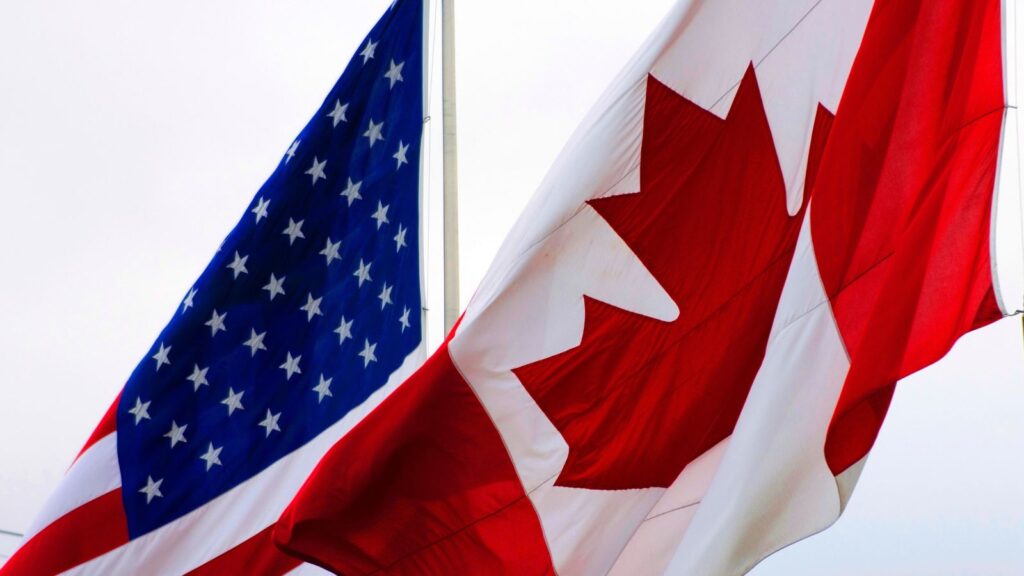
On paper, the solution sounds straightforward: Congress votes to remove the tariffs, and commerce can begin recovering. In Washington, however, the person who imposed the duties can still block that remedy. As the November 3 U.S. midterm elections approach, Oregon Senator Ron Wyden, the top Democrat on the Senate Finance Committee, is arguing that President Donald Trump’s tariffs on Canadian products should be among the first targeted for repeal.
The push has a bill behind it, but passage is far from assured. Republicans have already blocked one attempt to advance the legislation, and even a Democratic victory in Congress would not erase Trump’s presidential veto. For businesses on either side of the border, the debate now involves jobs, supply chains and the question of how long tariffs can remain in place.
Wyden Turns Canada Into a Congressional Priority
Senator Ron Wyden is not making a vague appeal for better relations with Ottawa. Speaking to Reuters ahead of the November 3 midterms, the Oregon Democrat described repeal of Trump’s Canadian tariffs as an obvious priority because of the pressure he says they place on prices and border communities. Wyden is the ranking Democrat on the Senate Finance Committee, the panel responsible for much of Congress’s work on taxes and trade. His position gives the argument weight, even while Republicans retain the committee’s chairmanship.
His intervention also clarifies the difference between promising a change and delivering one. Democrats may gain a chamber of Congress, enabling new hearings and votes, but Trump could still veto ordinary repeal legislation. Wyden’s goal is therefore as much about placing Canada’s treatment under sustained scrutiny as it is about a bill reaching the president’s desk. The distinction matters to exporters waiting for meaningful relief rather than another political statement.
What Trump’s 50% Canada Tariffs Actually Cover
The most contentious new duties are not a blanket 50% charge on everything Canada sells to the United States. On July 20, Trump announced measures targeting roughly US$20 billion in Canadian imports under Section 338 of the Tariff Act of 1930. The administration says Canada’s treatment of American vehicles, alcoholic beverages and dairy products justifies the response. Covered goods have included manufactured products and consumer items, and, unusually, they are not automatically spared simply because they qualify under the North American free-trade agreement.
The duties took effect on August 22 after a brief suspension, and the product list has continued to change. Customs guidance issued October 29 detailed revisions effective October 30, removing some classifications while adding 100 more. That creates a moving compliance problem for importers: the applicable rate can depend on an item’s precise customs classification and entry date. The White House calls the measures protection against discrimination; opponents say they disrupt supply chains and punish customers on both sides of the border.
Schumer’s Bill Goes Beyond a Simple Repeal
Senate Democratic Leader Chuck Schumer has already put a legislative proposal on the table. Introduced September 14 as S. 5390, the End Trump’s Tariff Tax Act would repeal Section 338 and the separate Section 122 authority previously used for temporary global tariffs. It would also terminate duties connected to specified forced-labour investigations. Wyden is among the bill’s co-sponsors, making the legislation a concrete expression of the position he has now emphasized publicly.
The most direct financial provision is a proposed refund. U.S. Customs and Border Protection would have 30 days after enactment to automatically return covered duties, with interest, to the importers who paid them. The text directs officials to prioritize small businesses where practicable and forbids requiring a separate refund application. That would not translate into an automatic cheque for every shopper whose prices increased. Nor would it erase all American tariffs on Canada, including duties imposed under separate legal authorities. None of these refunds can occur under this bill unless it becomes law.
Why Winning Congress Would Not Defeat a Veto
The November 3 election could dramatically change the atmosphere in Washington without immediately changing tariff rates. Ahead of voting, Republicans hold narrow majorities in both chambers, and Reuters reports that Democrats need a net gain of four seats in each to take control. A Democratic majority could put tariff repeal on the agenda and send legislation forward. It could not, simply by winning an ordinary majority, force Trump to accept a rollback of his own trade measures.
The U.S. Constitution gives a president the power to reject legislation approved by Congress. Overriding that veto requires two-thirds of members voting in the House and two-thirds in the Senate. Those thresholds are substantially higher than the numbers needed to control either chamber, and analysts see no plausible veto-proof majority emerging from these elections. A repeal vote might therefore document opposition, influence negotiations or expose divisions among Republicans without bringing immediate relief at the border. That is the central obstacle behind the Democrats’ renewed push.
Senate Republicans Have Already Stopped One Attempt
The difficulty is more than theoretical. On September 16, Democratic Senator Patty Murray asked the Senate to pass Schumer’s tariff bill by unanimous consent, a procedure that can move legislation quickly when no senator objects. Republican Finance Committee Chairman Mike Crapo objected, arguing that the committee was the proper place to examine trade policy. The objection ended that attempt; it was not a recorded vote showing that every Republican opposed the bill’s contents.
There is also a procedural difference between Trump’s old and new Canada tariffs. Earlier duties issued under emergency-powers legislation were subject to a special congressional challenge process. In October 2025, the Senate voted 50–46 against those earlier tariffs. The House passed a separate repeal resolution 219–211 in February 2026. Later that month, the Supreme Court ruled that the emergency-powers law did not authorize those tariffs. The current 50% duties rely on Section 338 instead, which lacks the same fast-track mechanism for a single senator to force a floor vote. Repeal therefore faces both procedural resistance and presidential opposition.
Canada and the U.S. Remain Deeply Interdependent
Arguments over tariffs can sound abstract until the sheer scale of cross-border commerce comes into focus. The U.S. Trade Representative estimates that trade in goods and services between the two countries reached US$872.3 billion in 2025. Statistics Canada reports that 71.7% of Canadian merchandise exports went to the United States that year, even after the American share declined from 75.9% in 2024. Those numbers help explain why a change in American import policy can quickly become a Canadian business concern.
The relationship is also built into production decisions. Energy, vehicle manufacturing, machinery and other industries depend on predictable movement across the border, sometimes at multiple stages before a finished product is sold. The United States declined to extend the Canada–U.S.–Mexico trade agreement during its July 2026 review, but the agreement remains in force. Unless the countries agree on an extension, annual reviews continue and the current term ends in 2036. The uncertainty is real; an immediate disappearance of the trade pact is not.
The Costs Do Not Stop at the Border
Tariffs are collected from importers entering goods into the United States, but businesses decide how much of that expense to absorb and how much to pass along. Research from the Federal Reserve Bank of New York found that close to 90% of the 2025 tariff burden showed up in U.S. import prices rather than being absorbed by foreign exporters. Other Federal Reserve research has documented how higher input costs can eventually raise prices for American-made products as well.
The Budget Lab at Yale estimated in August that the broader U.S. tariff system would cost the average household about US$1,100 annually under then-current law. That estimate covers the tariff regime as a whole, not just the Canadian measures. It should not be read as a precise bill for every family, either. Still, it explains why opponents describe tariff repeal as an affordability issue and why manufacturers worry about losing customers when imported components become more expensive. The costs can be spread widely even when the tariff applies narrowly.
Border Communities Put Faces to the Numbers
At the Port of Oswego in northern New York, the trade dispute is being described in terms of missed shipments and lost opportunities. During an October 29 visit, Schumer cited the port authority’s estimate of more than US$1 million in lost potential revenue connected to tariffs and the wider trade dispute. He also highlighted Syracuse manufacturer Eagle Metalcraft, which reported losing business from a major customer and laying off six workers. These figures are company and local-authority accounts, not a national measure of tariff damage.
The strain reaches smaller storefronts, too. Fulton café 114 Reserve said its coffee beans cost an additional dollar per pound and that other supplies had become more expensive, squeezing margins without room to raise menu prices. Travel adds another complication. Statistics Canada’s preliminary September figures showed Canadian residents’ return trips from the United States by car were 31.1% below September 2024, despite a rise from 2025. Tariffs alone cannot explain every travel choice, but cross-border tension has consequences well beyond customs offices.
Hearings Could Change the Debate Without Changing the Law
If Democrats capture either chamber, their strongest immediate tool may be investigation rather than repeal. Committee leaders can schedule hearings, demand information and, within applicable rules, issue subpoenas. Trade specialists interviewed by Reuters expect scrutiny of how the administration grants tariff exemptions, what small businesses are paying and how investment commitments from foreign trade partners are managed. That would be a meaningful change for companies seeking explanations of decisions that currently arrive with little public detail.
Oversight is not the same as authority to set customs rates. A committee hearing cannot simply strike Section 338 duties from the tariff schedule, and subpoena powers operate under procedural and legal limits. But sustained questioning could reveal who benefits from exemptions, whether promised investments materialize and where costs are concentrated. It could also give lawmakers evidence for future trade legislation. For Wyden, whose committee specializes in tax and trade, that prospect creates a path to influence even if Trump’s veto keeps the existing tariffs in place.
Ottawa Still Has to Deal With Trump Directly
Canada cannot build its near-term trade strategy on an election result that has not happened, particularly when an opposition-controlled Congress might still lack the votes to overturn a veto. On November 1, Prime Minister Mark Carney said he had a constructive discussion with Trump about a possible trade agreement and that negotiating teams would work toward an outcome in the coming weeks. The two governments have discussed potential relief involving steel and automobiles, but no completed deal or agreed tariff rollback was announced.
The administration has defended its trade programme as a way to protect American workers and businesses, and Reuters reports that it is preparing to rely on executive powers even if Democrats gain seats. For Ottawa, the practical challenge is to keep negotiations moving while businesses manage duties that remain active. Congressional pressure could strengthen demands for transparency and give Canada sympathetic voices in Washington. It is not, by itself, a substitute for an agreement, a change in presidential policy or legislation capable of surviving a veto.
