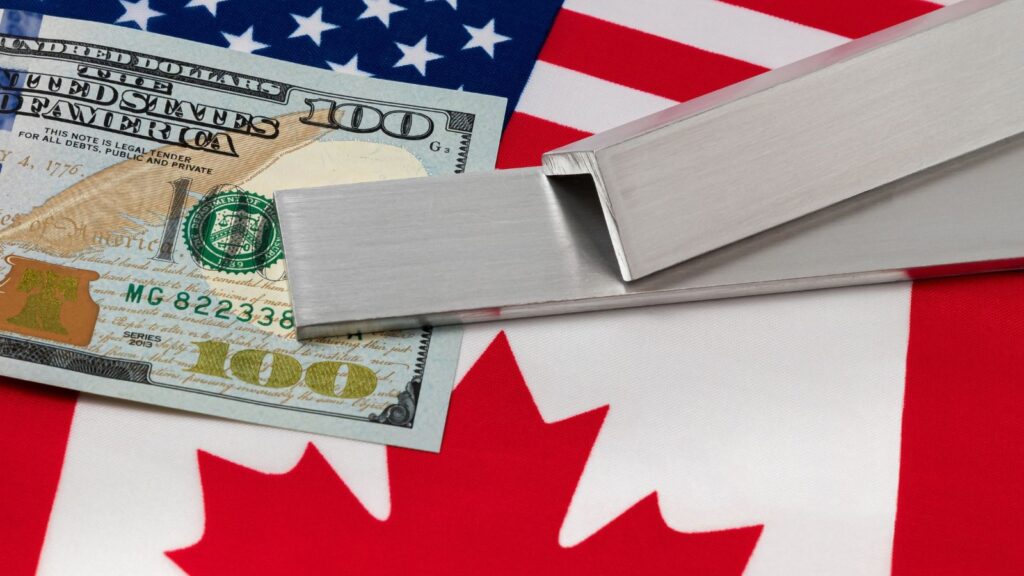
A 50% tariff sounds like the kind of shock that should rip straight through a manufacturer’s financial results. For Canadian manufacturing group Decisive Dividend Corporation, however, the reality has been more complicated. The Kelowna-based company says steep U.S. steel and aluminum tariffs have pushed up costs at parts of its portfolio, with its Blaze King hearth-products business responding through higher prices. Yet Decisive also says direct tariff costs have not significantly affected its overall 2026 results.
That does not mean the trade conflict has been painless. Some subsidiaries have faced weaker customer demand tied to economic and trade uncertainty, while tariff refunds have helped offset other costs. The result is a useful example of how a headline tariff rate can produce very different effects across a diversified manufacturer.
The Company Behind the Headline Is Really a Portfolio of Manufacturers
Decisive Dividend is not a single factory producing one product. The Canadian company owns a portfolio of manufacturing businesses spanning hearth products, agricultural equipment, retail merchandising systems, industrial components, mining wear parts and other specialized products. That diversification matters because each subsidiary has a different supply chain, customer base and exposure to the United States. A tariff that creates a serious problem for one operation may barely touch another. Decisive’s strategy has deliberately centred on acquiring established manufacturing businesses rather than concentrating its fortunes in a single product category.
The scale of the group has also increased considerably. Decisive reported record annual sales of C$152.2 million for 2025, up 19% from the previous year, while adjusted EBITDA reached a record C$25.4 million. Growth has continued through acquisitions, including European hearth-products manufacturer Be Fire in June 2026. That expanding portfolio helps explain why management can report meaningful tariff pressure at an individual subsidiary while still describing the overall direct financial impact as limited. The trade story is therefore less about one Canadian plant absorbing a 50% charge and more about how a diversified manufacturer spreads economic risk across businesses, markets and product categories.
Blaze King Has Taken the Clearest Direct Hit From the Metal Tariffs
The most visible tariff exposure is at Blaze King, Decisive’s long-established hearth-products operation. Blaze King manufactures wood-burning stoves, fireplace inserts, gas stoves and related products at facilities in Penticton, British Columbia, and Walla Walla, Washington. Steel is an obvious and important physical input in products designed to contain fire for years of service, which makes a steep metal tariff difficult to ignore. In its September 23 update, Decisive specifically identified Section 232 steel and aluminum tariffs as the tariffs having the largest impact across the group, with Blaze King affected most heavily.
Decisive said the pressure became particularly notable when the tariff rate relevant to Blaze King’s exposure increased from 25% to 50% in spring 2026. U.S. trade measures introduced in April also changed how Section 232 metal duties were calculated, including broader application to the full customs value of many covered products. That matters because tariff exposure can increase sharply even when the quantity of metal inside a finished product has not changed. For a manufacturer moving products, parts or metal-intensive goods across the Canada-U.S. border, customs classification and the precise tariff treatment can suddenly become almost as important as the underlying price of steel itself.
Blaze King Responded the Way Many Manufacturers Have: Higher Prices
Decisive says Blaze King implemented price increases to help mitigate its higher steel and aluminum tariff costs. That wording is important. The company did not say the increases eliminated every dollar of exposure, only that pricing was being used as a tool to offset some of the impact. Manufacturers facing tariffs generally have several choices: absorb the expense and accept lower margins, negotiate with suppliers, redesign or relocate sourcing, reduce other costs, or pass some portion of the increase to customers. In practice, companies often use several of those strategies at once.
Blaze King is hardly alone in taking the pricing route. Statistics Canada found that 27.4% of Canadian businesses surveyed in the third quarter of 2026 said they had passed tariff-related cost increases to customers during the previous 12 months. Another 30.4% said they were very or somewhat likely to pass such increases along during the next year. The numbers show why a 50% tariff does not necessarily produce a 50% retail price increase. The tariff applies at a specific point in the supply chain, while labour, plant overhead, distribution and other costs may not rise by the same amount. Companies can also absorb part of the shock rather than passing it through completely.
Tariff Refunds Helped Keep the Net Cost Under Control
One of the biggest reasons Decisive can describe its overall direct tariff burden as limited is that another category of tariff expense moved in the opposite direction. The company said refunds related to tariffs previously paid under the U.S. International Emergency Economic Powers Act, or IEEPA, have so far largely offset its 2026 tariff costs. In other words, Blaze King and other operations may have been paying more under continuing Section 232 metal duties while Decisive was simultaneously recovering money associated with an earlier tariff regime.
The refund story stems from a major U.S. Supreme Court decision on February 20, 2026. The court ruled that IEEPA did not authorize the president to impose tariffs under the sweeping emergency powers claimed by the administration. The ruling opened the way for refunds on enormous amounts already collected. Penn Wharton Budget Model researchers estimated that more than US$175 billion in tariff revenue could potentially be subject to refunds. U.S. Customs and Border Protection subsequently established procedures for processing eligible entries. Decisive does not disclose in its September update the exact dollar amount it has recovered, but it makes clear that those refunds have been large enough to substantially counterbalance its current direct tariff costs.
The Bigger Problem at Some Subsidiaries Has Been Demand, Not the Tariff Invoice
Direct tariff payments tell only part of the story. Decisive has repeatedly warned that U.S. trade uncertainty can hurt a manufacturer even when a particular shipment avoids a major duty. Hawk and Northside provide the clearest examples. Hawk produces precision-machined components and has exposure to oil and gas customers, while Northside supplies fabricated products to commercial-vehicle manufacturers. Decisive said both businesses have experienced demand effects connected to the broader U.S. economic and trade-policy environment.
Those pressures were visible in the company’s first-quarter numbers. Industrial product sales fell 26% year over year in Q1 2026, with Decisive pointing to weaker demand from one of Northside’s commercial-vehicle customers, one of Hawk’s important oil and gas customers and another oil and gas customer shared by several subsidiaries. Consolidated first-quarter sales slipped 3% to C$37.9 million, while adjusted EBITDA declined 7% to C$6.5 million. This illustrates an important distinction: a manufacturer can have limited direct tariff expense while still losing orders because customers are delaying purchases, cutting production or changing investment plans. The indirect effect can sometimes arrive through an empty order book rather than a customs bill.
Diversification Has Helped Offset Weakness in Tariff-Sensitive Markets
Decisive’s portfolio structure has provided an important buffer against those uneven conditions. When industrial demand weakened, other areas of the company continued to grow. In the first quarter of 2026, strong demand for mining wear parts helped offset some of the industrial weakness. Unicast and Techbelt drove a 49% year-over-year increase in wear-part sales, while agricultural equipment businesses Slimline and IHT also posted stronger activity. The company described this as evidence that its mix of subsidiaries can reduce reliance on any single end market.
That pattern became even clearer during the second quarter. Consolidated sales rose 6% year over year to C$38.5 million even though component-manufacturing sales declined 17%. The finished-products segment, by contrast, grew 26%. Hearth-product revenue increased by C$2.3 million, with the majority of that improvement coming organically from Blaze King and ACR rather than entirely from acquisitions. Agricultural and merchandising sales also strengthened. The contrasting results help explain why the tariff story at Decisive has not followed a simple cause-and-effect path. Some subsidiaries exposed to U.S. industrial cycles weakened, while other businesses selling very different products expanded enough to compensate.
The Financial Results Suggest Pressure, but Not a Group-Wide Tariff Shock
Decisive’s most recent reported financial numbers support management’s description of the direct tariff impact as limited. Second-quarter sales of C$38.5 million were 6% higher than a year earlier, while gross profit increased 7% to C$14.2 million. Adjusted EBITDA rose 1% to C$5.4 million. For the first six months of 2026, revenue reached C$76.4 million, up 1% from C$75.4 million during the same period of 2025. Those figures do not resemble a company experiencing a uniform 50% cost shock across its entire operation.
There are still signs of pressure beneath the headline growth. Component Manufacturing sales dropped 17% in Q2, and adjusted EBITDA for the first half declined as Decisive invested in acquisitions, sales capabilities and management succession. The company also recorded a C$0.3 million net loss in the second quarter, compared with C$2 million in net income a year earlier, although the comparison was affected by a C$1.7 million insurance settlement recorded in the prior-year period. Taken together, the results reinforce the central message: tariffs are one cost and demand factor among many, rather than the dominant driver of consolidated performance.
The New Section 338 Tariffs Appear to Create a Much Narrower Exposure
The trade environment shifted again in August 2026 when the United States imposed another set of tariffs on Canadian goods. Canada subsequently announced matching countermeasures covering C$27.6 billion of U.S. imports, illustrating how quickly the tariff landscape has continued to evolve. For Decisive, however, management says the newly introduced U.S. Section 338 measures are not expected to have a significant financial effect under the company’s current business mix.
Decisive said products already subject to Section 232 duties are not also subject to the Section 338 tariffs. Within its portfolio, management identified Marketing Impact’s plastic merchandising products as the main category that could fall within the new measures. Marketing Impact produces retail display and shelf-management systems used by grocery, convenience-store and pharmacy customers. The company said U.S. sales of the affected plastic products are not significant, limiting the potential exposure. That conclusion could change if tariff schedules or sourcing patterns change again, but the current assessment provides another example of why headline tariff rates must be matched against actual product classifications and sales volumes before their company-level impact can be understood.
Decisive’s Experience Mirrors a Much Broader Canadian Manufacturing Problem
The fact that Decisive has contained its direct tariff costs should not be mistaken for evidence that 50% metal duties are insignificant for Canadian manufacturing generally. Statistics Canada reported that 49.7% of manufacturing businesses surveyed in the third quarter of 2026 expected U.S. tariffs on Canadian imports to negatively affect their business during the next 12 months. Earlier research from the agency found that manufacturing employment fell by almost 36,000 workers between December 2024 and December 2025, with particularly sharp weakness in some vehicle-parts, steel and primary-metal industries.
The Bank of Canada has also found evidence of tariff costs moving through supply chains, with companies frequently mentioning steel when discussing higher input expenses. Yet many businesses cannot simply transfer every additional dollar to customers because demand, contracts and competition limit pricing power. Decisive therefore represents one outcome among many. Its diversified portfolio, U.S. manufacturing presence, pricing adjustments and tariff refunds have helped prevent a steep headline rate from becoming an equally steep group-wide financial hit. At the same time, weaker demand at Hawk and Northside shows that the cost of a trade dispute can surface well beyond the tariff line on an invoice.
