A diplomatic breakthrough meant to protect Ukrainian civilians from further attacks on electricity and heating facilities quickly ran into a troubling reality: Russian strikes continued despite Washington’s announcement of a ceasefire.
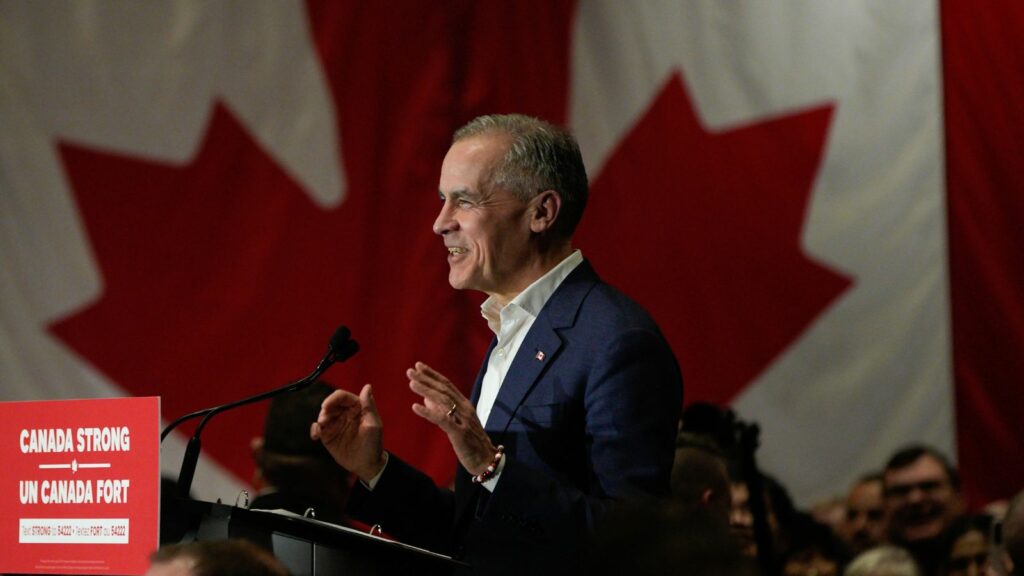
Canadian Prime Minister Mark Carney welcomed U.S. President Donald Trump’s October 11, 2026, initiative, calling for an immediate end to attacks on energy infrastructure. But Ukrainian President Volodymyr Zelenskyy reported continued Russian strikes, including attacks on power facilities in Kyiv and Kharkiv.
The developments exposed a growing divide between diplomatic announcements and conditions on the ground. With colder weather approaching, Ukraine’s damaged energy network remains vulnerable, while Canada and European allies face difficult questions about whether Moscow will honour any agreement and what pressure might be needed to make a ceasefire effective.
Carney Endorses Trump’s Ceasefire Initiative While Standing Firmly Behind Ukraine
Canadian Prime Minister Mark Carney publicly supported Trump’s proposed energy ceasefire on October 11 after speaking separately with the American president and Zelenskyy. According to an official readout from the Prime Minister’s Office, Carney thanked Trump for his leadership toward securing the proposed agreement and expressed Canada’s strong support for stopping attacks on energy infrastructure.
The Canadian government’s message emphasized that Russia must honour the arrangement and that attacks on civilians must stop immediately. Carney’s endorsement was significant because Canada has been among Ukraine’s strongest international supporters since Russia launched its full-scale invasion in February 2022. His position demonstrated a willingness to support American diplomatic initiatives while maintaining Canada’s longstanding commitment to Ukraine’s security and sovereignty.
During his separate conversation with Zelenskyy, Carney offered condolences for Ukrainians killed in recent Russian attacks and reaffirmed Ottawa’s solidarity with Kyiv. Both leaders emphasized the urgency of ending strikes against Ukraine’s energy network.
Crucially, Canada’s support for the ceasefire did not mean endorsing every element of Trump’s evolving Russia policy. Ottawa simultaneously criticized Washington’s separate arrangement involving Russian diesel supplies, arguing that additional energy revenue could help finance Moscow’s war. Carney’s approach reflected an important distinction: backing efforts to reduce civilian suffering while opposing economic concessions that might strengthen Russia’s ability to continue fighting.
Trump’s Surprise Announcement Leaves Major Questions About What Russia Actually Agreed To
Trump announced the purported energy ceasefire on October 11 through a brief message on his Truth Social platform. The president declared that an agreement between Russia and Ukraine had taken effect immediately and urged both countries not to violate it. The announcement suggested a potentially significant reduction in attacks on infrastructure essential to electricity generation, heating and fuel supplies.
However, the declaration came without a publicly disclosed agreement, detailed implementation procedures or immediate confirmation from either government involved in the fighting. Ukrainian officials indicated that they had not been informed of a finalized arrangement beforehand. Zelenskyy subsequently said Ukraine supported the proposal but was still waiting for details from Washington and confirmation that Moscow would participate.
The uncertainty continued into October 12. Kremlin spokesman Dmitry Peskov acknowledged ongoing contacts but did not clearly confirm that Russia had accepted the ceasefire Trump announced.
The confusion was particularly concerning because Trump had made a similar announcement on September 14, saying both sides had agreed to stop targeting each other’s energy infrastructure. That earlier proposal had not developed into an effective, publicly confirmed arrangement. The latest announcement therefore raised a fundamental question: whether Washington had secured a genuine commitment from Moscow or was announcing a diplomatic objective before the necessary agreements were in place.
Russian Strikes Continue as Ukraine Reports Damage to Power Plants and Gas Facilities
The proposed ceasefire faced an immediate test as Ukrainian officials reported fresh Russian attacks on essential energy facilities. Zelenskyy said a drone struck a power plant in Kyiv after Trump’s announcement, disrupting electricity supplies across parts of the capital. Another attack targeted Kharkiv’s CHP-5 combined heat and power plant, damaging infrastructure that helps supply electricity and heating to Ukraine’s second-largest city.
The attacks continued into October 12. Ukraine’s state-owned energy company Naftogaz confirmed that a jet-powered drone struck one of its gas-production facilities in the Kharkiv region, causing a fire and damaging critical equipment. Employees had taken shelter, and the company reported no injuries at that site. Zelenskyy also identified a Russian drone attack on a civilian petrol station.
According to Reuters, Zelenskyy reported that at least six energy targets had been struck during the overnight and morning attacks. Ukrainian air defences also faced another large assault, with the country’s military reporting that it intercepted or suppressed 89 of 121 Russian drones launched overnight.
The continued bombardment reinforced Kyiv’s concerns about the proposed arrangement. Zelenskyy accused Moscow of violating the ceasefire announced by Trump, while emphasizing that Ukraine had not launched attacks on Russian refineries overnight. Although the strikes were reported by Ukrainian authorities and covered by international news organizations, Russia had not clearly confirmed accepting the agreement. That distinction matters when assessing whether Moscow violated a mutually established ceasefire or continued attacks despite Washington’s declaration.
Ukraine’s Energy Crisis Is Becoming a Humanitarian Emergency Ahead of Winter
The attacks carry consequences far beyond damaged electrical equipment. On October 11, Zelenskyy reported that Russian forces had conducted more than 200 strikes against Ukrainian electricity generation and transmission facilities during the preceding week. He also reported 17 attacks against gas and oil installations. According to the Ukrainian president, more than 150 people had been killed and over 700 wounded across the country during that period.
The figures, presented by Ukraine’s government, describe the broader toll of Russian attacks rather than deaths exclusively connected to energy facilities. Nevertheless, they illustrate the scale of violence confronting the country as temperatures begin to fall. Damaged power plants can interrupt electricity, but the effects quickly spread to water pumping, building heating systems, transportation and other essential services.
A September 2026 report from a United Nations investigative commission described the devastating consequences of attacks during the previous winter, when temperatures in parts of Ukraine reached minus 20°C. Millions experienced prolonged electricity outages or serious heating disruptions.
One 74-year-old Kyiv resident told UN investigators that power cuts repeatedly disabled the lifts in her high-rise apartment building, leaving her effectively trapped on the 18th floor in freezing conditions. Her account captured the vulnerability of older residents when basic infrastructure fails.
Fuel supplies face similar risks. Ukraine’s energy minister reported that more than 300 petrol stations had been destroyed over six months, prompting operators to install protective barriers, shelters and backup generators. For Ukrainian families, a meaningful energy ceasefire could determine whether ordinary daily life remains possible through another difficult winter.
Zelenskyy Offers a Reciprocal Ceasefire but Rejects a Deal That Protects Only Russian Refineries
A central disagreement has emerged over exactly which facilities would be protected by the proposed ceasefire. Axios reported that a White House official described a potential arrangement initially focused on both countries refraining from attacks against oil refineries. A broader agreement covering electricity generation and power grids could follow later.
That distinction is particularly important for Ukraine. Russia operates roughly 30 major oil refineries, while Ukraine has only one refinery, which was severely damaged by Russian attacks and is no longer fully operational. Ukraine depends heavily on imported diesel and other petroleum products. A refinery-only arrangement could therefore provide considerably greater immediate protection to Russia’s energy industry than to the Ukrainian infrastructure most vulnerable to attacks.
Speaking to the Warsaw Security Forum on October 12, Zelenskyy reiterated that Ukraine was willing to stop its long-range strikes against Russian oil refineries and exports if Moscow stopped attacking Ukrainian electricity supplies and critical infrastructure.
The Ukrainian president said Russia had continued striking Ukrainian energy facilities even as Ukrainian forces refrained from attacking Russian refineries overnight. He also warned that Ukraine would respond if Moscow refused to participate in a genuine ceasefire. His position reflected a demand for reciprocity rather than a rejection of negotiations: both sides would have to make meaningful concessions, and the agreement would need to protect the systems civilians rely upon to survive.
Carney Opposes Trump’s Separate Diesel Deal With Putin as Energy Prices Complicate Diplomacy
The ceasefire controversy developed alongside another major shift in Washington’s relationship with Moscow. On October 9, Trump announced an arrangement with Russian President Vladimir Putin intended to release additional Russian diesel supplies onto international markets. Trump said Russia would immediately make more than 300,000 metric tonnes of diesel available, equivalent to approximately 2.25 million barrels, with additional shipments planned.
The administration presented the arrangement as a response to elevated fuel prices, which have placed pressure on American transportation companies, farmers and consumers. However, Reuters reported that the initial proposed delivery amounted to less than one day’s diesel consumption by the U.S. transportation sector, based on Energy Information Administration figures of approximately 2.94 million barrels per day.
Carney sharply criticized the diesel arrangement during his October 11 conversation with Zelenskyy. According to Canada’s official readout, the prime minister warned that additional Russian energy revenues could finance Moscow’s continued military operations, undermining efforts to secure peace.
The criticism was echoed in Washington, where seven Democratic and Republican senators questioned the administration’s decision to permit Russian diesel imports despite restrictions established in 2022. Their statement called for the policy to be reversed.
Meanwhile, Carney used his conversation with Trump to underscore Canada’s role in American energy security. His office said Canada would continue maximizing oil and diesel exports to the United States, which it described as supporting well over one million barrels of daily diesel output. The contrasting messages reinforced Ottawa’s position: Canada supports initiatives to end attacks but opposes rewarding Russia economically while its invasion continues.
Canada’s Military Support and Air-Defence Investments Remain Central to Its Ukraine Strategy
Canada’s response extends well beyond diplomatic statements. According to the Prime Minister’s Office, Ottawa has committed more than $8.5 billion in military assistance to Ukraine since Russia’s full-scale invasion began, alongside more than $750 million for recovery and reconstruction. The government has also imposed over 3,500 sanctions in response to Russia’s violations of Ukrainian sovereignty.
During Zelenskyy’s September 2026 visit to Canada, the two governments announced approximately $355 million in support for Ukrainian air defences. That assistance has become especially important as Russia continues using missiles and drones against populated areas and essential infrastructure. Intercepting incoming weapons can reduce civilian casualties and help keep electricity supplies operating even when diplomatic efforts fail to halt the attacks.
The countries are also strengthening cooperation on emerging defence technology. Zelenskyy confirmed on October 11 that Canada had become actively involved in developing the European FREYJA anti-ballistic missile system, a project intended to provide more affordable and scalable protection against missile threats.
The initiative remains under development, meaning it is not an immediate solution to Ukraine’s current air-defence shortages. Nevertheless, it demonstrates how Canada is pursuing longer-term security cooperation alongside emergency assistance. For Ottawa, the challenge is to support a negotiated peace while ensuring Ukraine retains the ability to protect its population if Russia continues military operations. Carney’s discussions with Zelenskyy included further coordination with allies on air-defence requirements, reflecting that immediate priority.
European Allies Increase Sanctions as Doubts Grow Over Moscow’s Willingness to Stop Attacks
European governments have responded to the ceasefire announcement with cautious support for its humanitarian objectives and skepticism about Russia’s willingness to participate. European Union foreign policy chief Kaja Kallas said on October 12 that there was no clear evidence Moscow would observe the proposed restrictions. She also argued that protecting civilians from being killed should be part of any meaningful ceasefire.
The European response included a substantial expansion of economic pressure on Russia. On October 12, the Council of the European Union approved sanctions listings targeting 1,569 individuals and entities connected to Russia’s military-industrial complex. The measures covered 826 companies and 743 executives, making them the EU’s largest single addition to its Russia-related sanctions lists since the invasion began.
The new restrictions focus on companies supplying components for missiles, drones, aircraft and other military equipment. The EU said many of the targeted businesses were involved in electronics, communications, navigation systems and other technologies supporting Russia’s weapons production.
The sanctions underline a strategic difference between encouraging negotiations and reducing pressure before Moscow demonstrates meaningful compliance. European leaders argue that financial and industrial restrictions are necessary to limit Russia’s ability to sustain its military campaign.
For Canada, which has maintained an extensive sanctions program of its own, the European approach offers an important point of alignment. Ottawa’s decision to support Trump’s ceasefire initiative while criticizing the Russian diesel arrangement is consistent with a policy of pursuing peace without abandoning economic pressure on Moscow.
Moscow’s Response Leaves the Ceasefire Uncertain as Zelenskyy Demands Concrete Guarantees
Russia’s public response has done little to resolve the uncertainty surrounding Trump’s announcement. On October 12, Kremlin spokesman Dmitry Peskov said contacts about a possible energy ceasefire were continuing but declined to confirm whether Moscow had accepted the arrangement. He also rejected Zelenskyy’s separate proposal for a comprehensive 60-day ceasefire that would create conditions for Ukrainian presidential elections.
Peskov said Russia wanted a broader, long-term peace settlement rather than a temporary halt to fighting. The comments highlighted the distance between Washington’s declaration of an immediate energy ceasefire and the Kremlin’s publicly stated position. Meanwhile, Zelenskyy emphasized that Ukraine was waiting to learn what concrete commitments Washington had obtained from Russia and how American officials intended to ensure compliance.
A functioning energy ceasefire would require more than competing statements from national leaders. Both governments would need a shared understanding of which facilities were protected, when the restrictions began, how alleged violations would be investigated and what consequences would follow renewed attacks.
Zelenskyy has indicated that Ukraine would be willing to formalize reliable guarantees, but his government insists that Russian strikes against electricity supplies must stop.
For Carney and Canada’s European partners, the immediate question is whether Trump’s initiative can be transformed into a verifiable agreement that actually changes conditions on the ground. The outcome will not be measured by diplomatic announcements alone. For Ukrainians facing another winter of potential blackouts, its success will be measured by whether power plants remain operational, homes stay heated and families can live without the constant threat of another strike.
