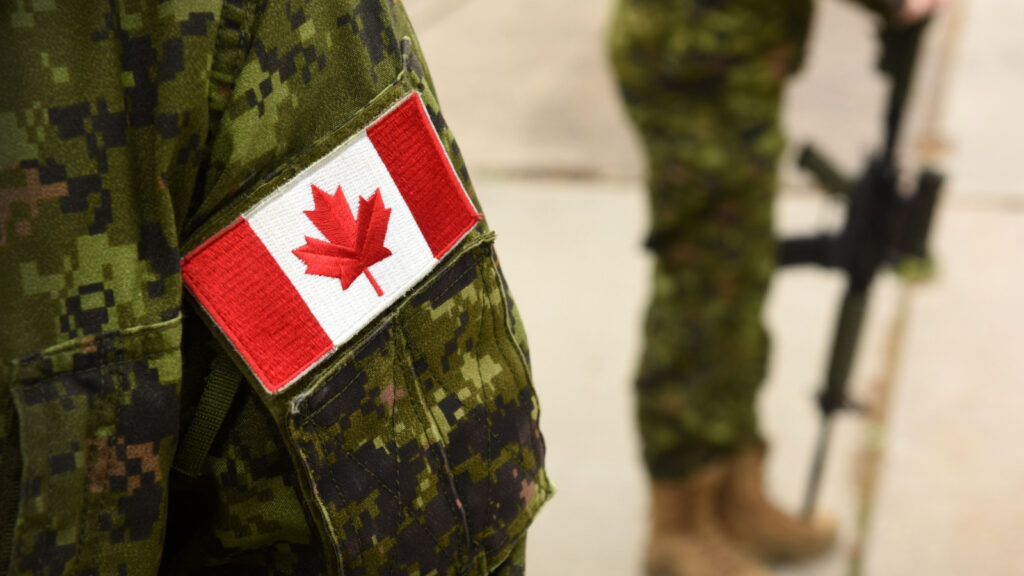
Prime Minister Mark Carney has disclosed that Canada examined a scenario that would once have sounded almost unthinkable: the possibility of U.S.-led military action involving Canada. In a New York Times interview published September 23, Carney described that possibility as an “extreme tail risk” rather than a likely outcome, arguing that governments have a responsibility to prepare for severe scenarios even when they are highly improbable. He declined to reveal what the examination involved. The disclosure arrives after months of unusually strained Canada-U.S. relations involving sovereignty rhetoric, tariffs and efforts by Ottawa to reduce strategic dependence on its largest trading partner. Just as important, however, Carney did not say Canada expects military action. His comments were framed around contingency planning, not a prediction that conflict is approaching.
Carney Drew a Clear Line Between Preparing and Predicting
The most important part of Carney’s disclosure may be the qualification attached to it. Asked about the possibility of American military action, he said leaders have a responsibility to examine “extreme tail risk” and stressed that such an event was “not a base case.” In other words, he was describing something considered serious enough to plan around because of its potential consequences, not something his government regards as the probable direction of Canada-U.S. relations. Carney did not disclose whether the work consisted of military contingency planning, intelligence assessments, economic preparations or a broader government risk exercise. Canadian Press reported that he specifically declined to explain the examination in detail.
That distinction matters because the public evidence does not establish that Washington has developed an operational plan to use military force against Canada. Carney’s statement reveals what Ottawa considered, but not what Canadian officials believe the United States is preparing to do. His language closely resembles the kind of worst-case risk analysis familiar from finance and central banking, fields in which Carney spent much of his career. A low-probability possibility can still receive government attention when the potential consequences are enormous. The disclosure is therefore significant less because it establishes that military confrontation is likely and more because it shows how dramatically the range of scenarios being contemplated inside Canadian leadership has widened during the current period of bilateral tension.
Trump’s 51st-State Rhetoric Changed the Political Background
The extraordinary context behind the discussion is President Donald Trump’s repeated suggestion that Canada could become the 51st U.S. state. Those comments began attracting sustained attention before Carney became prime minister and continued to influence Canadian political debate about sovereignty. At a January 7, 2025 news conference, Trump was specifically asked whether he might use military force against Canada. He rejected that option and instead raised the possibility of using “economic force.” Reuters reported at the time that then-prime minister Justin Trudeau rejected the suggestion that Canada could become part of the United States.
That history is essential when interpreting Carney’s latest remarks. The president publicly ruling out military force in January 2025 is evidence against treating an invasion or attack as declared U.S. policy. At the same time, the persistence of annexation rhetoric gave Canadian officials a reason to consider whether statements previously dismissed as provocation should be included in wider sovereign-risk planning. Carney’s comments do not establish that Trump later reversed his public position on military force. Instead, they show that Ottawa was unwilling to assume an extreme scenario could simply be ignored. The difference between public rhetoric, economic coercion and actual military intentions remains substantial, and nothing Carney disclosed eliminates that distinction.
The Military Relationship Is Far More Integrated Than the Headline Suggests
Any hypothetical military confrontation would collide with one of the deepest bilateral defence relationships in the world. Canada and the United States jointly operate the North American Aerospace Defense Command, better known as NORAD. The binational organization provides aerospace warning, aerospace control and maritime warning for North America. Canadian forces contribute aircraft, bases, radar infrastructure and personnel, while the Canadian NORAD Region headquartered in Winnipeg is responsible for surveillance, identification and control over Canadian airspace. Canadian defence documents have estimated that roughly 1,000 Canadian Armed Forces personnel support NORAD missions.
That cooperation is not merely a Cold War legacy sitting on paper. From August 24 through September 1, 2026, Canadian and U.S. forces participated together in NORAD’s Exercise AMALGAM DART, conducting integrated air-defence scenarios involving fighters, command-and-control systems and simulated threats approaching North America. The exercise included operations from 3 Wing Bagotville in Quebec. Such activity underscores the unusual contradiction surrounding the present political moment: Ottawa is contemplating rare sovereign-security contingencies involving the same country with which Canadian forces conduct daily continental defence. The existing military architecture therefore remains important evidence against interpreting Carney’s remarks as a declaration that normal defence relations have already broken down.
Canada Is Spending More on Defence as Its Strategic Assumptions Change
Carney’s comments also arrive during a major expansion of Canadian defence spending. In March 2026, the federal government announced that Canada had reached NATO’s benchmark of spending 2 per cent of gross domestic product on defence for fiscal 2025-26. National Defence said more than $63 billion was being spent across the department, the Canadian Armed Forces and other participating government organizations. Budget 2025 had previously allocated $81.8 billion over five years for defence-related rebuilding, readiness and new capabilities. Ottawa has described reaching 2 per cent not as an endpoint but as part of a longer effort to strengthen the military and defence-industrial base.
Much of that spending was announced in response to broader security concerns rather than the specific hypothetical scenario Carney discussed with the Times. Russia, Arctic security, NATO obligations, missile threats and long-running equipment shortages all feature prominently in federal defence planning. Canada is also continuing a $38.6-billion, 20-year modernization of its NORAD capabilities, including new surveillance systems, communications infrastructure, air weapons and northern facilities. The result is that Carney’s “tail risk” disclosure sits inside a defence transformation that was already underway. It would therefore be misleading to portray every new Canadian military investment as preparation for conflict with Washington. Many of the programs are specifically designed for cooperation with the United States in defending the continent.
Ottawa Is Also Trying to Reduce Dependence on Individual Suppliers
The more immediate link between Carney’s comments and government policy is Ottawa’s effort to build greater strategic autonomy. Canada launched its first Defence Industrial Strategy in February 2026, arguing that the country had become too dependent on international suppliers in important areas. The strategy prioritizes Canadian production where possible and partnerships with other allies where domestic capability is insufficient. In May, Carney described the procurement approach as “build, partner, buy,” with greater emphasis on creating sovereign capabilities and directing more defence spending into Canadian industry.
Fighter aircraft provide a revealing example. Canada originally announced plans to acquire 88 F-35s, but Carney ordered a review of the procurement in March 2025. Federal defence documents in 2026 said the review considered operational requirements, NORAD and NATO obligations, industrial benefits, strategic partnerships and possible alternatives. At the same time, preparations for the first Canadian F-35s have continued rather than stopping altogether. Canada has separately pursued European partnerships, including negotiations involving Saab’s GlobalEye airborne surveillance aircraft and approximately $800 million in Norwegian-made Joint Strike Missiles. Diversification, therefore, does not necessarily mean severing U.S. defence ties. Ottawa is attempting to create options while remaining embedded in continental and allied systems.
Space and European Partnerships Are Becoming Part of the Same Strategy
Carney’s broader argument is that national security increasingly depends on technologies that sit outside traditional definitions of military hardware. Satellite communications, surveillance, launch capacity, artificial intelligence, telecommunications and critical minerals can all become strategic vulnerabilities when one country controls too much of the supply chain. In his September interview, Carney discussed reducing Canadian reliance on American technology and suppliers, including satellite systems, while pursuing a wider network of partners. The goal he described was resilience rather than complete separation from the United States.
Recent agreements provide concrete examples. At the July 2026 NATO summit, Ottawa announced plans to use Telesat Lightspeed for sovereign military satellite communications in the Arctic. On September 20, Carney and French President Emmanuel Macron directed their countries’ space agencies, defence ministries and industries to develop shared space infrastructure, including launch systems and ground reception and control facilities. Canada has also expanded defence cooperation with the European Union and became the first non-European participant in the EU’s SAFE defence initiative. These moves predate the disclosure of Canada’s worst-case contingency thinking, but they fit the same underlying principle: critical Canadian capabilities should not depend entirely on a single foreign government, company or supply chain.
The Trade Fight Shows Why Economic Dependence Matters Too
Military planning is only one part of the rapidly changing relationship. The sharper conflict in 2026 has been economic. Canada suspended trade negotiations with the United States in August after Washington imposed a 50 per cent tariff on $27.6 billion of Canadian goods. Ottawa subsequently announced matching counter-tariffs on $27.6 billion in American products, targeting sectors including steel and aluminum, dairy, appliances, agricultural equipment, pulp and paper, plastics and electronics. Those Canadian countermeasures took effect September 8.
The scale of the underlying relationship explains why economic pressure can carry such weight. Statistics Canada reported that the United States still received 71.7 per cent of Canadian merchandise exports in 2025, although that was down from 75.9 per cent in 2024. Canadian exports to the United States fell 5.8 per cent during 2025, while exports to countries outside the United States rose 17.2 per cent. Those numbers help explain Ottawa’s emphasis on diversification: the objective is not simply finding diplomatic alternatives but reducing the economic impact any one government can impose through tariffs, procurement rules or access to strategic technologies. The same risk-management logic visible in Carney’s military comments is increasingly visible in trade policy.
The Biggest Message May Be About How Ottawa Now Defines Risk
Carney’s disclosure is striking because Canadian governments have historically treated the United States as the country’s closest military and economic partner rather than as a potential source of direct sovereign risk. His decision to acknowledge that an American military scenario was examined shows that Ottawa’s planning assumptions have broadened. Yet the publicly available evidence still points toward contingency planning, not an expectation of armed conflict. Carney explicitly described the scenario as outside the “base case,” and no details of the preparations, probability assessment or agencies involved were released.
Meanwhile, practical Canada-U.S. cooperation continues. NORAD remains operational, Canadian and American personnel continue conducting joint exercises, and the two economies remain enormously interconnected despite the tariff dispute. Those realities can coexist with a Canadian effort to become less vulnerable to American policy changes. That may ultimately be the broader significance of the “extreme tail risk” remark: Ottawa is treating dependence itself as something that requires management. Preparing for an unlikely crisis does not mean predicting that it will happen. It means Canadian leaders no longer appear willing to assume that long-standing relationships make every previously unimaginable scenario impossible.
