North America’s trade relationship has entered another unpredictable chapter, with Washington offering Canada a glimmer of hope for an agreement while simultaneously threatening Mexico with another round of tariffs.
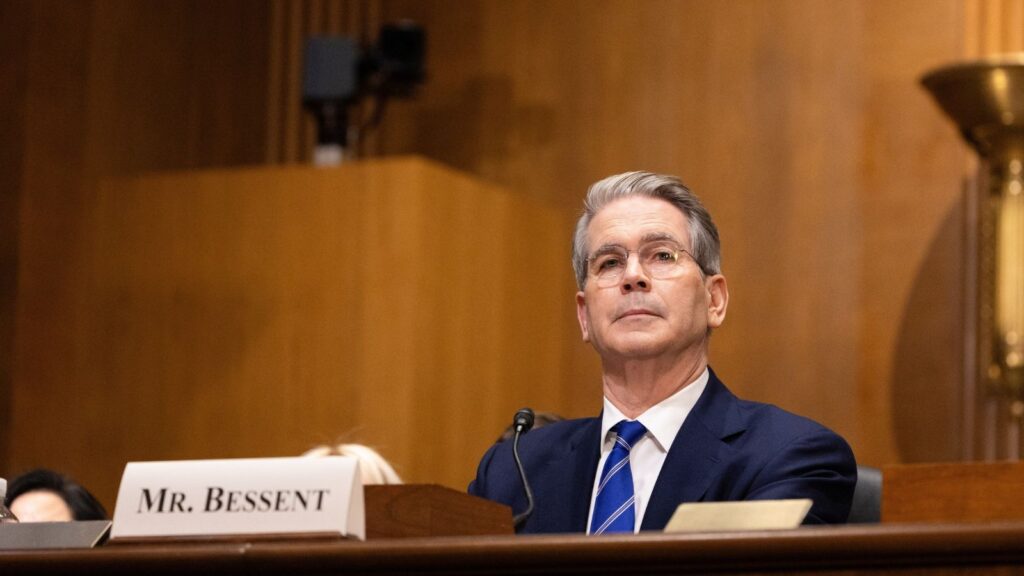
U.S. Treasury Secretary Scott Bessent said on November 13, 2026, that he remained optimistic about reaching trade agreements with Canada and Mexico, suggesting negotiations could still produce meaningful results despite months of uncertainty. However, his comments came just one day after President Donald Trump threatened to double tariffs on Mexican goods over a migrant caravan heading toward the United States.
For Canadian businesses, manufacturers and exporters, the contrasting messages highlight how quickly Washington’s trade priorities can shift. The possibility of a negotiated settlement remains alive, but tariff threats, political disputes and unresolved disagreements continue to complicate the economic relationship between the three North American neighbours.
Bessent Signals Hope for a Canada–U.S. Trade Agreement
U.S. Treasury Secretary Scott Bessent offered an encouraging assessment of North American trade negotiations during a November 13 interview with CNBC, expressing confidence that Washington could ultimately reach agreements with Canada and Mexico. His remarks represented a potentially important diplomatic signal after months of increasingly difficult negotiations. However, Bessent stopped short of announcing any breakthrough, providing no details about proposed tariff reductions, outstanding disagreements or a timeline for reaching a settlement. His optimism suggested that discussions remained possible, but it did not establish that the two governments were close to signing an agreement.
For Canadian companies that depend on American customers, the distinction between encouraging language and a completed agreement is significant. Manufacturers must make decisions about equipment, hiring and production schedules long before their products reach the market. Those commitments become more difficult when future tariff rates remain uncertain. Bessent also avoided discussing Trump’s latest warning against Mexico, leaving unanswered questions about how the administration intends to balance its negotiating ambitions with the president’s willingness to threaten new trade barriers.
Trump Threatens to Double Mexico Tariffs Over Migrant Caravan
While Bessent was presenting a more optimistic outlook, President Donald Trump had already introduced another source of instability into North American trade relations. On November 12, Trump warned that tariffs on Mexican goods would be immediately doubled unless Mexico stopped a migrant caravan travelling north toward the United States. Reuters reported that approximately 1,500 migrants, many from Central America, had departed from Tapachula near the Guatemalan border on November 10. Trump’s warning connected immigration enforcement directly to trade policy, raising the possibility of additional economic penalties against one of America’s largest commercial partners.
Mexican President Claudia Sheinbaum responded by emphasizing that no migrant caravan had reached the American border since Trump returned to office. Her government described efforts to address migrant movements without resorting to repression, including informing migrants about immigration restrictions and arranging returns to their countries. Importantly, Trump’s statement was a conditional threat rather than confirmation that tariffs had already doubled. Nevertheless, for companies operating across the U.S.–Mexico border, the warning demonstrated how quickly disputes outside traditional trade negotiations could create uncertainty about future costs and market access.
The North American Trade Agreement Remains in Place Despite Trump’s Decision
The future of the Canada–United States–Mexico Agreement, known as CUSMA in Canada and USMCA in the United States, remains central to the ongoing negotiations. The agreement originally took effect on July 1, 2020, and underwent its first mandatory six-year review on July 1, 2026. During that review, Canada and Mexico supported extending the arrangement, but Washington declined to renew it in its existing form. U.S. Trade Representative Jamieson Greer explained that the administration wanted to address perceived shortcomings in the agreement and outstanding trade disputes before committing to another long-term extension.
Importantly, Trump’s decision did not immediately terminate the trade agreement. The existing framework remains in effect, with annual reviews now required until all three countries agree to an extension or the agreement reaches its scheduled expiration in July 2036. That distinction provides some continuity for businesses that rely on established trade rules. Nevertheless, continuing tariffs and uncertainty about future requirements make long-term investment decisions considerably more complicated, particularly for manufacturers whose supply chains extend across multiple North American borders.
Carney Confirms Progress but Says Canada Still Has No Deal
Canadian Prime Minister Mark Carney offered a similarly cautious assessment on November 14, telling reporters in Manila that Canada and the United States were making progress toward a possible bilateral agreement. Carney revealed that he had held a lengthy conversation with Trump and senior American officials before travelling to Asia. According to the Associated Press, U.S. Trade Representative Jamieson Greer and White House chief of staff Stephen Miller also participated in the discussion. The renewed dialogue suggested that communication between the governments had improved following the breakdown of negotiations in August, although neither side had announced finalized terms.
Carney also identified a major Canadian priority that could determine whether negotiations succeed. His government would not accept a trade arrangement that undermined the viability of Canada’s automotive industry. The position reflects concerns that even a deal reducing certain tariffs might leave Canadian assembly plants and parts manufacturers at a competitive disadvantage. For Ottawa, securing an agreement is only part of the challenge. Ensuring that its provisions protect employment, manufacturing investment and Canada’s position within North American supply chains remains equally important.
Canada’s Existing Tariff Dispute Makes Negotiations More Complicated
Canada and the United States are already dealing with significant tariff measures that have affected their traditionally close economic relationship. After negotiations broke down during the summer, Washington imposed 50% tariffs on certain Canadian products beginning August 22, 2026. The measures were introduced under Section 338 of the U.S. Tariff Act of 1930, with Washington alleging discriminatory Canadian policies affecting American commerce. Canada responded on September 8 with retaliatory tariffs covering approximately C$27.6 billion in American imports, targeting industries including steel, dairy, appliances, agricultural equipment and electronics.
The Canadian countermeasures included tariff rates of 15%, 25% and 50%, depending on the products involved. Washington subsequently modified the scope of its own measures, including changes announced in October. For manufacturers, retailers and distributors, these shifting rules create a difficult operating environment. A product that was economically viable to import under one tariff arrangement can become substantially more expensive under another. Consequently, any agreement would need to address more than political disagreements. Businesses would be looking for meaningful reductions in trade costs, clearer customs requirements and protection against another sudden escalation.
Canada’s Auto Industry Could Be the Biggest Test of Any Agreement
Few industries illustrate Canada’s dependence on cross-border trade more clearly than automotive manufacturing. According to the federal government, more than 90% of Canadian-made vehicles and approximately 60% of Canadian-made automotive parts are exported to the United States. The sector supports roughly 125,000 direct manufacturing jobs and more than 500,000 jobs across the broader automotive economy. Since April 2025, Canadian-made vehicles have faced a 25% U.S. tariff on their non-American content, although qualifying vehicles receive an exemption for the value of their U.S.-made components.
The existing CUSMA framework already contains detailed automotive requirements. Passenger vehicles and light trucks generally must meet a 75% North American regional-value-content threshold to qualify for preferential treatment, alongside other requirements covering wages, core components and metal sourcing. Changes to those rules could reshape where companies purchase parts and assemble vehicles. For workers in Ontario’s manufacturing communities, the consequences extend beyond international diplomacy. Changes in tariffs or sourcing requirements can influence investment decisions, production volumes and ultimately the number of jobs available at factories and their suppliers.
The Economic Stakes Extend Far Beyond Government Negotiations
The scale of Canada–U.S. trade helps explain why developments in Washington attract attention across the Canadian economy. Statistics Canada reports that 71.7% of Canadian merchandise exports went to the United States in 2025, compared with 75.9% in 2024. Although Canada’s export markets are becoming more diversified, the American economy remains its most important destination for goods. According to the Office of the U.S. Trade Representative, bilateral trade in goods and services totalled approximately US$872.3 billion in 2025. Those figures reflect an economic relationship involving businesses of virtually every size, from major energy producers to small manufacturing suppliers.
For Canadian households, the consequences of trade disputes can reach considerably further than factory gates and shipping terminals. Tariffs can increase the costs of imported goods and components, forcing businesses to absorb expenses, negotiate lower prices with suppliers or pass increases along to customers. Exporters facing reduced competitiveness may also reconsider hiring and investment plans. Although the effects differ between industries, prolonged uncertainty creates challenges for businesses trying to forecast demand and maintain profitability. A predictable trade relationship therefore matters to employers, workers and consumers alike.
Mexico’s Negotiations Could Influence Canada’s Position at the Bargaining Table
Washington’s decision to pursue separate negotiations with Canada and Mexico introduces another layer of complexity. In July, U.S. Trade Representative Jamieson Greer told American lawmakers that the administration hoped to secure interim arrangements with both countries before the end of 2026. More complicated issues, including automotive sourcing requirements and other provisions of the broader North American trade agreement, could require negotiations extending into 2027. Mexico has been pursuing tariff relief while discussing American demands involving vehicle production and Chinese investment, creating negotiating priorities that differ somewhat from those facing Ottawa.
For Canada, the possibility of a separate American agreement with Mexico creates both opportunities and risks. A Mexican deal could establish terms that Washington later seeks to apply to Canadian negotiations, particularly concerning automobiles and regional manufacturing requirements. Alternatively, different agreements could complicate supply chains that currently operate across all three countries. Mexico’s situation has become even more uncertain following Trump’s latest tariff warning. While Bessent’s comments suggest Washington remains interested in reaching agreements, the president’s immigration-related demands demonstrate how quickly unrelated political issues can influence the negotiating environment.
Trump’s Mexico Tariff Threat Raises Questions About Legal Authority
Another important uncertainty concerns the legal mechanism Washington could use to implement Trump’s latest threat against Mexico. On February 20, 2026, the U.S. Supreme Court ruled that the International Emergency Economic Powers Act did not authorize the president to impose tariffs. The decision invalidated a major part of the administration’s earlier tariff strategy, including emergency duties imposed on imports from Canada and Mexico. It did not eliminate Washington’s ability to impose tariffs under other legislation, but it meant the administration needed to rely on different statutory authorities for subsequent measures.
Other American trade laws provide mechanisms for tariffs under specific circumstances. Section 232 of the Trade Expansion Act of 1962, for example, allows trade restrictions based on national-security findings, while Section 301 addresses certain unfair foreign trade practices. Washington has also used Section 338 of the Tariff Act of 1930 against Canadian products. Each authority comes with different requirements and limitations. Trump did not identify the precise legal basis or product coverage for his proposed doubling of Mexican tariffs. Consequently, the threat’s eventual implementation, scope and possible legal challenges remain uncertain rather than settled outcomes.
Canada Expands Trade Partnerships as the Next North American Review Approaches
While negotiations with Washington continue, Ottawa is accelerating efforts to expand commercial relationships beyond North America. During his November 14 visit to Manila, Carney announced that Canada had concluded free-trade negotiations with the Philippines and substantially completed negotiations with the Association of Southeast Asian Nations. The ASEAN agreement would expand Canada’s access to a region representing nearly 700 million people. The federal government estimates that the agreement could eventually add nearly C$2 billion to Canada’s economy and support approximately 14,000 jobs. Both agreements still require additional steps before entering into force, with signatures targeted for 2027.
Meanwhile, the North American trade negotiations face another important milestone. The Office of the U.S. Trade Representative has opened consultations ahead of the 2027 CUSMA review, with public comments due January 12, 2027. Businesses and industry groups will have an opportunity to identify concerns about the agreement and recommend changes. For Canada, the immediate priority remains securing meaningful tariff relief while protecting the industries that depend heavily on American customers. Bessent’s optimism provides a reason to believe negotiations could succeed, but Trump’s threats against Mexico underscore how fragile that progress remains. Until concrete terms are announced and implemented, uncertainty will continue to shape North American trade decisions.
