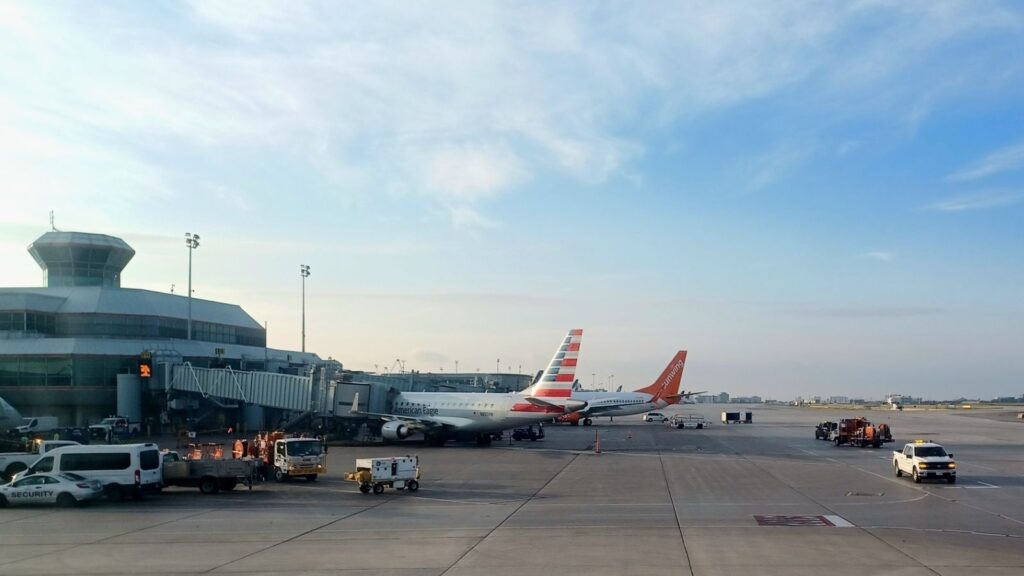
A major breakdown in the United States air-traffic control system brought cross-border travel to a sudden standstill on Friday, November 13, 2026, leaving Canadian passengers facing cancellations, delays and uncertainty. The Federal Aviation Administration (FAA) ordered a nationwide ground stop after communications problems disrupted the American network responsible for managing aircraft between airports.
The disruption immediately affected Canada’s busiest aviation hubs. Toronto Pearson and Montréal–Trudeau suspended U.S.-bound operations, while Vancouver and Calgary introduced traffic-management measures as the problems spread across international routes. Although Canadian air-traffic systems continued operating normally, the effects reached well beyond American airports.
The FAA lifted its nationwide ground stop Friday evening, but the backlog of stranded aircraft, displaced crews and disrupted schedules meant that restoring normal service would take considerably longer.
An FAA Communications Breakdown That Reached Across the Border
The disruption began shortly before 4 p.m. Eastern on November 13, when the FAA ordered departures halted nationwide because of serious communications problems affecting the American air-traffic network. U.S. Transportation Secretary Sean Duffy confirmed that the issue involved all 22 regional Air Route Traffic Control Centers, the facilities responsible for managing aircraft travelling between airports. Unlike individual airport towers, these centres coordinate aircraft across enormous stretches of airspace. When their ability to communicate becomes unreliable, the consequences can extend across thousands of flights. The FAA instructed departing aircraft to remain grounded, while planes already airborne were permitted to continue. International arrivals were assessed individually rather than automatically prohibited. For passengers, that meant a flight could be fully boarded, properly staffed and technically ready to depart, yet still be unable to leave because the wider aviation network could not guarantee normal operations.
The seriousness of the incident became clearer as officials explained that the shutdown was a precaution intended to protect aviation safety. A nationwide ground stop is exceptionally unusual, with the previous comparable interruption occurring in January 2023, when an FAA computer failure disrupted the system used to distribute important flight information to pilots. The November 13 breakdown involved communications infrastructure rather than that same notification system. Homeland Security Secretary Markwayne Mullin said investigators had not identified evidence of a malicious cyberattack, although authorities were examining whether newer technology had overwhelmed older equipment. That explanation remained preliminary rather than a confirmed technical finding. The FAA eventually lifted the ground stop after more than four hours, allowing departures to resume. However, the decision could not immediately reverse the disruption already spreading through airline schedules. Aircraft sitting at unexpected airports, crews reaching their operating limits and passengers missing connections created problems that would continue after controllers regained the ability to manage traffic.
Toronto Pearson and Montréal–Trudeau Suspend U.S. Flights as Passengers Scramble
At Toronto Pearson International Airport, the consequences were immediately visible in the departure terminals. Airport officials reported that no U.S.-bound departures or arrivals were scheduled during the shutdown, while flights that did not require American airspace could continue operating. The Greater Toronto Airports Authority increased staffing, deployed additional passenger-assistance teams and coordinated aircraft parking arrangements as the disruption grew. For affected travellers, the distinction between an airport closure and a suspension of specific routes offered little immediate comfort. The Canadian Press described passengers standing beside their luggage, checking mobile phones for updates and approaching airline employees for information. Toronto resident Brenda Zhou and her daughter, Athena Guan, were preparing to fly to Miami for a college soccer identification camp when U.S. customs processing was interrupted. They were subsequently rebooked on a Saturday evening flight to Tampa, creating the likelihood of missing part of the camp. Hotel reservations, rental-car expenses and registration fees added financial uncertainty to an already disappointing situation.
Montréal–Trudeau International Airport faced similar difficulties, announcing that all flights between Montreal and the United States were suspended until further notice. Airport authorities warned passengers to expect cancellations and delays, emphasizing that travellers should obtain updated information directly from their airlines. The disruption affected both sides of the border, including Canadians travelling to American destinations and passengers in the United States attempting to return home. Those already at airports encountered some of the greatest uncertainty because their travel plans depended on decisions being made across a national aviation network rather than at individual departure gates. The consequences extended beyond Toronto and Montreal. Ottawa International Airport reported that American arrivals and departures were being affected, with officials also preparing for the possibility of diverted aircraft. These developments demonstrated that Canada’s exposure was not limited to the four largest hubs. Airports across the country could experience secondary disruptions whenever American flight operations stopped unexpectedly, particularly when aircraft or connecting passengers were already committed to complicated itineraries.
Vancouver and Calgary Introduce Traffic Restrictions as Disruption Spreads
The impact on Canada’s western airports developed somewhat differently. Vancouver International Airport initially reported delays involving U.S.-bound departures and certain international services whose flight paths crossed American airspace. As airlines adjusted their schedules, cancellations to American destinations increased, alongside secondary disruptions affecting some domestic and international flights. Calgary International Airport was also included in NAV CANADA’s emergency traffic-management measures, intended to control the movement of aircraft as flight schedules changed. Importantly, those measures did not mean Canada’s own air-traffic control network had failed. NAV CANADA, the organization responsible for managing civil air navigation across the country, confirmed that its systems continued functioning normally. The organization introduced traffic-management procedures at Toronto Pearson, Montréal–Trudeau, Calgary and Vancouver to accommodate changing flight volumes and potential diversions. Unlike Toronto and Montreal, where widespread U.S. flight suspensions were explicitly reported, the measures at Calgary and Vancouver were not independently confirmed as identical airport-wide suspensions of American service.
The wider impact also extended beyond flights scheduled to land in the United States. Air Canada warned that routes connecting Canada with the Caribbean and South America could be affected, particularly when their planned journeys involved American airspace. That distinction made the disruption more complicated for airlines and passengers alike. A traveller departing Vancouver for a destination outside the United States could still encounter delays because of the aircraft’s intended route or its earlier assignments. Canadian airports also had to prepare for unexpected traffic patterns, including the possibility that aircraft heading toward American destinations would require alternative arrangements. Federal Transport Minister Steven MacKinnon confirmed that Canada was prepared to assist American authorities, including helping accommodate U.S.-bound aircraft when necessary. WestJet similarly indicated that it was monitoring developments and following regulatory instructions. The situation demonstrated why traffic-management measures remained important even when Canadian airports themselves were fully operational. Maintaining safe aircraft movements, coordinating available gates and responding to sudden schedule changes required cooperation among airport authorities, air-traffic controllers and airlines across both countries.
Ground Stop Lifted, but Thousands of Cancellations and Delays Continue
Although the FAA lifted its nationwide ground stop Friday evening, the scale of the disruption meant that normal schedules could not immediately resume. Reuters reported figures from Flightradar24 showing more than 4,700 flight cancellations and approximately 10,000 delays on Friday, with roughly 700 additional flights already cancelled for Saturday. Those figures reflected the broader U.S. aviation disruption rather than cancellations at Canadian airports alone. Air Canada announced that it was cancelling its remaining flights to and from the United States for Friday evening, illustrating how serious the operational backlog had become. Aircraft and flight crews were stranded away from their scheduled locations, making it difficult for airlines to restore connections even after the original restrictions ended. For passengers, the consequences were deeply personal. Samantha Chowen, a Regina resident travelling from Nashville to Toronto, told The Canadian Press that her flight was stopped after boarding. Having injured her knee during her trip, she faced additional uncertainty about getting home in time for a scheduled medical examination.
The disruption also raised questions about passenger protections, refunds and the costs of unexpected travel interruptions. Under Canada’s Air Passenger Protection Regulations, flight disruptions caused by air-traffic control instructions are generally classified as circumstances outside an airline’s control. Airlines must still meet applicable communication and rebooking obligations, and passengers may qualify for refunds in certain circumstances. However, standard compensation for inconvenience is not automatically required when a disruption is outside the airline’s control. Affected travellers should therefore retain booking confirmations, cancellation notices and receipts while checking directly with their airlines about available arrangements. Beyond the immediate recovery effort, the incident renewed attention on the condition of American air-traffic infrastructure. Investigators were still examining the precise cause, while officials acknowledged the need to modernize aging communications equipment. The consequences for Canada were clear: even with fully functioning domestic air-traffic systems, the country’s aviation network remains closely connected to American operations. A major breakdown south of the border can quickly affect Canadian airports, airlines and passengers far beyond the routes where the original problem occurred.
