On paper, a household with a solid salary should feel comfortable. In practice, many Canadians have watched raises, bonuses and even two incomes disappear into housing, deductions, debt payments and everyday basics that cost far more than they did a few years ago. That disconnect helps explain why “doing okay” can still feel financially precarious.
The problem is not always reckless spending or a lack of discipline. More often, it is a collision between higher fixed costs, thinner buffers and a cost structure that keeps shifting faster than peace of mind returns. These 12 forces help explain why decent earners across Canada are describing the same feeling: money is coming in, but there is still not much room to breathe.
Gross pay and usable cash are not the same thing
A salary can look impressive until it collides with payroll reality. Canadians often compare income in gross terms, but daily life is funded with net pay. Once Canada Pension Plan contributions, Employment Insurance premiums and income taxes are withheld, the number that lands in a chequing account can feel much smaller than the headline salary suggested. That gap matters more than people admit, especially in households that feel socially “middle class” or even “upper middle class” but still find themselves checking balances before ordinary purchases.
The disconnect becomes clearer when income is measured after tax instead of before it. A household can sit above national medians and still feel short on flexibility once fixed bills arrive. This is why many decent earners feel as though they are underperforming financially when they are actually running into arithmetic. The salary is not fake, but the spending power attached to it is far less generous than the gross figure implies.
Wages rose, but prices reset higher

Canadians are not imagining wage growth. Pay has moved up, and in inflation-adjusted terms there has been some improvement since the pre-pandemic period. The problem is that everyday prices did not go back down once inflation cooled. Household budgets are not comparing today with last year’s inflation rate; they are comparing today’s bills with what those same routines used to cost. A raise can be real and still feel useless when it arrives after a broad reset in the price level.
That is why the emotional experience of money lags the data headlines. A worker may be earning more than before, but if groceries, housing, insurance and household essentials all reset upward over the same stretch, the raise becomes defensive rather than liberating. It preserves lifestyle more than it expands it. That is one of the clearest reasons decent-income Canadians keep saying they feel broke: their earnings improved, but the cost of ordinary life moved first and stayed elevated.
Rent still eats too much of the budget

For many renters, the core issue is not extravagance. It is concentration. When shelter becomes the largest line item by a wide margin, the rest of the budget has to squeeze into whatever remains. That changes how a household experiences money. A person can be earning a respectable salary and still feel poor because so much of that income disappears before the month has really started. Rent has a way of converting what should feel like a solid income into a narrow operating budget.
Even where rental markets have softened somewhat, the relief has not erased the damage of the past several years. Someone moving, renewing a lease or trying to upgrade from a cramped unit may still run into monthly costs that overwhelm the pace of income growth. Once shelter takes over the budget, even responsible spending elsewhere can look inadequate. The problem is not always that Canadians are buying too much. Often it is that housing is claiming too much.
Mortgage renewals are resetting middle-class budgets
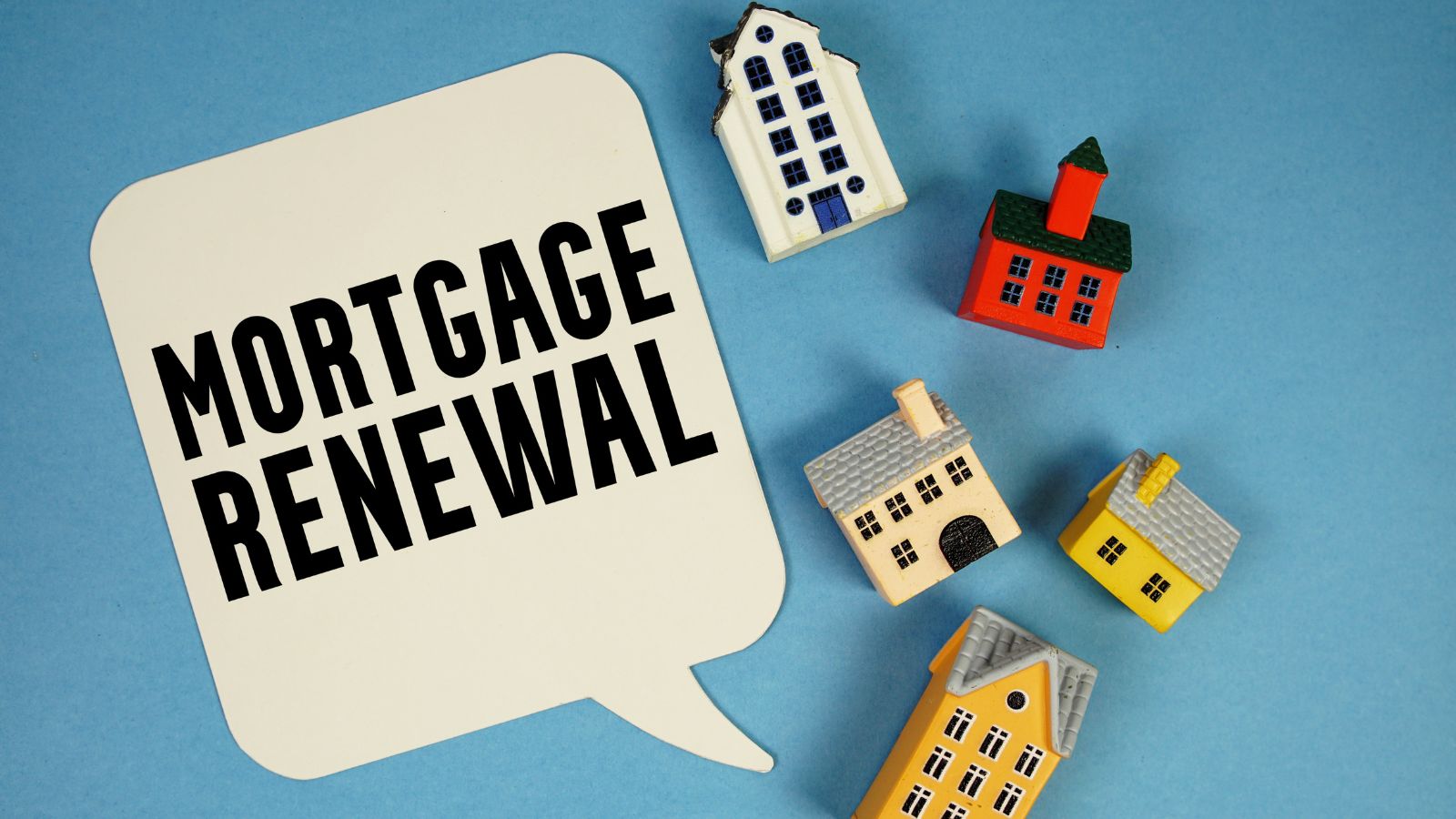
Many homeowners felt secure because they bought years ago, qualified under stress tests and locked in what seemed like manageable payments. The catch is that stability at origination does not guarantee stability at renewal. For borrowers coming off much lower pandemic-era rates, the payment shock can be large enough to alter the entire household budget. A family that once felt comfortably established can suddenly start treating restaurants, travel or kids’ activities like luxury items.
That is one reason the “feeling broke” story now extends well beyond renters or lower-income households. Mortgage renewal pressure lands on people who often look stable from the outside: dual-income professionals, long-time owners, families in good neighbourhoods. Yet once a larger payment arrives, money that used to fund flexibility gets reassigned to staying in the same house. The household has not become irresponsible overnight. It has simply been moved into a higher-cost version of the same life.
Debt payments became their own cost-of-living category

Canada’s household debt burden remains so large that debt service now behaves like a parallel form of inflation. Old borrowing becomes a current fixed expense, and that changes the feel of every paycheque. A household can make decent money and still feel perpetually behind because a meaningful share of monthly income is already committed to credit cards, lines of credit, auto loans or a large mortgage balance before any new spending begins.
This also explains why many Canadians describe financial stress even when headline rates are lower than their recent peak. The balance is what matters, not just the rate. Once obligations are embedded into the monthly budget, they crowd out everything else: savings, repairs, small pleasures and the ability to absorb surprises. Debt has a way of turning past consumption into present anxiety. That is why a respectable salary can still feel thin. Too much of it is already promised away.
Groceries still feel expensive even when inflation cools

Food is one of the hardest categories for households to mentally “normalize.” Even when inflation slows, groceries continue to remind people how much prices have changed because the spending is so frequent. There is no long pause between purchases, no chance to forget the old price and no way to delay the next bill for very long. A household may tolerate a pricier sofa once every few years, but it cannot avoid noticing a more expensive weekly grocery run.
The same pressure spills into meals outside the home. If both supermarket spending and restaurant spending remain elevated, households lose one of their usual pressure valves. Cooking at home feels expensive, but eating out does too. That is why food has such a large psychological effect on the “still feeling broke” question. The category is repetitive, visible and unavoidable. Even good earners can start feeling poor when the most ordinary act in a household budget—feeding everyone—keeps demanding more.
Transportation punishes both city living and suburban compromise

Transportation costs have become harder to escape because they are tightly tied to housing choices. Living closer to work often means paying more for housing. Living farther out can mean lower housing costs but higher fuel, parking, insurance and time costs. That trade-off is brutal for households trying to optimize. What looks like a smart move on a housing listing can become an expensive move once the full commuting burden shows up month after month.
Fuel volatility only makes the tension worse. A sudden jump at the pump lands immediately on families with long commutes, multiple vehicles or school and childcare logistics that require constant driving. In that sense, transportation is not just a separate budget line. It is part of the total cost of where and how a household lives. That is why many decent-income Canadians feel trapped between bad options rather than guilty about bad habits. The cheaper solution often is not actually cheaper.
Cars keep getting pricier even before the loan payment

Vehicle ownership is no longer a simple matter of one monthly payment. The price of the vehicle, the cost of financing, the insurance premium and the inevitable maintenance schedule now pile on top of one another. Even households that can technically “afford” a car often feel stretched by the total chain of costs attached to it. A reliable vehicle may still be necessary for work or family life, but necessity does not make it feel light.
This is especially punishing outside dense urban cores, where going without a car is not realistic. A household can be disciplined, organized and well employed and still feel financially boxed in because one essential machine keeps generating new bills. That is part of what makes the current squeeze so frustrating. It is not always coming from luxury consumption. Often it is coming from the practical infrastructure of everyday life, and the car is one of the clearest examples.
Child care got cheaper, but family logistics are still costly

One of the more hopeful affordability stories in Canada has been child care fee relief. For many families, that has meaningfully reduced a bill that once felt crushing. But lower fees do not automatically create a smooth family budget. Parents still run into wait-lists, limited flexibility, schedule mismatches and care shortages that force work decisions around what spots are available rather than what is most financially efficient.
That is why even dual-income households with strong earnings can still feel stretched. Money may no longer be leaking out through the same fee structure, but it is still being spent in other ways: missed hours, compromised job opportunities, backup arrangements and the sheer friction of coordinating family life. Family affordability is about more than a single price tag. If the system remains hard to access, households will continue to feel strained even when one major bill comes down.
A “decent income” means different things in different postal codes

National salary benchmarks can be deeply misleading because they flatten regional reality. A good income in one part of Canada can feel ordinary or even insufficient in another, especially where shelter dominates the budget. That is why so many households describe a strange split-screen experience: statistically they are doing fine, but locally they feel like they are barely keeping up. The income is real, yet the lifestyle it buys depends heavily on where it is being spent.
The geography problem gets sharper when transportation is added back into the picture. Moving farther from a high-cost core may reduce housing pressure, but it can also raise commuting costs enough to erase much of the savings. The result is that many Canadians do not feel as though they have found a truly affordable choice. They feel as though they have chosen which form of strain they prefer. That is not a mindset problem. It is a location-cost problem.
Thin buffers make ordinary problems feel like financial crises

Feeling broke is not just about how much comes in. It is also about how much slack remains after the essentials are covered. A household with little breathing room can look stable until something small goes wrong. A dental bill, school fee, car repair or appliance replacement can instantly turn a normal month into a stressful one. That is why so many decent earners describe constant low-level anxiety. They are not always insolvent, but they are often one inconvenience away from feeling cornered.
This is also why income alone is a poor measure of financial comfort. A household might pay every bill on time and still feel fragile if there is never enough untouched cash left over to build security. Stability from the outside can look very different from stability on the inside. When the buffer is thin, every expense feels louder. That is the environment in which decent money can still produce a broke feeling: the margin for error is simply too small.
Uncertainty makes people feel poorer before they actually are

Money is partly arithmetic and partly confidence. When households expect more price pressure, job uncertainty or another policy shock, they start behaving defensively even before their balance sheet materially worsens. Spending plans get delayed, savings feel inadequate and every discretionary decision begins to carry extra weight. That emotional layer matters because financial stress is rarely driven by current bills alone. It is also driven by what households fear the next few months will do to them.
That helps explain why so many Canadians report working hard and still feeling as if they are not advancing. The sensation comes from more than one bad number. It comes from a whole environment of high fixed costs, thin margins and uncertainty about what could rise next. In that setting, a decent income stops feeling like a source of momentum and starts feeling like a defensive wall. The household may be surviving just fine, but it no longer feels like it is moving forward.
19 Things Canadians Don’t Realize the CRA Can See About Their Online Income

Earning money online feels simple and informal for many Canadians. Freelancing, selling products, and digital services often start as side projects. The problem appears at tax time. Many people underestimate how much information the CRA can access. Online platforms, banks, and payment processors create detailed records automatically. These records do not disappear once money hits an account. Small gaps in reporting add up quickly.
Here are 19 things Canadians don’t realize the CRA can see about their online income.
