Falsehood used to look clumsy. Now it can sound like a frightened grandchild, appear as a polished executive on a video call, or arrive wrapped in the visual language of breaking news. That shift has turned deepfakes from a novelty into a trust problem that touches politics, finance, hiring, public safety, and everyday conversation.
These 17 deepfake tricks show how synthetic media is being used to exploit urgency, familiarity, and authority. Some are crude once slowed down and examined. Others work precisely because people are busy, distracted, and primed to believe what already feels emotionally or socially plausible.
Cloned Family Emergency Calls
One of the most unsettling deepfake tricks is also one of the simplest: a panicked phone call that sounds exactly like a loved one. The voice may plead for bail money, claim to have been in a car crash, or whisper that a phone was taken and help is needed immediately. What makes the tactic powerful is not cinematic realism but emotional timing. A few seconds of familiar cadence, combined with urgency and fear, can override the instinct to slow down and verify. In many reported cases, the scammer follows up with strict instructions not to call anyone else, cutting off the easiest path to confirmation.
Voice cloning has become more convincing because realistic synthetic speech can be built from short samples gathered from social media videos, voicemails, podcasts, or public clips. Research has also shown that people are no longer consistently good at telling cloned voices from real ones. That makes the family-emergency scenario especially effective: the goal is not perfection, only plausibility long enough to trigger panic. Once trust is hijacked, the request for cash, gift cards, or wire transfers feels frighteningly believable.
Fake Proof-of-Life Kidnapping Media
Virtual kidnapping scams used to rely on imagination. Deepfakes have made them far more persuasive by adding fake evidence. Criminals can now send altered photographs, manipulated short videos, or synthetic voice clips meant to serve as proof that someone has been abducted. A blurred image of a frightened teenager, a whispered audio file, or a shaky clip that appears to show restraint can do exactly what the scammer intends: collapse rational thinking into immediate fear. In that emotional state, details that would normally raise suspicion often go unnoticed.
Law enforcement has warned that these scams often begin with publicly available social media images. Those photos can be repurposed into fabricated “proof-of-life” materials and paired with threats designed to keep families from checking the story. The deception works because it blends two pressures at once: the instinct to act instantly and the visual habit of treating media as evidence. Even when the media is low quality, its very existence can feel persuasive. A frightened family does not need to be convinced for long. It only needs to believe for a few desperate minutes.
Executive Video Calls That Authorize Wires

Corporate fraud has entered a new phase because deepfakes can imitate authority in real time. Instead of a suspicious email with broken grammar, an employee may now see what appears to be a senior executive on a video call calmly approving a transfer, confirming banking details, or asking for unusual discretion. That setting borrows the credibility of modern office life: remote meetings, rushed approvals, and decisions made across time zones. The moment feels routine, which is exactly why the deception can slip through.
One of the clearest examples involved a Hong Kong finance employee who transferred roughly $25 million after a deepfake video conference impersonated the company’s chief financial officer and other colleagues. Cases like that show the danger of combining synthetic face, voice, and workplace context. Even highly trained staff can mistake consistency for authenticity when multiple “people” in a call appear to reinforce the same request. The trick is less about technical wizardry than social choreography. It recreates the cues of hierarchy so convincingly that ordinary safeguards may be bypassed before doubt has time to surface.
Remote Job Interviews With Stolen Identities
Hiring teams increasingly face applicants who are not who they claim to be. In some cases, the fraud involves stolen personal information paired with AI-enhanced video or audio during remote interviews. An applicant may present a face that looks slightly off, a voice that does not quite sync with lip movement, or a polished camera feed that masks real identity. In a labor market where remote recruiting is fast and global, those details can be easy to miss, especially when the person on screen seems prepared, fluent, and technically capable.
This trick matters because its goal is often broader than landing a paycheck. Fraudulent applicants may seek access to internal systems, proprietary data, customer records, or company devices. U.S. authorities have warned that online interviews are being targeted with spoofed voices and possible deepfake techniques, including mismatched facial movement. The danger grows when hiring pipelines prioritize speed over verification. A forged resume used to be the main risk. Now the interview itself can be manipulated, turning what should be a human checkpoint into another surface for synthetic deception.
Official-Sounding Voice Notes From “Government” Contacts

A text message from a senior official used to be suspicious enough. A text accompanied by a realistic voice note can feel far more credible. Deepfake tools allow malicious actors to impersonate public figures, government representatives, or senior staffers with just enough vocal resemblance to establish trust. The target may hear a calm, familiar-sounding message asking to continue the conversation on a different platform, share account details, or provide information for an urgent matter. Because the tone sounds measured and authoritative, the approach often feels more legitimate than a written message alone.
Authorities have warned that threat actors are already using AI-generated voice messages in impersonation campaigns involving senior officials. This tactic is especially effective because voice communicates rank and intimacy at the same time. It can make a stranger sound like someone already known or institutionally trusted. Once that bridge is crossed, the attacker does not need a flawless impression. The message only needs to sound plausible enough to move the interaction into a less visible channel, where requests for credentials, contacts, or money can be framed as routine administrative business.
Election Robocalls That Borrow a Candidate’s Voice

Deepfakes have given political deception a sharper edge by letting bad actors mimic the voices of real candidates. Instead of posting crude misinformation, they can place robocalls or circulate audio clips that sound like a public figure speaking directly to voters. The effect can be powerful because people are used to hearing campaigns through recorded calls, short clips, and social media snippets. A false message delivered in a recognizable voice can feel more intimate and more authentic than a graphic or headline ever could.
The New Hampshire robocall that mimicked President Joe Biden became a warning sign for this tactic. The call falsely suggested voters should “save” their vote for the general election rather than participate in the primary, turning synthetic audio into a tool of voter suppression. The incident showed how little time is needed for a fake voice to create confusion. Even brief, low-context audio can spread uncertainty, especially when it reaches people in the exact channels where campaign communication already happens. In politics, doubt itself can be strategic, and deepfakes manufacture that doubt cheaply and fast.
Celebrity Endorsement Investment Videos
Celebrity deepfakes have become one of the internet’s most profitable lies. The format is familiar: a famous business figure, actor, or television personality appears to endorse a trading platform, crypto opportunity, or side-income system. The video may look like a clipped interview, a news segment, or a social media testimonial. What sells the scam is not only star power but the illusion that a trusted face is casually revealing a financial shortcut. That emotional shortcut is powerful because it substitutes recognition for due diligence.
Consumer protection agencies have repeatedly warned that investment scams now use deepfake celebrity videos and fake news-style promotions to reel victims in. Often the first payment request is modest, sometimes around a few hundred dollars, making the entry point feel low risk. From there, the victim is pushed toward larger deposits while fake dashboards or fake account managers create an impression of growth. Deepfakes make this strategy stronger because they collapse skepticism at the first touchpoint. A fraudulent pitch wrapped in a familiar face can travel faster than a banner ad and seem far more persuasive than a stranger’s promise.
Fake News Anchor Segments That Sell Scams

One of the most damaging deepfake formats borrows the look of journalism. A scammer may create a video that appears to feature a polished studio anchor introducing a breakthrough investment, a consumer warning, or a high-profile interview. The graphics look familiar, the delivery sounds neutral, and the pacing mimics professional news production. That aesthetic matters because audiences have been trained for decades to associate studio presentation with vetting, editorial control, and public credibility. Even skeptical viewers can momentarily lower their guard when something looks like broadcast media.
Researchers and media analysts have noted that fabricated clips of newsreaders are increasingly being used to advertise bogus investments and other scams. This tactic works especially well online, where context is thin and short clips are detached from full programs, station websites, or original broadcasts. A convincing ten-second segment can circulate widely before anyone checks whether the anchor ever said those words. The result is not only financial harm but reputational spillover. Each fake segment chips away at confidence in real reporting, making trustworthy media easier to imitate and harder to defend.
Romance Scammers With AI-Built Faces, Voices, and Videos
Romance fraud has always depended on performance, but deepfakes have expanded the script. Scammers no longer need to rely only on stolen photographs and carefully timed text messages. They can now generate believable profile images, send synthetic voice clips, and even stage short video interactions that make a fake identity feel more emotionally grounded. That added realism can turn hesitation into attachment. Once a victim begins to feel that the person is genuine, requests for money, crypto transfers, or emergency help become more difficult to reject.
Financial regulators and law enforcement have warned that AI tools are being used to create the appearance of real romantic partners and investment mentors, often blending emotional manipulation with financial fraud. In many cases, the relationship evolves into a pitch for trading or crypto platforms, with fake account balances used to reinforce trust. The deepfake element matters because it fills the old gaps in the story. The scammer can now “appear,” “speak,” and “prove” existence on demand. That synthetic intimacy is what makes the fraud feel personal rather than procedural.
Social Media “Proof” Packs That Make Fake People Look Real
A single fake profile is less persuasive than a whole package of evidence. Deepfake scammers increasingly build what can be called proof packs: polished profile photos, casual-looking selfies, short voice notes, video snippets, and fragments of personal history that appear to support one another. None of the pieces needs to be perfect. Their power comes from accumulation. When a profile has multiple forms of media and a coherent persona, people tend to stop asking whether the person exists and start asking only what kind of person they are.
This approach is strengthened by research showing that synthetic faces can be extremely hard to distinguish from real ones and may even be rated as more trustworthy. That is a dangerous combination for an internet culture built on fast judgments. A fake person with an attractive headshot, a believable voice note, and a few socially legible details can pass initial scrutiny with surprising ease. Deepfakes do not just falsify one image; they help fabricate an identity ecosystem. Once that ecosystem exists, scams involving friendship, hiring, dating, or investment can unfold on a much more stable foundation of manufactured credibility.
Deepfake IDs That Slip Past Verification
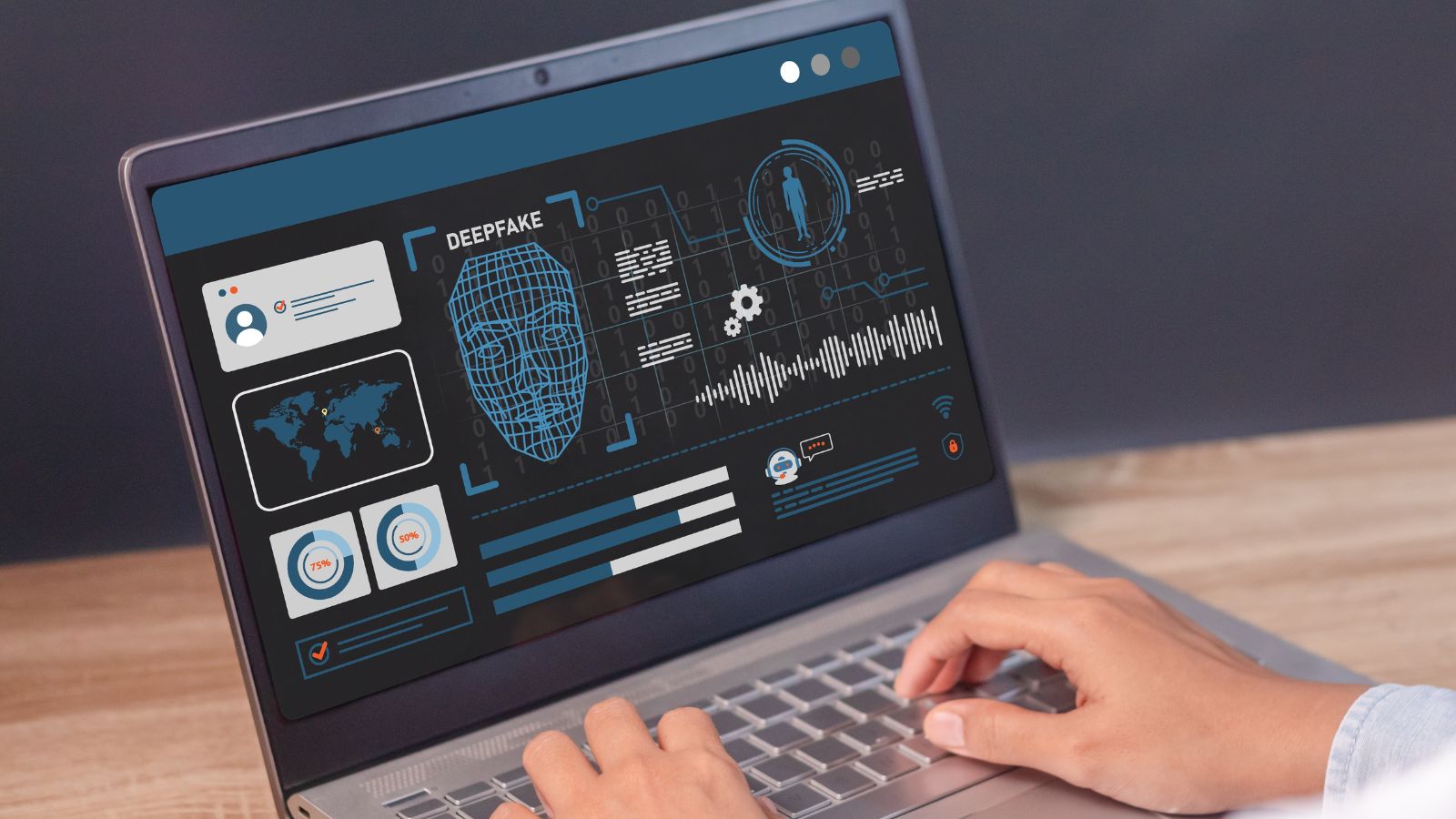
Identity verification systems were built around the idea that forged documents take skill and time. Generative AI has changed that equation. Criminals can now alter or generate identity documents, supporting photos, and related media quickly enough to pressure digital onboarding systems and weak review processes. If a fake driver’s license is paired with a matching selfie, a synthetic portrait, or manipulated video, the deception becomes much harder to catch through routine screening. The goal is often not elegance but access: opening accounts, passing know-your-customer checks, or bypassing fraud controls.
Financial crime authorities have warned that criminals are using generative AI to create or alter documents such as passports and driver’s licenses, as well as supporting images and videos designed to circumvent verification. This matters because many online services increasingly depend on remote identity checks rather than in-person inspection. A system that treats uploaded visuals as neutral evidence can be gamed if the underlying media itself is synthetic. Deepfakes, in this sense, do not simply imitate people. They challenge the reliability of the digital gates that decide who is allowed to enter financial and institutional systems.
Hijacked Livestreams With Synthetic CEOs and QR Codes
Livestream deepfakes exploit one of the internet’s strongest trust signals: liveness. When viewers believe they are watching an event unfold in real time, suspicion drops. Scammers have taken advantage of that by hijacking channels or creating counterfeit streams that appear to show well-known tech leaders speaking live, often alongside QR codes and promises of crypto giveaways or limited-time offers. The presence of a moving face, a recognizable executive, and a live viewer count creates the sensation that thousands of other people are witnessing the same thing, which can lower skepticism even further.
Several high-profile incidents have shown how effective this format can be. Fake streams have used synthetic versions of business leaders and repurposed old footage while directing viewers to scam sites or wallet addresses. In some cases, fake broadcasts drew very large audiences, aided by artificial engagement and platform visibility. This is deepfake fraud at its most platform-native: the scam is not just the face on screen but the entire performance of legitimacy around it. Viewer counts, branding, timing, and visual polish all combine to make a fraudulent event feel socially validated.
Synthetic Disaster and Conflict Images That Pull in Donations

Disaster imagery has always moved quickly online, but AI has made it easier to flood feeds with fabricated scenes of suffering. A fake image of a collapsed building, an injured child, or a ruined neighborhood can travel fast because it fits what audiences already expect during crises. When those visuals are paired with donation links, charity appeals, or urgent repost requests, they can redirect sympathy into fraud. The emotional force of humanitarian imagery is precisely what makes this trick so effective. People want to help before they have time to investigate.
Authorities have warned that AI-generated images and videos are being used in schemes involving fake charities, disaster narratives, and manipulative crisis content. The risk extends beyond direct financial theft. Fabricated media can distort public understanding of real events, overwhelm accurate reporting, and make authentic documentation easier to dismiss as “just another fake.” In a crisis, that erosion of trust has practical consequences. Donations may go to scammers, genuine organizations may struggle for credibility, and audiences may become numb or cynical. Deepfakes turn compassion into a target by exploiting the speed at which emotional content spreads.
Lip-Synced Clips That Put Real Words in the Wrong Mouth
Not every dangerous deepfake starts from scratch. Some of the most persuasive ones begin with real footage of a real person and alter only the speech. A face remains familiar, the lighting looks natural, and the setting is authentic. What changes is the spoken content. Lip-syncing and voice replacement can make it appear that a politician, executive, journalist, or public figure said something they never said. Because the base video is real, viewers often inherit its credibility without noticing that the meaning has been rewritten.
This kind of manipulation is especially corrosive because it weaponizes the ordinary way people consume short video clips online. A ten-second excerpt is rarely checked against a full interview, official transcript, or longer recording. That makes synthetic speech over real visuals a perfect vehicle for smear campaigns, market rumors, or reputational attacks. It also increases confusion after the fact. Even once a clip is debunked, the emotional impression can linger. The face was real, the setting was real, and the memory of having “seen it” can be difficult to unlearn.
Fake Audio Leaks, Confessions, and Smear Recordings
Audio has a special persuasive force because it feels intimate and unguarded. A supposed leaked call, private confession, or candid outburst can spread quickly even without video. Deepfake tools have made those fabricated recordings more accessible, allowing bad actors to imitate voices for blackmail, reputational sabotage, office politics, or political disruption. A fake recording does not need studio quality to do damage. In fact, slight distortion can make it seem more authentic, like something secretly captured rather than carefully produced.
The problem is amplified by the way people treat leaked audio as raw truth. A written statement can feel curated; a voice recording sounds direct. Researchers have found that listeners struggle to reliably identify cloned voices, which gives fabricated audio an unusually dangerous advantage. A convincing fake can circulate long before forensic analysis catches up, and the denial may arrive too late to undo the harm. Whether the target is a school principal, a company leader, or a public figure, the core trick is the same: use the emotional realism of a voice to create a memory of wrongdoing that never happened.
Bot-Boosted Networks of Fake Profiles and Comments
Deepfakes become more persuasive when they are not standing alone. A fake video, audio clip, or identity looks more credible when it is surrounded by comments, reposts, testimonials, and engagement that suggest wide public belief. That is why many modern deception campaigns pair synthetic media with networks of fake or automated accounts. The media delivers the initial emotional hook; the coordinated amplification supplies social proof. A scam, rumor, or fabricated persona then appears not merely visible but widely accepted.
Law enforcement has warned that generative AI is making it easier to create large numbers of fictitious social media profiles and scale social engineering operations. In practice, this means deepfake content can arrive pre-validated by an artificial crowd. View counts can be inflated, comment sections can be seeded, and fake communities can be built around fraudulent narratives. The tactic is powerful because people often use consensus as a shortcut for truth. When dozens or thousands of accounts appear to endorse something, many assume somebody else must already have checked it. That assumption is exactly what coordinated synthetic ecosystems are designed to exploit.
The Liar’s Dividend
Perhaps the most damaging deepfake trick is the one that works even when no fake is present. As synthetic media becomes more common, real evidence becomes easier to deny. This phenomenon is often called the liar’s dividend: the mere existence of convincing deepfakes gives dishonest people a ready-made excuse to dismiss authentic recordings, videos, and screenshots as fabricated. In other words, deepfakes do not only create falsehood. They also create shelter for real misconduct by making reality itself easier to dispute.
Researchers and international organizations have warned that this may be the deepest trust problem of all. Once audiences become unsure whether any clip, call, or image can be believed, verification becomes slower, polarization deepens, and bad-faith denial gets stronger. The damage reaches far beyond scams. Journalism, public accountability, courtroom evidence, and ordinary interpersonal trust all suffer when authenticity becomes perpetually negotiable. That is why deepfakes are not just a technical issue. They are a social one. The internet becomes harder to trust not only because more lies are possible, but because truth becomes easier to challenge.
19 Things Canadians Don’t Realize the CRA Can See About Their Online Income

Earning money online feels simple and informal for many Canadians. Freelancing, selling products, and digital services often start as side projects. The problem appears at tax time. Many people underestimate how much information the CRA can access. Online platforms, banks, and payment processors create detailed records automatically. These records do not disappear once money hits an account. Small gaps in reporting add up quickly.
Here are 19 things Canadians don’t realize the CRA can see about their online income.
