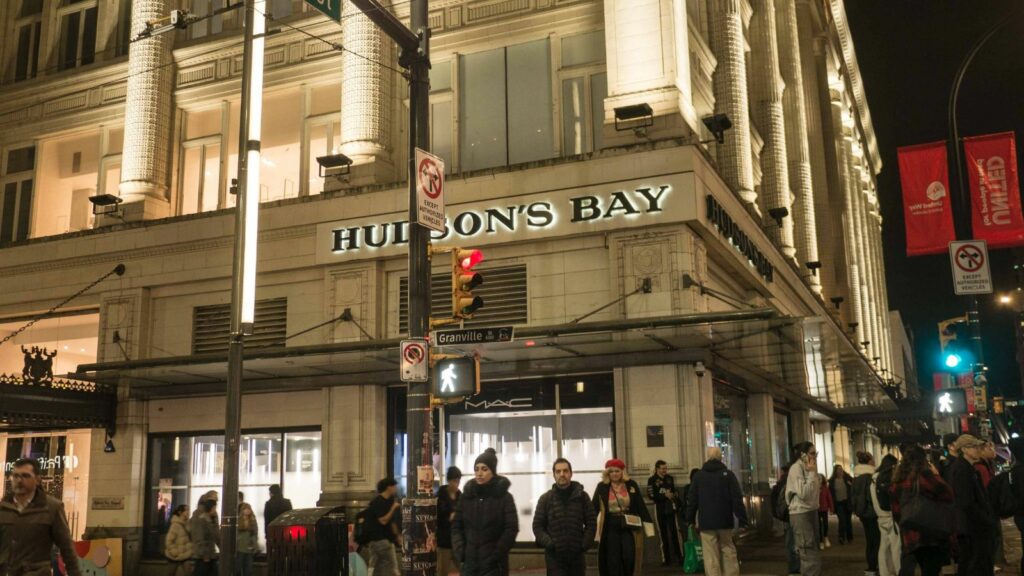
Canadian brand nostalgia has been feeling unusually fragile lately. Names that once filled malls, closets, garages, school supplies, coffee runs, family road trips, and downtown storefronts are now shrinking, changing hands, moving online, or surviving mostly as memories. Some are gone entirely. Others still exist, but not in the familiar form that made them feel woven into everyday Canadian life.
These 20 Canadian brands stand out because their fading presence tells a larger story about retail disruption, private ownership, changing habits, global competition, and the slow disappearance of once-common national touchstones.
Hudson’s Bay
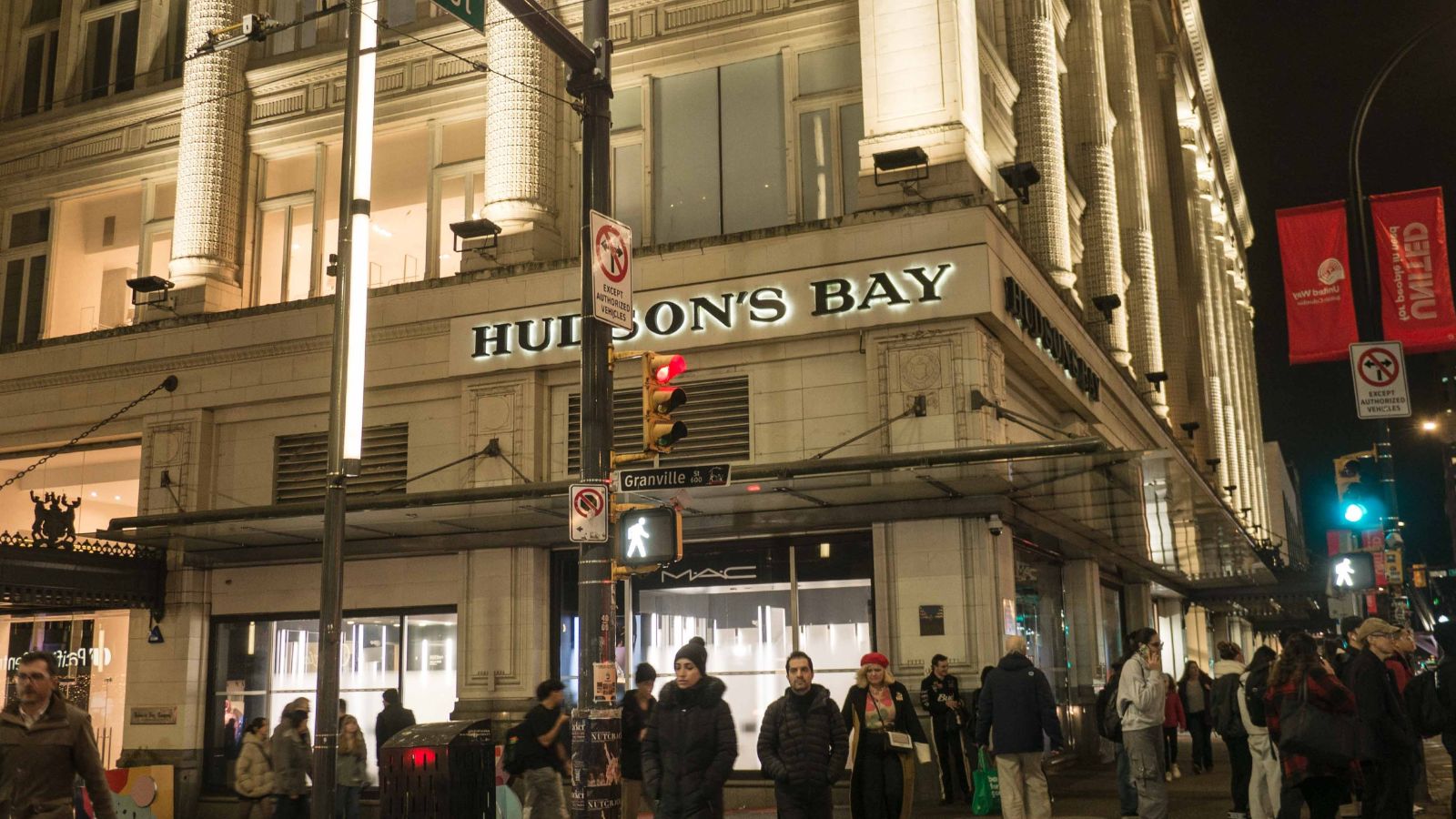
Hudson’s Bay carried a kind of national weight that few retailers could match. Its origins reached back to 1670, and for generations the Bay was less a store than a civic landmark: a place for school clothes, wedding registries, winter coats, Christmas windows, and those unmistakable striped blankets. Yet by 2025, the old department-store model had become painfully exposed. Large downtown stores needed traffic that never fully returned after the pandemic, while online competition and cautious household spending made vast selling floors harder to justify.
The emotional shock came from how quickly the familiar name moved from “troubled” to “liquidating.” Stores that had anchored malls for decades became closing-sale sites, and the brand’s intellectual property moved to Canadian Tire. The stripes may live on as merchandise, but the department-store experience that made Hudson’s Bay feel like a Canadian institution has largely slipped out of daily life.
Zellers
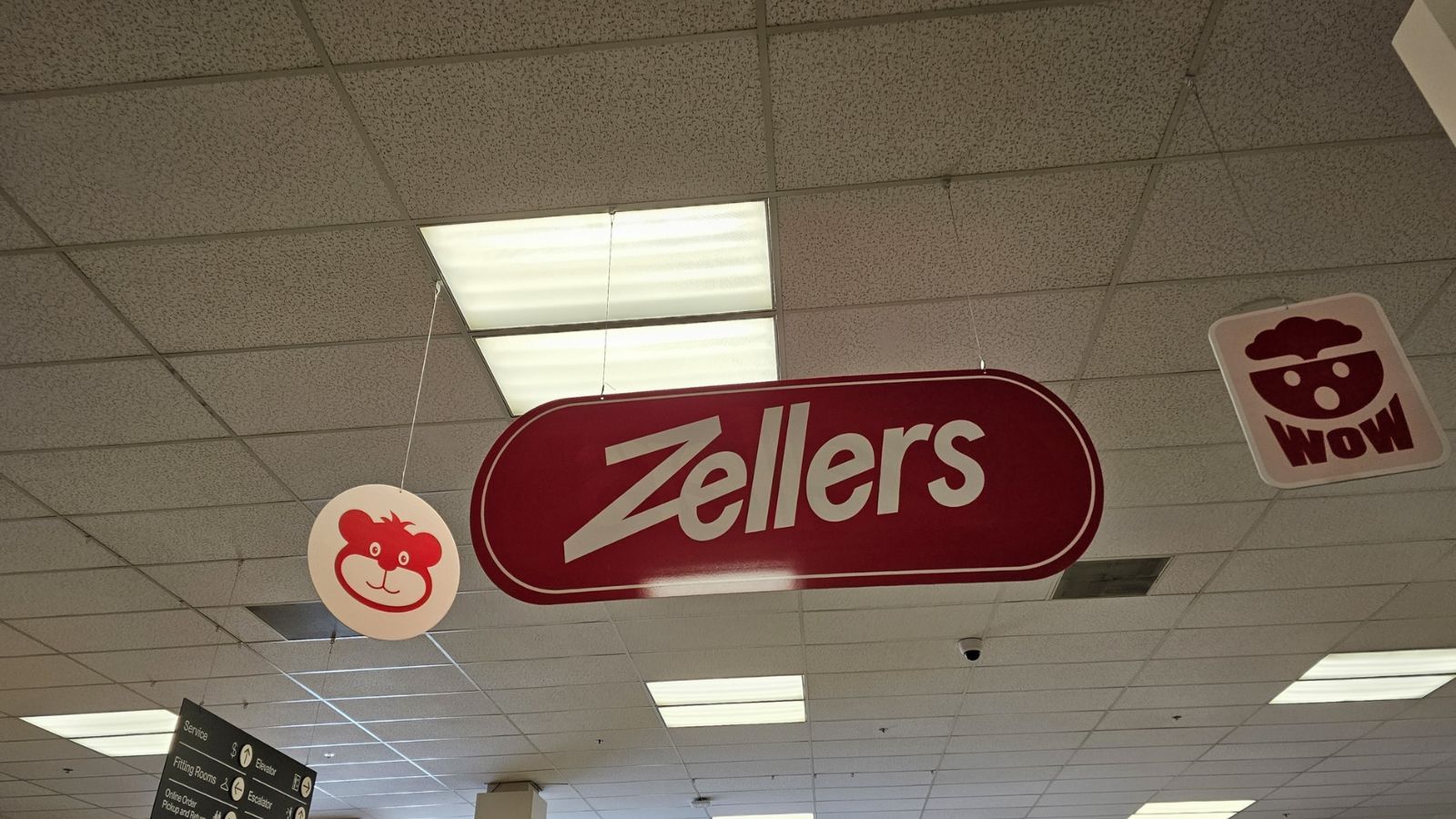
Zellers is one of those names that refuses to disappear completely, which may be why its decline feels so strange. At its peak, it represented the practical side of Canadian shopping: affordable housewares, school supplies, family clothing, and the in-store diner that became a nostalgia machine of its own. The brand’s retreat accelerated after many leases were sold to Target, and the original chain effectively vanished from everyday Canadian retail by the early 2010s.
Recent revivals have kept the name alive, but not quite the old feeling. A store-within-a-store version inside Hudson’s Bay offered a flash of recognition, then became tangled in Hudson’s Bay’s own collapse. Later attempts under new ownership suggest there is still value in the Zellers name. Still, the brand’s modern form feels more like a memory being tested than a full return to the Canadian discount-retail role it once owned.
Sears Canada

Sears Canada used to occupy a dependable place in Canadian households. It was where families bought appliances, mattresses, school clothes, tools, catalogue items, and Christmas gifts. The catalogue alone made Sears feel present in towns where big malls were far away. For many Canadians, the brand was associated with durability and middle-class predictability: Kenmore appliances, Craftsman tools, and big seasonal flyers arriving at the door.
Its final closure in 2018 marked more than another retail bankruptcy. It removed a familiar bridge between department-store shopping, catalogue culture, and suburban mall life. Thousands of employees were affected, and former Sears spaces became reminders of how hard it had become for traditional anchors to compete. The brand still sparks recognition, but largely as a symbol of a retail era that assumed big stores, broad inventories, and long-term customer loyalty would last forever.
Eaton’s

Eaton’s had already disappeared before today’s retail upheaval, but its absence still hangs over Canadian shopping culture. For much of the 20th century, Eaton’s was a defining national merchant, famous for its catalogue, downtown flagships, and holiday traditions. The Eaton’s name carried so much cultural force that many Canadian malls, streets, and shopping habits were built around it.
The company’s bankruptcy in 1999 and the eventual disappearance of the brand in the early 2000s showed that even the most established Canadian names could lose relevance. Eaton’s struggled as shopping moved toward suburban formats, discount competition, and new specialty retailers. Today, the name survives mostly through architecture, family stories, archived catalogues, and Christmas-window memories. Its fading is a reminder that a brand can be nationally beloved and still fail to adapt quickly enough.
BlackBerry

BlackBerry did not simply sell phones; it shaped how professionals communicated. The keyboard, blinking red light, and secure messaging once made the Waterloo-born brand a status symbol in business, government, and media circles. At its height, “BlackBerry” was practically shorthand for mobile productivity, long before smartphones became entertainment screens.
The company still exists, but the consumer identity most Canadians remember has vanished. BlackBerry shifted toward cybersecurity, embedded software, and automotive systems, with QNX now powering technology inside millions of vehicles. That may be a smart business transformation, but it also means the brand has slipped away from pockets, meetings, and everyday conversations. For Canadians who remember thumb-typing emails on a Bold or Curve, BlackBerry’s survival as enterprise software feels like watching a public icon become invisible infrastructure.
Bombardier

Bombardier once felt like proof that Canada could build big things for the world: snowmobiles, regional jets, trains, and eventually the ambitious C Series aircraft. The company’s name appeared in airports, transit systems, and aerospace stories with a distinctly Canadian sense of industrial pride. Its scale made it more than a brand; it was a symbol of engineering confidence.
The modern Bombardier is far narrower. It sold its rail business to Alstom and exited the commercial aircraft program that became the Airbus A220. Today, Bombardier is focused mainly on business jets, a profitable and specialized field, but not one with the same public visibility. The company has not disappeared, yet much of what made the name familiar to ordinary Canadians has moved elsewhere. The brand feels less like a national industrial giant and more like a premium niche manufacturer.
Nortel

Nortel’s disappearance remains one of the most dramatic corporate collapses in Canadian history. At its peak, the telecom equipment maker was one of the country’s most valuable companies and a major force on the Toronto Stock Exchange. Its technology helped build communications networks, and its workforce represented a generation of Canadian engineering ambition.
The fall was brutal. Nortel filed for bankruptcy protection in 2009, and years of asset sales, legal fights, creditor disputes, and patent battles followed. For employees, investors, pensioners, and the wider tech sector, the collapse left long shadows. Nortel now exists mainly as a cautionary name in Canadian business history. Its fading feels especially sharp because it was not a slow lifestyle-brand decline; it was the sudden loss of a company many thought would define Canada’s future in global technology.
Mountain Equipment Company

MEC once carried an unusually strong emotional bond with Canadian outdoor shoppers because it was not just a retailer; it was a co-op. Members bought backpacks, rain shells, tents, climbing gear, paddling supplies, and cycling equipment with a sense of shared ownership. The green logo suggested practical adventure and a certain Canadian trustworthiness: less flashy than global outdoor brands, more community-minded than a typical chain.
That identity changed when the co-op’s assets were sold in 2020 to a private investment firm. The stores continued, but the sense of member ownership was gone. A later sale to a Canadian-led investor group revived some optimism, yet the old MEC feeling remains difficult to recreate. The brand still has stores and loyal customers, but its most distinctive quality—the co-operative structure that made shoppers feel personally attached—has already slipped away.
Le Château

Le Château was once a fixture of Canadian malls, especially for shoppers looking for going-out clothes, prom dresses, clubwear, office pieces, and sharp shoes at accessible prices. Its stores had a distinct mood: dramatic lighting, glossy displays, and a sense that ordinary mall shopping could become a little more glamorous. For many Canadians, it was tied to first interviews, weddings, graduations, and nights downtown.
The brand filed for creditor protection in 2020 and closed its stores, ending the physical mall presence that made it so recognizable. It later relaunched online under Suzy Shier ownership, with some shop-in-shop placements. That preserved the name, but not the same cultural footprint. Le Château still has brand equity, especially in occasion wear, yet the old experience of walking into one of its stores while mall speakers played overhead is mostly gone.
Addition Elle

Addition Elle mattered because it served a customer many mainstream fashion retailers treated as an afterthought. Long before inclusive sizing became a louder industry conversation, the brand offered plus-size clothing in a dedicated retail environment. Its stores gave shoppers access to denim, lingerie, workwear, casual pieces, and seasonal fashion without having to search through limited racks at the back of a department store.
Reitmans closed Addition Elle during its restructuring, and the loss was felt beyond simple store count. It removed a familiar national plus-size banner from malls at the same time many consumers were asking for more size diversity, not less. Some categories and customers shifted to Penningtons or online alternatives, but Addition Elle had its own identity. Its disappearance showed how restructuring can erase brands that served specific communities well.
Thyme Maternity

Thyme Maternity occupied a very specific place in Canadian retail: it was one of the few national chains built around pregnancy and early motherhood. For many shoppers, it was where work pants, nursing tops, hospital-bag basics, and baby-shower outfits came from during a short but important life stage. Its appeal was practical, but also emotional; maternity shopping often happens at a moment when bodies, budgets, and routines are changing quickly.
When Reitmans closed Thyme Maternity during restructuring, the brand’s disappearance left a gap that online shopping did not fully replace. Maternity wear is a category where fit, comfort, and fabric often matter in person. Without a familiar mall-based option, customers had to rely more on general retailers, second-hand groups, or e-commerce. Thyme’s fading shows how niche retail can vanish even when the need it served has not gone away.
Aldo
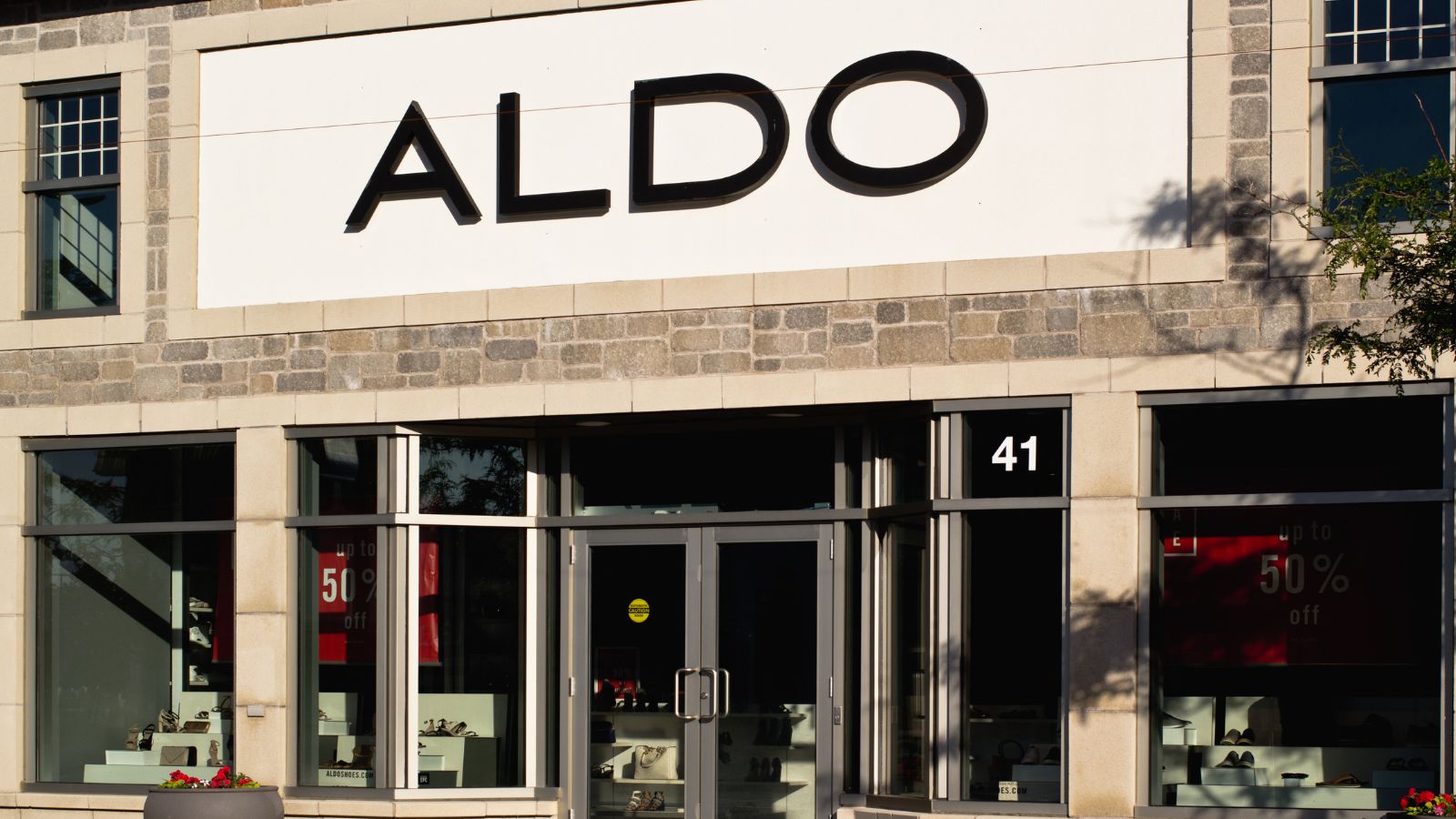
Aldo remains active, but its Canadian-mall dominance no longer feels as automatic as it once did. Founded in Montreal, the brand became a global footwear name with stylish but accessible shoes, bags, and accessories. For years, Aldo stores seemed nearly unavoidable in shopping centres, especially for dress shoes, work footwear, and trend-driven seasonal pairs.
The company’s creditor-protection filing in 2020 revealed how vulnerable even internationally known Canadian retailers had become. Pandemic closures accelerated pressure, but footwear retail was already being reshaped by online shopping, sneaker culture, fast fashion, and direct-to-consumer brands. Aldo later completed its restructuring, which is a meaningful survival story. Still, the brand’s aura has changed. It feels less like the default mall destination for affordable style and more like a legacy player trying to stay visible in a crowded global footwear market.
Second Cup

Second Cup once felt like Canada’s answer to the coffeehouse boom. Before specialty coffee chains became ubiquitous, its cafés offered a warmer, more relaxed alternative to quick-service counters. Students lingered, office workers met between appointments, and neighbourhood regulars knew which location had the best seating. Founded in Toronto in the 1970s, the brand built familiarity through the idea of coffee as a place, not just a drink.
The modern landscape is far tougher. Starbucks, Tim Hortons, independent cafés, drive-thru habits, delivery apps, and remote work have all reshaped coffee routines. Second Cup was sold to Foodtastic in 2021, with promises of renewed growth, but its presence no longer feels as prominent as it did in many city centres and malls. The brand survives, yet its role as a default Canadian café has quietly weakened.
Roots

Roots still has strong recognition: the beaver logo, salt-and-pepper sweats, leather goods, cabin imagery, and Olympic-era nostalgia remain deeply Canadian-coded. The brand built its identity around comfort, outdoorsiness, and a soft version of national pride. For decades, Roots managed to feel both casual and iconic, especially when its hoodies and bags became unofficial souvenirs of Canadian life.
Recent developments suggest the company is reassessing its future. Roots announced a strategic review in 2026, including the possibility of a sale. That does not mean the brand is disappearing, and its recent results have included signs of operational progress. But when a brand so closely tied to Canadian identity explores strategic alternatives, it raises the sense that ownership, direction, or positioning could shift. Roots may remain familiar, but its next chapter could feel less certain than its past.
Canada Goose
Canada Goose is not slipping away in the same way as a bankrupt mall chain. It remains globally recognized and sells premium outerwear with a powerful Canadian image. The issue is more subtle: the brand’s once-clear identity as rugged Arctic utility has become tangled with luxury fashion, global expansion, pricing debates, and changing consumer sentiment. What used to read as extreme-weather authenticity can now feel like a status symbol under pressure.
The company has also faced weaker luxury demand in some markets and announced corporate workforce reductions as part of cost-cutting efforts. Those moves do not erase its success, but they do soften the aura of unstoppable growth. For many Canadians, Canada Goose has moved from local pride to global luxury object, often priced beyond ordinary reach. The brand is still visible, but the grounded Canadian familiarity that helped build its reputation feels more distant.
Indigo

Indigo helped reshape Canadian book retail by combining books, gifts, cafés, toys, stationery, and lifestyle merchandise into a browsing experience. For many communities, it became the last large bookstore standing after earlier chains and independents disappeared. Its stores offered warmth: tables of new releases, holiday displays, children’s corners, journals, puzzles, and staff picks that made shopping feel slower than the rest of the mall.
The company’s struggles have made that role feel less secure. Indigo dealt with falling sales, leadership changes, a major cyberattack, and then a take-private transaction in 2024. Going private may give the company breathing room, but it also underscores how difficult the public-market story had become. Indigo still matters because physical bookstores still matter. Yet the brand’s shift from confident national bookseller to company under repair has made its future feel more fragile.
Holt Renfrew
Holt Renfrew still carries prestige, but its footprint has narrowed in ways that make the brand feel less nationally present. For generations, Holts represented Canadian luxury retail: designer floors, cosmetics counters, personal shopping, and big-city elegance. It was never a mass-market chain, but its stores gave certain downtowns and upscale malls a sense of fashion importance.
Closures in markets such as Edmonton, Ottawa, and Quebec City reflected a strategy focused on larger flagship-style stores. From a business perspective, concentrating luxury retail in major markets can make sense. Culturally, though, each closure made the brand feel a little less accessible outside Toronto, Vancouver, Montreal, and Calgary. Holt Renfrew has not vanished; it has become more concentrated. For Canadians who remember local Holts locations as special-occasion destinations, that narrowing can feel like a quiet retreat.
Tilley

Tilley built its reputation on one of the most practical Canadian promises imaginable: a durable travel hat that could survive sun, rain, wind, luggage, and years of use. The brand’s origin story, tied to sailing and founder Alex Tilley, gave it a charmingly specific identity. Its hats became associated with travellers, gardeners, paddlers, retirees, photographers, and anyone who preferred function over flash.
Ownership changes altered the way many longtime fans talked about the brand. Tilley was sold to a subsidiary of U.K.-based Hilco Capital in 2015 and later changed hands again. The company still promotes Canadian design and Made-in-Canada hats, but the original founder-led era has passed. For devoted customers, the concern is less whether Tilley exists and more whether the old promise of stubborn, Canadian-made reliability feels the same. That emotional shift is what makes the brand seem less firmly rooted than before.
Danier
Danier Leather was once a reliable Canadian stop for leather jackets, gloves, handbags, and cold-weather accessories. Its stores appeared in malls across the country, and the brand had a clear proposition: accessible leather fashion with a Canadian retail identity. For shoppers buying a first leather jacket or a winter gift, Danier felt like a known quantity.
The company entered insolvency proceedings in 2016, closed its previous stores, and later relaunched under new ownership with a shortened Danier name and a broader fashion approach. That relaunch kept the brand alive, but it also marked a break from the old Danier Leather identity. The shift reflected wider changes in fashion, including price sensitivity, animal-product debates, online competition, and mall traffic decline. Danier remains recognizable, yet the once-familiar leather-specialist chain has become a smaller and different version of itself.
La Senza
La Senza was once one of Canada’s most visible lingerie retailers, with mall stores that competed directly in a category later dominated by global players. Founded in Canada, the brand grew widely and became familiar for affordable intimate apparel, colourful displays, and frequent promotions. For many shoppers, it was a standard mall stop during the 1990s and 2000s.
Its path became more complicated after ownership changes and intense competition. The brand was sold by L Brands to Regent, and supplier disputes later pushed it into headlines about possible bankruptcy proceedings. Its Canadian footprint also became far smaller than its peak. La Senza still operates, but it no longer feels like the dominant Canadian intimate-apparel name it once was. The decline is especially noticeable because rivals, including La Vie en Rose and international e-commerce brands, have filled much of the space La Senza used to command.
Laura
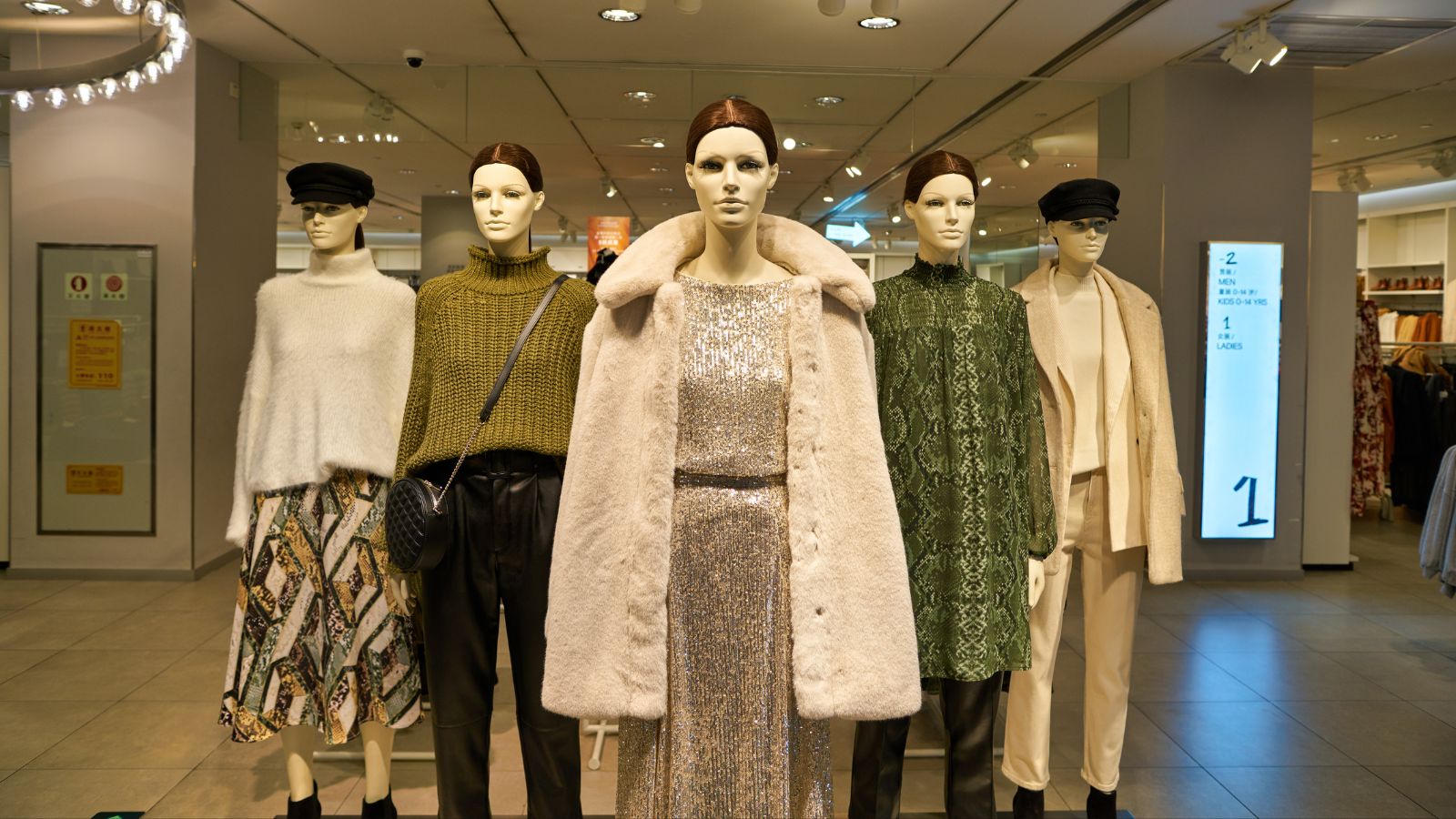
Laura, including related banners such as Melanie Lyne, built a long-running place in Canadian women’s fashion. Its strength came from serving shoppers who wanted occasion wear, office clothing, petite and plus options, and polished mall fashion without chasing ultra-fast trends. The brand’s history stretches back to Montreal in the 1930s, giving it deeper roots than many shoppers may realize.
But Laura’s repeated creditor-protection filings showed how vulnerable mid-market fashion had become. The company sought protection in 2015 and again during the pandemic period, reflecting pressure from debt, changing mall traffic, and shifting consumer habits. It has continued operating, which makes the story more complex than a disappearance. Still, when a brand built around reliable in-person shopping has to restructure more than once, it begins to feel less permanent. Laura remains familiar, but no longer untouchable.
19 Things Canadians Don’t Realize the CRA Can See About Their Online Income

Earning money online feels simple and informal for many Canadians. Freelancing, selling products, and digital services often start as side projects. The problem appears at tax time. Many people underestimate how much information the CRA can access. Online platforms, banks, and payment processors create detailed records automatically. These records do not disappear once money hits an account. Small gaps in reporting add up quickly.
Here are 19 things Canadians don’t realize the CRA can see about their online income.
