
Buying at the edge of affordability can feel rational when prices feel high, choices seem limited, and a lender has already approved the numbers. Yet the mortgage payment is only one part of the commitment. Closing costs, taxes, repairs, renewals, commuting, and interrupted income can turn a manageable purchase into years of financial strain.
These 20 things Canadian buyers should know before stretching for a house focus on the gap between qualifying and living comfortably. They examine how financing rules work, where ownership costs hide, and why flexibility matters long after possession day. The goal is not to discourage homeownership, but to show how a slightly smaller purchase can sometimes protect savings, relationships, career choices, and peace of mind.
Approval Ceiling Is Not a Comfort Ceiling

A mortgage pre-approval shows what a lender may be willing to advance, not what a household can comfortably carry. The Financial Consumer Agency of Canada warns that the pre-approved amount is a maximum and does not guarantee final financing. Lenders commonly assess housing costs against gross income, but gross income arrives before taxes, pension deductions, childcare, groceries, commuting, and dozens of irregular expenses. A couple approved for $750,000 may discover that the payment works on paper while everyday cash flow becomes uncomfortably thin.
The safer exercise is to build a “life-tested” budget rather than a lender-tested one. Buyers can insert the proposed mortgage, taxes, heating, insurance, maintenance, transportation, and current savings goals into several ordinary months. If the remaining margin disappears after a car repair or unpaid leave, the house is probably still too expensive. Stretching should mean accepting fewer luxuries, not losing the ability to absorb normal financial setbacks.
The Stress Test Is a Floor, Not a Forecast

Canada’s mortgage stress test is designed to test whether borrowers could handle a higher qualifying rate. For uninsured mortgages, the current minimum qualifying rate is the greater of the contract rate plus two percentage points or 5.25 percent. Passing that calculation is useful, but it is not a prediction of future expenses. It does not know whether a buyer expects parental leave, supports relatives, pays private therapy bills, or owns an aging vehicle.
A household can therefore pass the test and still feel financially strained. Consider buyers qualifying at a stressed payment while also planning daycare that will cost $1,400 a month within a year. The lender’s formula may capture debts, property taxes, heating, and part of condo fees, yet the family’s real budget is about to change. Buyers should run their own stress test with higher payments and lower income, then ask whether the plan leaves room for savings.
Down Payment Size Changes the Entire Loan

A smaller down payment does more than increase the amount borrowed. In Canada, buyers putting down less than 20 percent need mortgage loan insurance, which protects the lender rather than the homeowner. Minimum down payments also rise with the purchase price: five percent applies to the first $500,000 and ten percent to the portion above it, while insured financing is unavailable at $1.5 million or more. These rules can make the jump between price points expensive.
Insurance premiums are usually added to the mortgage and vary with the loan-to-value ratio. CMHC’s published premium schedule reaches four percent for traditional down payments between five and 9.99 percent. On a $600,000 purchase with the minimum $35,000 down, the insured loan begins much larger than the sticker-price gap suggests. Buyers should compare several down-payment levels because waiting to save more can reduce the principal, insurance premium, monthly payment, and interest paid over time.
Closing Costs Can Empty the Last Account

The down payment is only the most visible upfront cost. The Financial Consumer Agency of Canada advises buyers to prepare for closing costs equal to roughly 1.5 to four percent of the purchase price. Depending on the province and property, that money may cover legal work, land transfer taxes, title insurance, inspections, appraisal charges, property-tax adjustments, and other disbursements. On an $800,000 home, the planning range alone is approximately $12,000 to $32,000.
Stretch buyers often make the mistake of treating every available dollar as down-payment money. That can leave them scrambling for certified funds days before closing or using credit for moving, appliances, and immediate repairs. A stronger plan keeps closing money separate from both the down payment and emergency savings. The exact amount should be confirmed with a lawyer or notary and local tax calculators before an offer is made, because provincial and municipal charges vary widely across Canada.
Longer Amortization Trades Relief for Interest

Extending the amortization period can make an expensive house appear manageable because the required payment falls. The trade-off is slower principal repayment and a much larger interest bill. FCAC illustrates the difference with a $300,000 mortgage at four percent: a 10-year amortization produces a monthly payment of about $3,033 and total interest near $63,919, while 25 years lowers the payment to about $1,578 but raises total interest to roughly $173,418.
That example uses a constant rate, which real Canadian borrowers rarely enjoy for an entire amortization. Most mortgages renew several times, so the final cost can move substantially higher or lower. Stretch buyers should therefore view a 30-year schedule as a cash-flow tool, not proof that the home is affordable. They should also calculate how much equity will exist after five years. A payment that barely reduces principal can limit options when selling, refinancing, or renewing during a weaker market.
Renewal Risk Begins on Closing Day

A Canadian mortgage rate is normally fixed only for its term, not for the full amortization. When the term ends, the outstanding balance is renewed at prevailing rates and the payment can change. Bank of Canada analysis estimated that about 60 percent of mortgage holders renewing in 2025 and 2026 would see higher payments, with average increases relative to December 2024 estimated at 10 percent for 2025 renewals and six percent for 2026 renewals.
The lesson for new buyers is not to predict rates perfectly. It is to buy with enough margin that a renewal does not trigger a household crisis. A family considering a $3,200 payment could test $3,500, $3,800, and $4,000 while keeping taxes, insurance, and food inflation in the budget. If every higher scenario requires cancelling retirement contributions or carrying card balances, the purchase depends too heavily on favourable rates. Renewal resilience should be built before closing.
Variable Rates Can Change More Than Expected

Variable-rate mortgages can offer lower initial pricing, but risk depends on contract structure. With an adjustable payment, the required payment generally rises or falls as rates change. With a fixed payment and variable rate, the payment may stay level while more of it goes to interest. FCAC warns that borrowers can reach a point where none of the payment reduces principal and the total amount owed may increase, creating problems at renewal.
That distinction can be easy to miss during a rushed purchase. Imagine a buyer who chooses a fixed-payment variable mortgage because the payment appears predictable. If rates rise, the household may still face a trigger-rate notice, a larger required payment, a lump-sum request, or negative amortization. Before stretching, buyers should ask the lender to show exactly what happens after rate increases. The answer should cover payment changes, trigger provisions, amortization effects, and how quickly the principal would decline.
A Fixed Mortgage Can Still Be Expensive to Leave

Fixed-rate mortgages provide payment certainty during the term, but they can be costly to break. FCAC notes that prepayment penalties may reach thousands of dollars and depend on the mortgage type and contract terms. A homeowner may face one after selling, refinancing, transferring to another lender, or paying more than the permitted annual prepayment amount. The penalty can be especially important for buyers whose jobs or family plans may require a move.
A five-year term can feel safe until a transfer, separation, new child, or caregiving responsibility changes the plan in year two. Stretch buyers have less cash available to absorb the penalty, realtor fees, legal costs, and moving expenses simultaneously. They should compare portability, prepayment privileges, penalty formulas, and shorter-term options before accepting the lowest advertised rate. Contract flexibility can carry substantial, practical, real financial planning value, particularly when the household is already committing near its maximum monthly capacity.
Property Taxes Keep Moving After Purchase

The mortgage payment is not the full monthly cost of ownership. Property taxes, heating, homeowners’ insurance, water, electricity, and municipal charges continue regardless of mortgage-rate changes. FCAC includes property taxes and heating in mortgage affordability calculations, but the actual bills depend on the home, municipality, climate, and consumption. A larger detached house may carry both a higher assessment and more space to heat than the apartment the buyer is leaving.
Buyers should request recent tax and utility records, then adjust them for planned changes. A household working from home may use more electricity, while an older furnace or poor insulation can raise winter costs. Tax bills can also change after reassessment or budgets. A practical approach converts every annual bill into a monthly amount and adds a buffer. A house that works only when taxes and utilities remain flat is not truly affordable; it is relying on overly optimistic assumptions.
Maintenance Is a Bill Without a Due Date
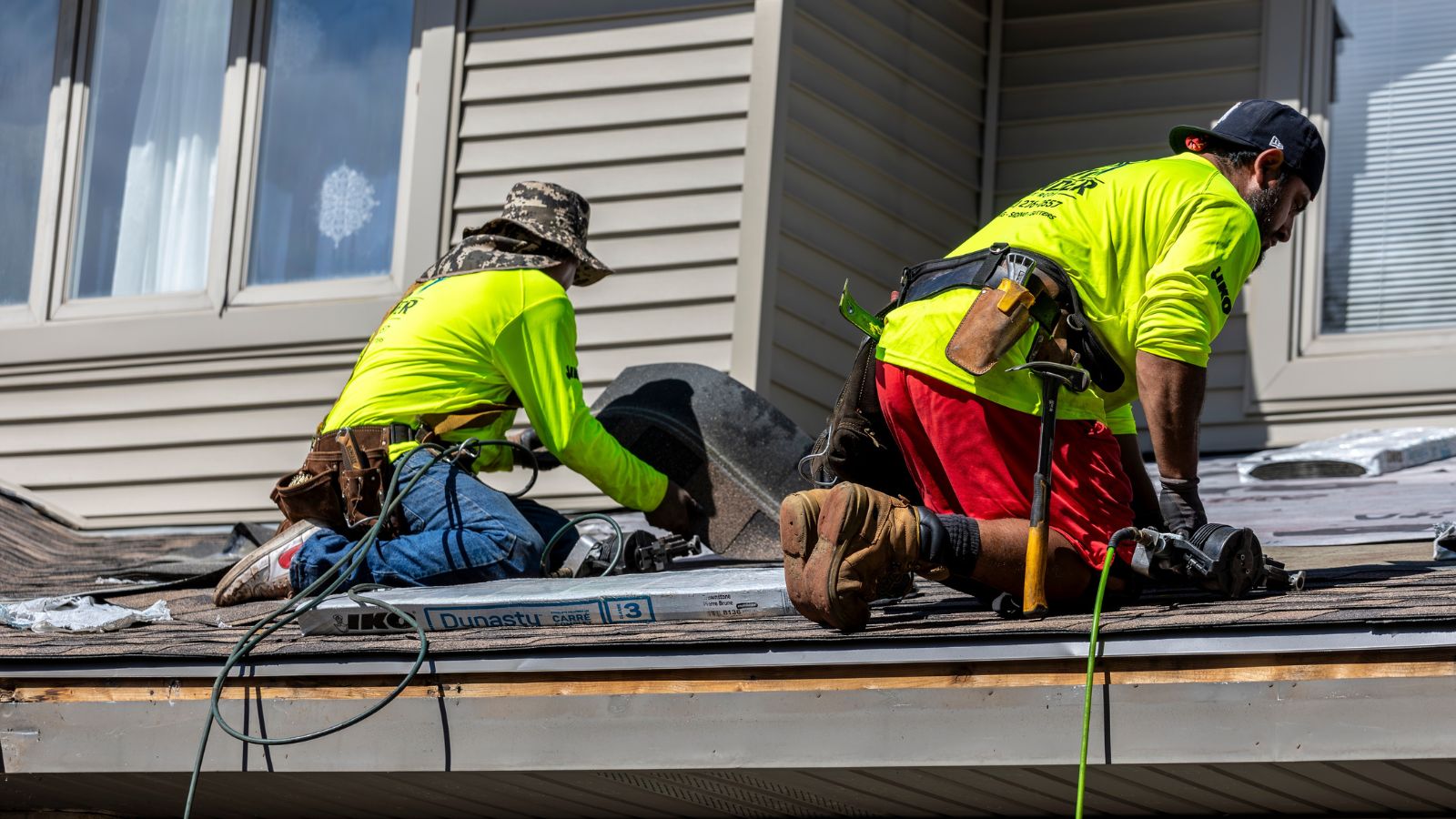
Home maintenance rarely arrives as a neat monthly invoice, but it is still an ongoing cost. CMHC lists maintenance and repairs among major operating expenses of homeownership, alongside snow removal, gardening, security, and condominium charges. Roofs, furnaces, drainage systems, appliances, windows, and exterior finishes age on different schedules. Stretch buyers often feel comfortable during quiet months, then discover that one failure can erase years of small savings.
A maintenance reserve turns those irregular shocks into a planned expense. For example, saving $400 monthly creates $4,800 yearly, but may not cover a major roof or foundation repair. The appropriate amount depends on age, condition, construction, and climate exposure. Buyers should study inspection findings, replacement dates, and contractor estimates before deciding what reserve is realistic. Cosmetic upgrades usually can wait; water intrusion, electrical hazards, and failed heating systems usually cannot. Affordability must include the house’s physical future, not just the purchase price.
Emergency Savings Should Survive the Closing
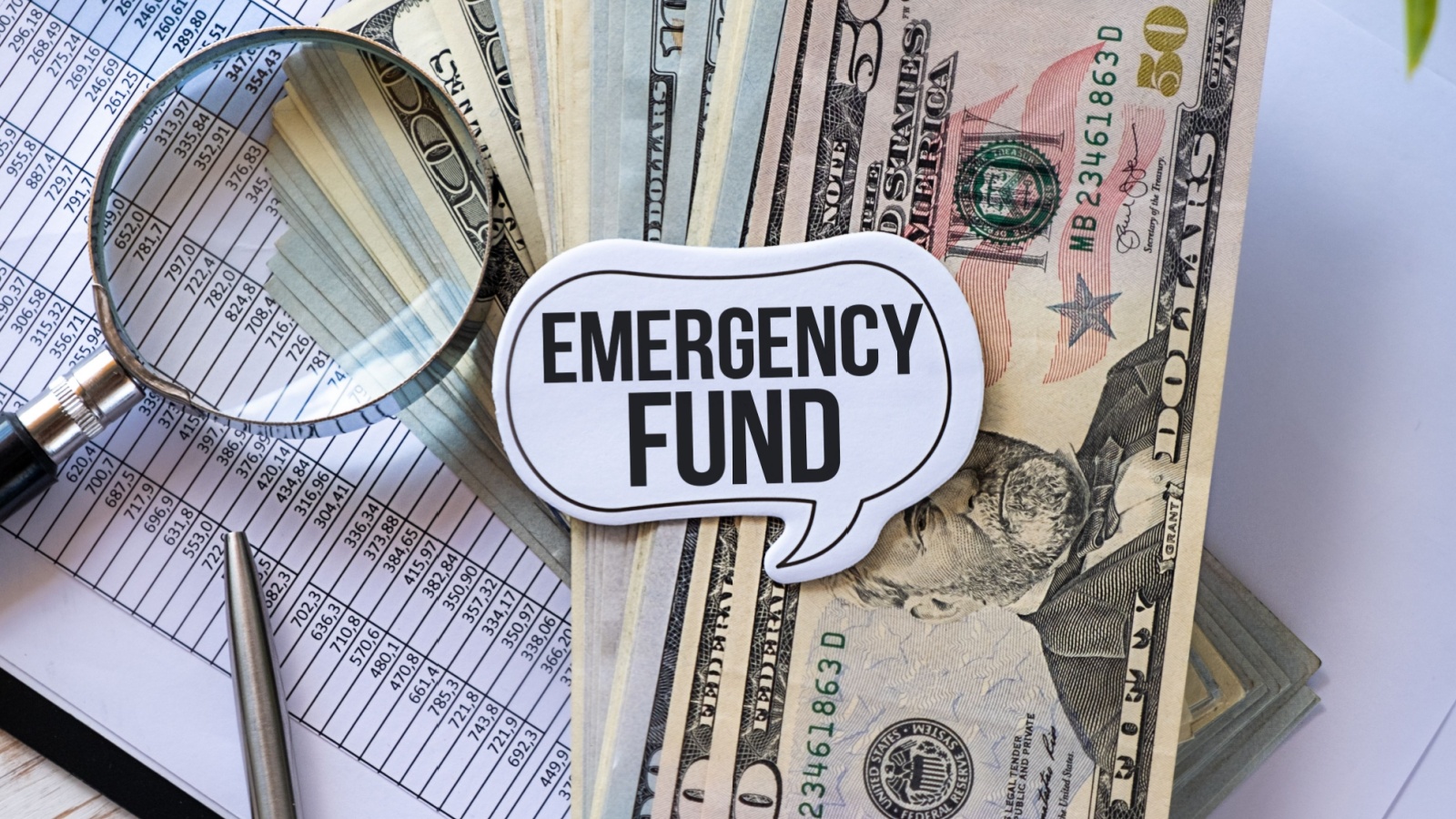
An emergency fund is most valuable immediately after buying, when cash reserves are often low and unfamiliar problems may appear. FCAC recommends aiming for three to six months of regular expenses or income. That guidance becomes harder to follow when every dollar has been directed toward the deposit, down payment, and closing costs. A buyer who closes with almost nothing saved may be one job interruption away from expensive debt.
The fund should be calculated using the new homeowner budget, not the old renter budget. Mortgage payments, taxes, utilities, insurance, transportation, food, and minimum debt payments all belong in the total. For a household spending $6,000 monthly after closing, three months equals $18,000. That target may require purchasing a less expensive home or delaying the move, but it creates valuable recovery time during layoffs, illness, or urgent repairs. Home equity cannot reliably replace cash, especially soon after a major purchase.
Condo Fees Can Hide Future Assessments

A condominium can lower the purchase price compared with a detached house, but the monthly fee is only part of the picture. CMHC explains that reserve funds are intended to pay for repairs and replacement of common elements such as roofs, elevators, roads, plumbing, and building systems. If the fund is inadequate, owners may face fee increases, borrowing, or special assessments, with rules varying by province or territory.
Stretch buyers should review the status or estoppel certificate, reserve-fund study, budget, financial statements, insurance, meeting minutes, and assessment history. A $550 monthly fee may be healthier than a $350 fee if the first building has funded upcoming work. Consider a buyer who can barely manage the mortgage and receives a $15,000 assessment for envelope repairs. The unit did not suddenly become more valuable, but the household’s debt may jump. Condo affordability depends on the corporation’s finances as well as the buyer’s.
Inspection Conditions Protect the Budget

A professional home inspection cannot guarantee that every defect will be found, but it can reveal conditions that change the purchase decision. CMHC recommends making inspection a condition of the offer and notes that repairs may justify renegotiating the price or withdrawing. Its consumer material estimates a typical inspection at around $500, a small amount beside structural, electrical, plumbing, roofing, or moisture problems.
The pressure to submit a “clean” offer is intense, especially in a competitive neighbourhood. Yet waiving inspection is riskiest for buyers with no repair cushion. A household stretching to win an older home may inherit a failing sewer line and an unsafe panel before the first mortgage anniversary. Where a full condition is not competitive, buyers can consider a pre-offer inspection, critically review available reports, and consult specialists for visible concerns. The key is not treating uncertainty as zero cost because no one has priced it yet.
The Appraisal May Not Match the Offer

An accepted offer establishes what the buyer agreed to pay, but the lender may still require an appraisal to estimate value. CMHC notes that banks and credit unions may require the appraisal at buyer expense. For insured improvement financing, CMHC bases lending value on the lower of market value or purchase price and construction cost, showing why lender valuation matters separately from the deal.
If an appraisal comes in below the offer, financing may be based on the lower value, leaving the buyer to provide more cash or renegotiate. Consider a $700,000 offer on a home appraised at $670,000. Even if accepted, the buyer may need to cover part of the $30,000 difference without borrowing it through the original mortgage. Stretch buyers should keep a financing condition, avoid exhausting liquid savings, and understand how their lender treats valuation shortfalls. Emotional bidding cannot compel a lender to recognize the same price.
Cheaper Housing Can Create Costlier Transportation

Moving farther from a major employment centre can reduce the purchase price, but it may increase combined housing and transportation costs. Statistics Canada’s Housing and Transportation Cost Index captures transportation expenses associated with a home’s location, because shelter alone does not show the full cost of living somewhere. Longer distances can mean another vehicle, more fuel, maintenance, insurance, parking, or unreliable work access.
A buyer saving $700 a month on the mortgage may not be ahead if the move creates $900 in additional vehicle and commuting costs. Time matters too: two extra hours of daily travel can complicate childcare, overtime, medical appointments, and family routines. Buyers should price the location using trips, not only the commute on a quiet Sunday. They should also test the budget against fuel increases and a second-car replacement. A distant house is affordable only when the household can afford the life required to reach it.
Home Costs Can Crowd Out Every Other Goal

Stretching for a house creates opportunity cost: money committed to shelter cannot also fund retirement, education, travel, business plans, or debt reduction. Statistics Canada reported homeowners with mortgages spent an average of $38,718 on shelter in 2023, up 16.9 percent from 2021. Mortgage payments accounted for more than half of that amount. This shows how quickly housing can dominate a household budget when borrowing costs rise.
The revealing question is not “Can the payment be made?” but “What stops happening after it is made?” A couple may cover the mortgage by pausing retirement contributions, postponing dental care, and relying on bonuses for property taxes. That is not necessarily failure, but it should be a choice rather than a surprise. Buyers should list the goals they refuse to sacrifice and treat those contributions as fixed expenses. A home should support a life, not consume every resource that provides stability and meaning.
Co-Signing Moves Risk Across Generations

Parental help can turn a mortgage rejection into approval, but co-signing does not make the debt smaller. It spreads responsibility across the family. Bank of Canada research found that the share of first-time-buyer mortgages co-signed by parents rose from four percent in 2004 to about 11 percent in 2025. Among a studied group, 74 percent of adult children would not have qualified for their mortgage without parental support.
That additional borrowing power can encourage a larger stretch. The Bank estimated that co-signing raised attainable purchasing power by about 72 percent for affected buyers in late 2022, while roughly one-third of co-signing parents already had mortgages themselves. Families should document ownership, contributions, repairs, exit plans, and what happens after job loss, separation, disability, or death. A parent may qualify on paper yet lack the retirement household cash flow to cover years of payments. Independent legal and financial advice protects everyone involved.
Tax-Assisted Savings Still Have Rules

Canada offers first-home savings tools, but they are not free cash. The First Home Savings Account provides deductible contributions and tax-free qualifying withdrawals, with $8,000 of participation room created in the first year an account is opened. The Home Buyers’ Plan currently permits up to $60,000 to be withdrawn from an RRSP, but amounts must generally be repaid over a 15-year period.
A buyer using both programs can assemble a larger down payment, yet the long-term effects differ. FHSA withdrawals do not require repayment when the conditions are met, while missed Home Buyers’ Plan repayments are generally included in taxable income. Pulling money from an RRSP can also interrupt investment growth. Buyers should compare the tax benefit with their future cash flow and retirement plan. Government programs can improve readiness, but they do not make an oversized mortgage sustainable. The monthly ownership budget still decides whether the purchase works.
Selling Soon Can Be an Expensive Escape

A house is not a liquid savings account. Selling can involve real estate commissions, legal fees, repairs, cleaning, staging, moving costs, mortgage discharge charges, and possible prepayment penalties. FCAC specifically lists these as selling expenses. Even in a rising market, transaction costs can consume a short-term gain; in a flat or falling market, the owner may need cash to close.
This matters for buyers anticipating career, relationship, immigration, or family changes. A starter home that may be outgrown in two years should be evaluated against the cost of buying and selling twice. A modest price increase may look profitable before transaction expenses are counted. Stretch buyers should prefer properties they can reasonably hold through a slow market and choose mortgage terms with their mobility in mind. An exit plan is part of affordability, not pessimism. Mobility deserves a price in the original buying decision, when the household is financially stretched.
A Smaller Purchase Can Buy More Resilience

The decision is rarely between a dream house and no house. It may be between a larger home with fragile finances and a smaller, older, attached, or differently located property with breathing room. Statistics Canada found 45 percent of Canadians were very concerned about housing affordability in a 2024 social survey, while 35 percent reported difficulty meeting basic financial needs in the previous year. Pressure to “get in” is real, but urgency distorts judgment.
Resilience has value: the ability to handle a renewal, replace a furnace, take parental leave, help a relative, or decline a toxic job without fearing default. Buyers can value that flexibility by setting a personal payment ceiling below the lender’s maximum and preserving savings after closing. Stretching may be reasonable when income is stable and trade-offs are deliberate. It becomes dangerous when the plan requires perfect employment, perfect health, stable rates, and a repair-free house simultaneously.
19 Things Canadians Don’t Realize the CRA Can See About Their Online Income

Earning money online feels simple and informal for many Canadians. Freelancing, selling products, and digital services often start as side projects. The problem appears at tax time. Many people underestimate how much information the CRA can access. Online platforms, banks, and payment processors create detailed records automatically. These records do not disappear once money hits an account. Small gaps in reporting add up quickly.
Here are 19 things Canadians don’t realize the CRA can see about their online income.
