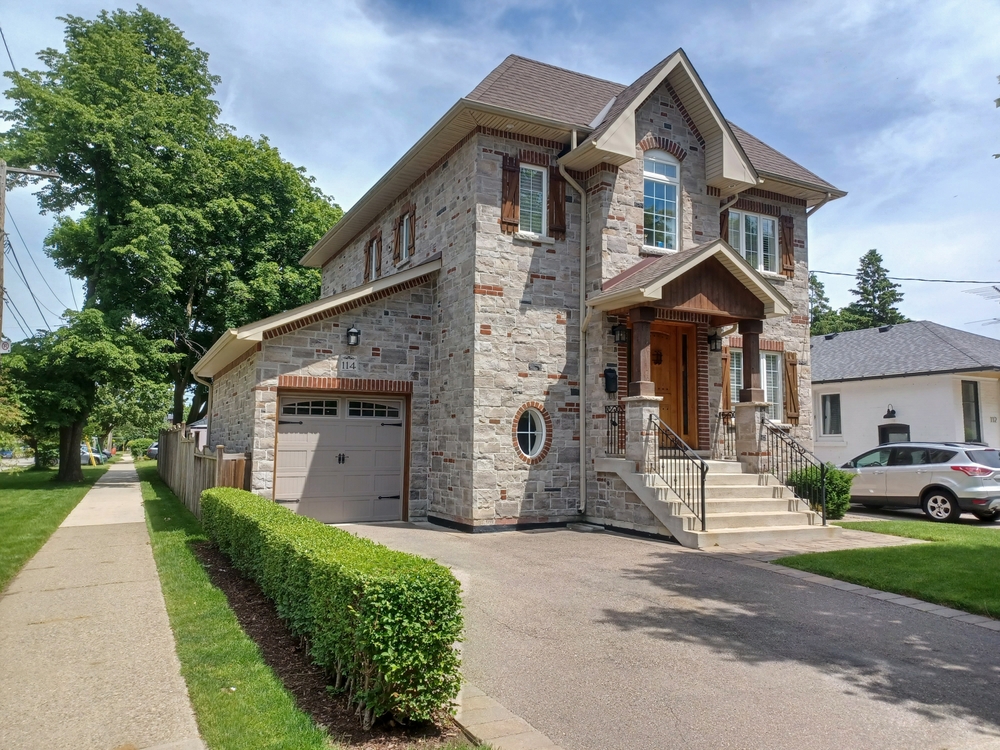
Toronto’s housing market is sending an unusual message: homes are getting cheaper, but many would-be buyers still are not convinced it is time to jump in. Across the Greater Toronto Area, the average selling price fell 4.5% year over year in July 2026 to $1,003,956, while the benchmark price for a typical home was down 4.6%.
Lower prices would normally be expected to draw buyers back quickly. Instead, the recovery remains cautious. Sales have started improving from the weakness seen earlier in the year, but affordability pressures, borrowing costs and uncertainty about the Canadian economy continue to influence major purchasing decisions. At the same time, fewer owners are listing their homes, creating the possibility that Toronto’s long-running buyer-friendly environment could begin tightening before prices fully recover.
The 4.5% Price Drop Is Significant, but It Needs Context
The headline decline reflects the Greater Toronto Area rather than the City of Toronto alone. GTA homes sold for an average of $1,003,956 in July, 4.5% below the same month in 2025. TRREB’s MLS Home Price Index Composite benchmark, designed to track changes in the value of a typical property while reducing distortions caused by the mix of homes sold, was down a similar 4.6%. That close relationship suggests the annual decline cannot simply be dismissed as a statistical quirk caused by more inexpensive homes changing hands.
Monthly figures tell a more complicated story. The unadjusted average selling price dropped substantially from June, but average prices can swing when the proportion of expensive detached homes or cheaper condos changes. The benchmark moved far less dramatically. For homeowners, that distinction matters: a 4.5% regional decline does not mean every property suddenly lost 4.5% of its value. Location, housing type and recent comparable sales remain far more important when valuing an individual home.
Buyers Are Returning, but There Is Still No Stampede
Toronto housing activity has improved considerably from the difficult opening months of 2026. Seasonally adjusted GTA home sales increased in July for the fifth consecutive month, extending a recovery that began after activity hit a particularly weak patch early in the year. In raw terms, TRREB recorded 5,995 transactions during July, only slightly below the level recorded a year earlier. That is a notable improvement from the large annual sales declines seen during parts of the winter.
Still, improving sales are not the same as a booming housing market. CMHC continues to describe Canadian homebuyers as cautious, with affordability, mortgage costs, income growth and economic uncertainty limiting demand. Toronto illustrates that hesitation clearly. Falling prices have brought some households back, particularly those that had already been financially prepared to purchase, but many others appear willing to keep renting or remain in their existing homes. In a market where the average property still costs roughly $1 million, even modest uncertainty can postpone a decision involving hundreds of thousands of dollars of debt.
Sellers Are Pulling Back Almost as Much as Buyers
One of July’s most important developments was not the number of homes sold, but the number entering the market. GTA new listings fell to 14,484, a 17.8% year-over-year decline. That was a much steeper drop than the change in sales, meaning the pool of available homes was no longer expanding as quickly as it had during the softer stages of the housing correction. Active inventory stood at roughly 26,100 properties during the month, also lower than a year earlier.
This creates an interesting dynamic. Buyers are still behaving cautiously, but sellers who are not under pressure to move may also be choosing to wait rather than accept a lower price. Imagine a homeowner who considered selling in the spring but received offers well below expectations: keeping the property for another year may suddenly seem more attractive. When enough sellers make that decision simultaneously, inventory shrinks. That can gradually reduce buyers’ negotiating leverage even without a dramatic increase in demand, which is why falling prices and tightening market conditions can exist at the same time.
Lower Interest Rates Have Not Solved Toronto’s Affordability Problem
Borrowing conditions are substantially easier than they were at the height of the Bank of Canada’s monetary tightening cycle, but Toronto homes remain expensive enough that financing continues to constrain demand. The Bank of Canada held its overnight policy rate at 2.25% in July, maintaining the level reached after its 2025 rate reductions. CMHC nevertheless says mortgage rates, slow income growth and uncertainty are keeping many Canadian households from buying even as affordability gradually improves.
The challenge becomes clearer when Toronto prices are viewed in dollar rather than percentage terms. A 4.5% annual decline sounds substantial, but the average GTA home still sold for just over $1 million. A buyer making a traditional 20% down payment on a property near that price would still need roughly $200,000 upfront before closing costs and would finance about $800,000. That leaves monthly payments highly sensitive to mortgage rates. Falling prices therefore help at the margin, but they have not transformed Toronto into an inexpensive market. For many households, waiting remains financially easier than stretching to purchase immediately.
Detached Homes and Condos Are Moving at Different Speeds
The regional average also hides major differences between housing categories. GTA detached homes sold for an average of roughly $1.29 million in July, down 5.1% from a year earlier. Semi-detached properties experienced an even larger annual decline of about 7.3%. Freehold townhouses were more resilient, while condominium apartments averaged approximately $636,000, only 2.3% below their July 2025 level. Condos were also the only major category to record an increase in average price from June.
Those differences show just how price-sensitive buyers have become. A household priced out of a detached home may still be capable of purchasing a townhouse or condo, particularly after several years in which mortgage qualification became more difficult. Toronto’s condo sector had previously been among the weakest portions of the market, but lower prices appear to be helping some units find buyers. It does not mean condos have entered another boom. Instead, the July figures suggest demand may be responding first where the purchase price is lowest, while expensive ground-oriented properties remain more exposed to affordability constraints.
The City of Toronto Is Holding Up Better Than the Wider GTA
The 4.5% decline commonly associated with Toronto housing is a GTA-wide figure, and conditions within the city were somewhat stronger in July. The average selling price in the City of Toronto was approximately $1.01 million, down about 3.2% from a year earlier. Its benchmark price was approximately $928,000, down 3.8%. The city recorded 2,242 sales, representing a small increase from July 2025, while new listings dropped sharply.
That distinction matters because Toronto is not a single housing market. A downtown condominium, an Etobicoke bungalow and a detached home in York Region can respond very differently to the same economic conditions. In July, the City of Toronto’s supply-demand balance tightened faster than the GTA overall because available listings declined more quickly relative to sales. This does not make Toronto a seller’s market, but it illustrates why broad regional headlines should be treated as directional indicators rather than precise valuations. Buyers searching in neighbourhoods with limited inventory may experience considerably more competition than the GTA-wide price decline would suggest.
Buyers Still Have Negotiating Power, but Sellers Cannot Ignore the Market
Despite the decline in listings, Toronto-area sellers have not regained the type of pricing power seen during the housing boom. GTA properties sold for roughly 97% of their asking price in July, while homes took about 32 days on average to sell. Those numbers suggest buyers still have time to evaluate properties, compare alternatives and negotiate rather than routinely competing through unconditional offers and bidding wars.
For sellers, the environment rewards realistic expectations. Pricing a home based on what a neighbour received several years ago can result in weeks of inactivity followed by a reduction. A correctly priced property in a desirable neighbourhood, however, can behave quite differently from the regional average—particularly as the supply of new listings contracts. The result is an increasingly selective market rather than one clearly controlled by either side. Attractive properties priced near recent comparable sales can still move quickly, while overpriced listings may sit. Buyers therefore retain leverage, but the window of exceptionally abundant selection that characterized softer periods of the market may gradually be narrowing.
Toronto May Be Approaching Stabilization, but a Fast Rebound Is Far From Guaranteed
TRREB entered 2026 forecasting an average GTA selling price of roughly $1 million to $1.03 million for the year, meaning July’s $1,003,956 result sits near the bottom of that range. The board has argued that declining inventory combined with improving transactions could eventually stabilize prices as more pent-up demand returns. July offers some evidence for that scenario: seasonally adjusted sales increased while new listings contracted sharply, gradually tightening the relationship between supply and demand.
CMHC remains more cautious. Its mid-year outlook expects Ontario to experience continued price weakness during 2026, particularly in expensive urban markets, before a gradual recovery begins in 2027. That disagreement captures the uncertainty surrounding Toronto housing. Prices may stop falling before sales return to historic levels, especially if owners continue withholding listings. But a sustained recovery will likely require more than reduced inventory. Buyers need confidence in employment, household income, borrowing costs and the broader economy. For now, Toronto appears to be moving away from outright deterioration and toward an uneasy period of stabilization—without yet delivering the conditions necessary for another major housing surge.
