Air travel rarely gets more expensive in a dramatic burst. More often, the added cost arrives in small, easy-to-miss steps: a fare stripped down here, a baggage rule tightened there, a few extra dollars attached to something that used to feel routine. WestJet’s latest checked-bag pricing fits that pattern, and it lands at a moment when Air Canada has already moved in the same direction.
This piece looks at 10 angles behind the change, from the exact fee structure to the fare classes most exposed, the routes where baggage costs bite hardest, the protections that still matter when a bag goes missing, and what the trend says about flying in Canada now.
A Small Fee Change That Feels Bigger at Checkout
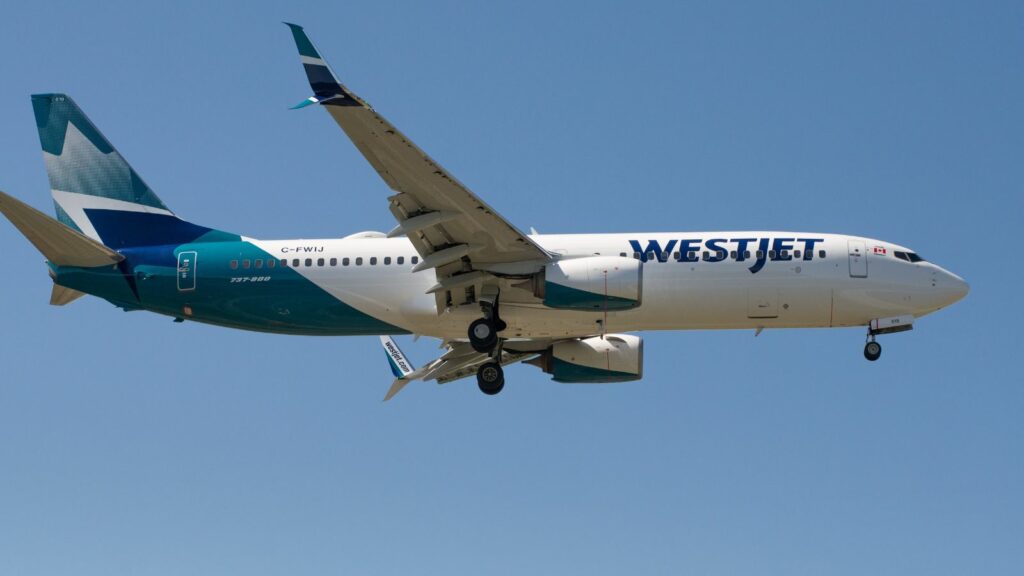
WestJet’s updated baggage tables make the increase look modest at first glance, but the effect becomes clearer once the booking path is compared with the airline’s earlier fee schedule. For travel within Canada and the U.S., a prepaid first checked bag on Econo or Member Exclusive now runs $40 to $48, up from $35 to $42 on the older table. UltraBasic’s prepaid first bag now sits at $50 to $59, versus $45 to $54 before. In practical terms, the first bag is where the squeeze has tightened most visibly for many economy travellers.
What makes the change feel larger is that WestJet’s published fee ranges are not one flat number. They can vary by fare, route, booking channel, origin airport, and whether the charge is paid online or later. That means the emotional shock often comes not from a headline fare, but from the moment baggage is added. A traveller who thought the cheapest fare was the cheapest trip can discover that the real total only becomes visible near the end of the purchase.
Air Canada Set the Latest Marker
Air Canada’s move came with a firmer date stamp. The carrier says that for Economy Basic, Standard, or Flex fares purchased on or after April 13, 2026, for travel within Canada, to or from the U.S., and to or from Mexico, the Caribbean, or Central America, the first checked bag is now CA/US$45 and the second is CA/US$60 for Basic and Standard. Flex keeps the first bag free, but the second becomes CA/US$60. That gave the market a fresh reference point almost immediately.
Seen beside that update, WestJet’s pricing looks less like an isolated tweak and more like alignment inside the same commercial lane. The two airlines do not mirror each other perfectly, but the direction is hard to miss: lower fares are being kept lean, while baggage is increasingly treated as a paid add-on rather than a default part of economy travel. For passengers, that narrows the difference between brands and shifts more attention toward fare family, route, and add-on math.
Fare Class Now Decides Almost Everything
The real story is not simply that checked bags cost more. It is that the fare ladder matters more than ever. On WestJet, EconoFlex includes one checked bag on many routes, while Premium and Business include two. On Air Canada, the split is similarly deliberate: Basic and Standard now carry the visible bag charge on affected routes, while Flex preserves the first free bag. Earlier, Air Canada also boosted Economy Comfort so that tickets purchased from January 3, 2025 onward include two complimentary checked bags worldwide.
That creates a new kind of airfare psychology. The cheapest ticket can still be the right ticket, but only for people travelling very light. Once a standard suitcase enters the plan, the “step-up” fare starts looking less like an indulgence and more like a hedge against drip-pricing. A short trip with only a personal item still fits the stripped-down model. A longer journey, a work trip, or travel with children can make the middle fare feel more rational than the entry-level one.
Route Maps Change the Math
Not all baggage pain is spread evenly across the map. WestJet’s own tables show that Europe is a different financial proposition from a Canada-U.S. hop. On Europe routes, the airline lists prepaid first- and second-bag fees of $75 to $89 and $105 to $124 on UltraBasic, while Econo or Member Exclusive carries a first bag of $40 to $48 and a second bag of $105 to $124. For many leisure travellers, that second bag is where a longer holiday starts getting expensive fast.
The route logic matters because baggage pricing now functions like a second fare structure layered on top of the first. A traveller going to Calgary for a few days may feel one kind of increase; someone flying overseas for two weeks sees another. WestJet also keeps standard checked bags within 157 total centimetres and 23 kilograms, so the cost risk is not only whether a bag is checked, but whether it stays inside the airline’s size and weight rules. On longer trips, that line is easier to cross than many people think.
Paying Later Usually Costs More
One of the clearest lessons in WestJet’s current policy is that timing matters. The airline says passengers should prepay online up to 24 hours before departure for the lowest first- and second-bag pricing, and that fees are higher when bags are checked at the airport. The published numbers make that warning concrete. On a Canada-U.S. itinerary, an Econo traveller paying in advance faces $40 to $48 for the first bag and $55 to $65 for the second, but airport check-in moves those to $60 to $71 and $75 to $89.
That difference turns baggage from a simple add-on into a behavior nudge. A couple checking two bags on the same kind of itinerary can go from roughly $95 to $113 prepaid to about $135 to $160 at the airport, before taxes where applicable. The airline is not only charging for the bag; it is charging more for waiting. That structure rewards planning and punishes indecision, which is one reason these fees can feel more frustrating than a higher base fare would.
UltraBasic and Basic Were Built for Very Light Packers
The most stripped-down fares now make their point quickly. WestJet says UltraBasic passengers get one personal item and generally may not bring or pay for a carry-on, except on certain Europe or Asia trips, when Extended Comfort has been purchased, or in a few special cases such as infant, pet, medical, or accessibility-related exceptions. If an UltraBasic traveller shows up at the gate with a carry-on outside those exceptions, the bag must be checked and a checked-bag fee plus a service fee is charged.
Air Canada took its own version of the same road earlier. For Economy Basic tickets purchased on or after January 3, 2025, the airline says carry-on baggage is no longer included for travel within Canada, to and from the U.S., and to and from Mexico, Central America, and the Caribbean; only a personal item is included, with standard baggage rules applying. That means the lowest fares at both major carriers increasingly assume a passenger can travel with something that fits under the seat and little else.
Loyalty Still Buys Real Relief
For all the discussion around rising fees, there is still a meaningful divide between casual travellers and passengers tied into airline ecosystems. WestJet says first-bag fees are included for WestJet RBC World Elite Mastercard primary cardholders and up to eight guests on the same booking, and also for EconoFlex, Premium, and Business fares plus Silver, Gold, and Platinum Rewards members. Second-bag fees are included for Premium and Business guests and for upper-tier WestJet Rewards members as well.
Air Canada preserves a similar escape hatch. In its Basic fare update, the airline says Aeroplan Elite members, Star Alliance Gold, and Aeroplan Premium Credit Cardholders keep their relevant benefits. That includes continued carry-on access on Basic fares for eligible customers, and some cardholders retain first checked bag benefits. In other words, the baggage-fee era is not uniform. It falls hardest on infrequent flyers and budget shoppers who have not bought into a status or co-brand card system, which is part of why the increases can feel unevenly distributed.
Bag Fees Have Become a Strategy, Not a Side Note
Checked-bag charges are no longer a minor extra tucked into the margins of airline economics. Industry research has spent years showing that baggage and seats are among the most important pieces of ancillary revenue, and IdeaWorks has highlighted both categories as core drivers for carriers trying to maximize optional income. Its 2026 field guide notes that baggage activity remains a crucial focus and even points out that, at American Airlines, fewer than half of passengers check bags, which shows how valuable targeted fees can be when only part of the customer base pays them.
That matters because it explains why airlines keep refining fares instead of simply raising every ticket equally. A fee attached to a behavior can be optimized. It can vary by channel, route, timing, and customer segment. It can also preserve the marketing appeal of a lower starting fare. From a corporate perspective, that is efficient. From a traveller’s perspective, it often feels like the price of flying is being rebuilt in pieces. The baggage line item is not an accident anymore; it is part of the product design.
Paying the Fee Does Not Erase Passenger Rights
A larger baggage bill does not cancel the protections tied to checked luggage. In Canada, the Air Passenger Protection Regulations set out baggage obligations for domestic service, and the law says compensation for lost or damaged baggage must include at least the baggage fees paid, along with any additional compensation that applies under the governing regime. The broader liability framework has also moved upward over time. The Canadian Transportation Agency says domestic services must align their liability limits with the Montreal Convention standard, which rose to 1,519 Special Drawing Rights per passenger from December 28, 2024.
The airline terms echo that. Air Canada says that if baggage is delayed, damaged, or lost, the fees paid to check it in will be refunded, and its terms cite the 1,519 SDR liability cap for most international and domestic itineraries. WestJet’s tariff likewise refers to 1,519 SDR per passenger and sets complaint timelines, including written complaints within 21 days in loss or delay cases. The practical takeaway is simple: higher fees do not remove accountability when an airline fails to deliver the bag it was paid to carry.
The Bigger Story Is Complexity in Canadian Air Travel
The baggage-fee story lands harder in Canada because it sits inside a market already criticized for being difficult to navigate. The Competition Bureau’s airline market study said passengers are dealing with complex flight bookings, a concise phrase that captures the experience of modern airfare shopping better than many longer explanations do. Base fare, carry-on rules, checked-bag charges, seat policies, card perks, route-specific exceptions, and fare-family differences now shape what a ticket actually costs, often long after the first search result appears.
That complexity is also arriving during a period of broader airline pressure. Reuters reported in April 2026 that rising fuel costs were leading Air Canada to trim some New York flights and that North American carriers were reacting with a mix of higher prices, capacity cuts, and fee increases. WestJet’s baggage move does not need to be dramatic to matter. In a market where competition, transparency, and total-trip cost are already under scrutiny, another baggage increase becomes more than a fee change. It becomes one more reminder that cheap airfare and affordable travel are no longer the same thing.
