
The modern tech market has become remarkably good at selling small improvements as major leaps. Faster chips, brighter panels, smarter software, and shinier materials still sound exciting, but the price gaps between standard models and premium upgrades have widened enough to make many once-coveted extras feel harder to defend. In category after category, the pattern looks similar: a flagship adds polish, not transformation, while the bill climbs much faster than the everyday benefit.
That is especially true in 16 areas where the “better” version increasingly solves problems most people do not actually have. Some upgrades still make sense for power users, professionals, or enthusiasts with very specific needs. But for everyone else, the value equation has shifted in a noticeable way, and the numbers behind it tell a less glamorous story than the marketing.
Yearly Flagship Phone Replacements

There was a time when replacing a top-end phone every year felt rational. Cameras were improving dramatically, batteries were jumping forward, and processors were making obvious leaps in speed. That cycle has slowed. Today’s premium phones are already fast enough for messaging, maps, video, gaming, and mobile photography, and they remain supported for longer than older models did. Once a device reaches that point, the next upgrade often becomes a purchase driven more by novelty than by need. The pricing only sharpens that feeling. When flagship phones start around the kind of money that once bought a decent laptop, the argument for replacing one annually gets much weaker.
That change also shows up in how long people keep their phones. Replacement cycles have stretched, not because people suddenly stopped liking new gadgets, but because the practical gains from one generation to the next are smaller. A newer phone may offer a stronger zoom, a brighter display, or a fresh AI feature, yet the previous model is often still excellent at the same core tasks. In real life, the difference between “very good” and “slightly better” tends to shrink after the first few days. The first week feels fresh; the second month feels familiar; by month three, the higher monthly payment is usually the part that remains most noticeable.
Paying More for Higher Phone Storage

Storage upgrades on phones increasingly feel like one of the cleanest examples of diminishing returns. The jump from a base capacity to the next tier is often priced like a major feature, even when the day-to-day experience changes only for a narrow slice of users. For someone who shoots constant 4K video, downloads large games, or keeps years of raw media on-device, more storage can be worthwhile. But for the average buyer, cloud backup, streaming, and routine cleanup have reduced the urgency of stuffing everything into the handset itself. That leaves many people paying a premium mostly to avoid the mild inconvenience of managing files a little more carefully.
Manufacturers understand how emotionally effective the phrase “future-proof” can be. It pushes buyers to imagine a future shortage rather than a current need. Yet many phones now last long enough that spending heavily on the biggest storage tier can overshoot real usage by a wide margin. A person who barely fills 180GB does not suddenly become a 1TB user because the option exists. Worse, those storage jumps can compound an already expensive purchase into something that feels excessive before the box is even opened. In an era of rising flagship prices, storage is less a hidden necessity than a high-margin comfort purchase. For a lot of buyers, that comfort no longer feels worth what it costs.
Foldable Phones as Productivity Upgrades

Foldable phones still generate the kind of reaction most consumer tech no longer can. They look futuristic, they invite curiosity, and they genuinely do offer something different. Open one up and the appeal is obvious: more room for multitasking, a larger canvas for reading, and a device that can act like both a phone and a small tablet. The problem is not that foldables are bad. It is that the premium attached to that novelty remains enormous. At current prices, buyers are paying a very large tax for the privilege of experiencing a form factor that still feels more specialized than essential.
That matters because the practical case for foldables is narrower than the marketing suggests. A book-style foldable can be wonderful for email, split-screen work, and video, but many owners still end up using it like a normal phone most of the time. The outer display handles quick tasks, the inner display stays closed more often than expected, and the astonishing first impression gradually becomes a routine habit. At that point, the price difference starts to matter more. When a standard flagship already offers a great camera, strong battery life, fast performance, and years of support, the foldable premium has to do more than impress for ten minutes. For many buyers, it still does not.
Ultra Smartwatches
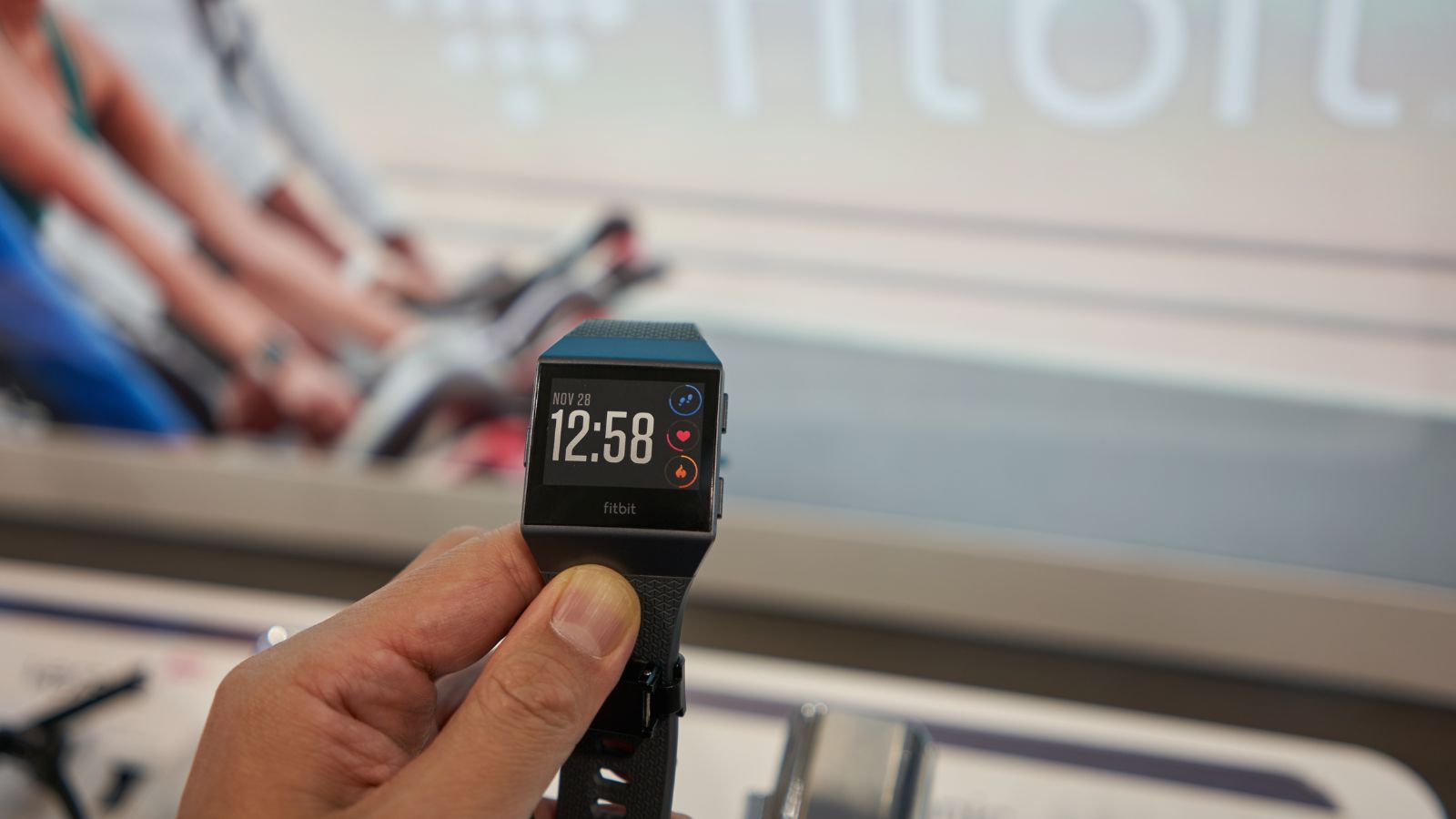
The rise of “Ultra” smartwatches says a lot about modern tech pricing. These models are positioned as tougher, brighter, more adventurous tools for people who climb mountains, dive deeper, or train harder. For a small group, that positioning is legitimate. Endurance athletes, divers, and backcountry hikers can benefit from longer battery life, stronger materials, and more specialized sensors. The issue is that most smartwatch owners do not live in those conditions. They track workouts, read notifications, check sleep data, and maybe answer a call while walking to the car. A rugged titanium watch built for extreme environments is often being used to count steps between meetings.
That mismatch makes the price gap harder to overlook. Standard watches have become very good at the things most people actually do every day. They already cover heart-rate tracking, sleep monitoring, notifications, basic fitness features, GPS on many models, and increasingly polished health insights. The Ultra tier adds durability and prestige, but in ordinary life those additions can feel like paying off-road prices for a vehicle that rarely leaves pavement. The visual design may be more imposing, and the spec sheet may sound more serious, yet the lived experience for many owners is not dramatically better. It is simply more expensive.
Premium Earbuds and Luxury Headphones

Audio brands have become experts at building temptation in neat, expensive layers. One model sounds good, the next adds better noise cancellation, the next improves transparency, and the top tier promises a more immersive or refined listening experience. None of that is fake. Premium earbuds and headphones can sound excellent, and better ANC is easy to appreciate on a plane, a train, or a noisy street. But the jumps in price now regularly outpace the jumps in satisfaction. A strong mid-tier pair can already handle commuting, calls, podcasts, workouts, and streaming music with far fewer compromises than buyers had to accept just a few years ago.
That has made the premium end feel less automatic than it once did. Once decent models started delivering solid fit, respectable microphones, acceptable battery life, and useful noise control, the practical case for spending far more became harder to sustain. The added polish is real, but so is the ceiling on how much everyday listening can improve. Someone moving from poor earbuds to good ones notices it immediately. Someone moving from good ones to very expensive ones often notices it most in quieter, more careful listening sessions that do not define most of modern audio use. In other words, the best premium models are still excellent; they just are not life-changing in proportion to their price.
Pro Tablets with a Keyboard and Stylus

Few upgrades look smarter on paper than a premium tablet paired with a keyboard case and stylus. It promises portability, creativity, entertainment, and productivity in one sleek package. For artists, note-takers, and certain mobile professionals, that combination can be genuinely powerful. The trouble begins when the accessory math enters the picture. A high-end tablet starts to look less like a clever alternative and more like a modular luxury purchase once the keyboard and pen are added on top. That is especially true when the total lands close to, or even overlaps with, the cost of a capable laptop that includes a better multitasking environment and a built-in keyboard from the start.
This is why the “tablet as laptop replacement” pitch often feels more convincing in theory than in daily use. Tablets remain wonderful at many things: sketching, presenting, reading, streaming, annotating, and light work. But once serious file management, heavy multitasking, extended typing, or desktop-style workflows enter the picture, the compromises become more visible. Buyers wind up paying for elegance and versatility, then using the device mainly for the same casual tasks a less expensive model could handle. The premium tablet itself is not the problem. It is the accumulated accessory bill that turns a graceful device into a harder value proposition than it first appears.
Soldered Memory Upgrades on Thin Laptops

Laptop memory used to feel like a problem that could be fixed later. Buy what was affordable now, add more RAM when workloads grow, and spread the cost over time. That logic has weakened as more thin-and-light machines lock memory at purchase. The result is a checkout moment that feels more consequential than it should. Buyers are nudged into paying a premium for extra headroom “just in case,” because there may be no second chance. That is a reasonable concern, but it also creates a familiar modern-tech dilemma: spend a lot today to prepare for a future that may never arrive.
For many mainstream users, the difference between sufficient RAM and overbought RAM is subtle. Email, browsing, office apps, streaming, and light creative work no longer demand the kind of memory inflation the market sometimes implies. Extra memory absolutely helps with large photo libraries, heavy multitasking, code builds, and creative suites, but the average buyer often winds up purchasing insurance more than necessity. The real frustration is not that more memory costs more. It is that non-upgradable designs make the price feel unavoidable, which amplifies the sense of being cornered into a premium choice. What used to feel like a thoughtful configuration decision now often feels like a toll.
Internal SSD Upgrades at Checkout
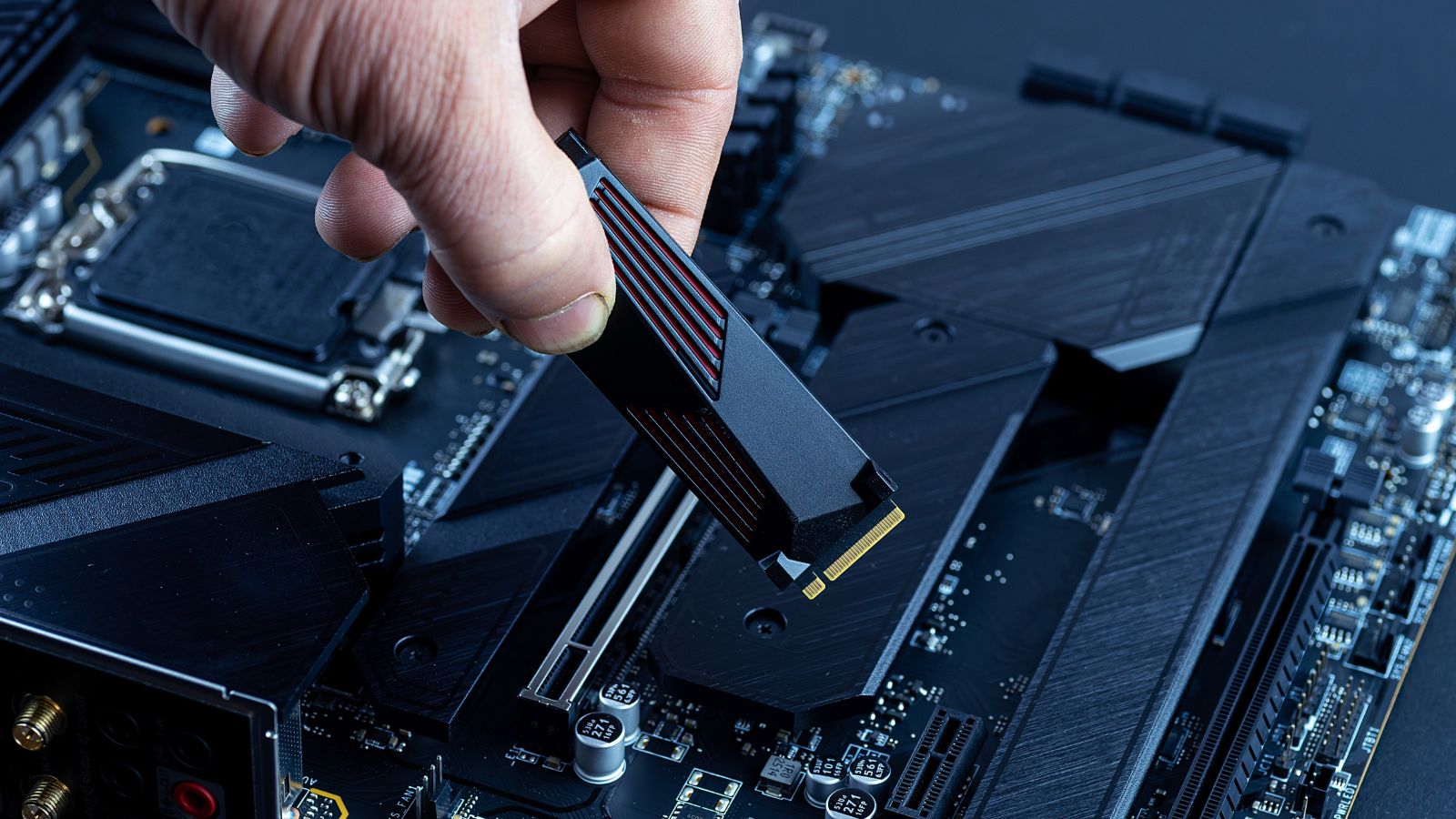
Internal laptop storage upgrades have become another point where convenience gets priced like a luxury. The pitch is always easy to understand: buy more space now, avoid future anxiety, and keep everything fast and tidy inside the machine. That logic is not wrong. Internal storage is elegant, seamless, and less cumbersome than carrying an external drive. But once the upgrade premiums start climbing in large steps, the difference between elegant and rational becomes harder to ignore. For many buyers, the internal bump is less about real workflow needs than about avoiding the mild annoyance of attaching external storage once in a while.
That trade-off feels especially skewed when portable SSDs have become fast, compact, and relatively affordable by comparison. A buyer can spend heavily for an internal jump that is invisible from the outside, or spend less on external storage that delivers plenty of room for archives, media, and backups. The internal option still wins on neatness, but neatness alone is an expensive reason to add thousands to a checkout total. This is one of the clearest places where buyers can mistake friction reduction for real necessity. If most large files are photos, video, game installs, or project archives, the premium for more internal space increasingly feels like a preference, not a need.
Wi-Fi 7 Routers for Ordinary Broadband
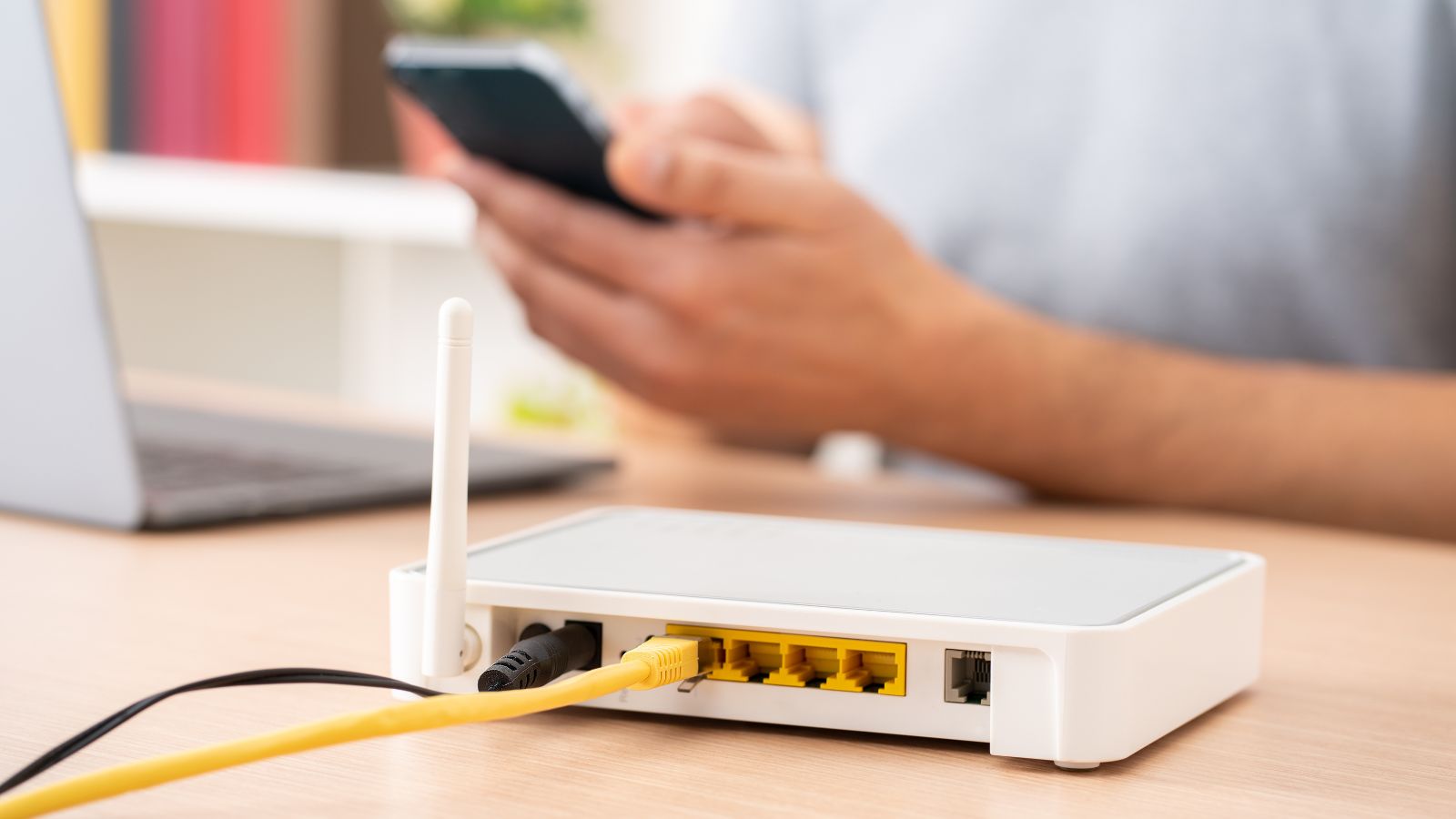
Wi-Fi 7 is real, impressive, and in some setups genuinely useful. The new standard is built around faster throughput, lower latency, and better handling of many connected devices. For enthusiasts with multi-gigabit internet, modern client hardware, and demanding local network use, that can matter. But for ordinary households, the bottleneck is often not the wireless standard at all. It is the broadband plan, the device mix, or the fact that most daily internet use simply does not stress a decent recent router. Streaming video, video calls, gaming, messaging, and smart-home traffic usually do not require a cutting-edge network to feel responsive.
That gap between capability and reality is what makes many Wi-Fi 7 upgrades feel premature. Marketing leans on maximum speeds and future readiness, while real households often operate far below those headline figures. A home connection sitting around the 100 Mbps range does not suddenly become transformed by hardware built to advertise multi-gigabit possibilities. The upgrade can still feel satisfying on a spec sheet, yet the lived difference may amount to very little outside edge cases. In practice, a good Wi-Fi 6 or 6E router often remains enough for the kinds of tasks that define a normal week. Paying extra for the newest badge is easy; noticing the payoff is harder.
Whole-Home Mesh Kits in Places Without Dead Zones

Mesh networking solved a real problem. Large homes, awkward floor plans, thick walls, and weak back rooms all made traditional routers frustrating. In the right environment, mesh systems can feel almost magical. The problem is that success has turned them into an aspirational default. Plenty of buyers now look at multi-pack mesh kits the way earlier generations looked at home-theater receivers: as a premium, obviously better upgrade whether or not the room actually demands one. That assumption is costly. A mesh system designed to cover a large property can be overkill in smaller homes where a single competent router would perform perfectly well.
That does not mean mesh is bad value across the board. It means the value depends heavily on layout, interference, and dead zones. In a modest apartment or compact house, the extra nodes may not improve much beyond what good placement and a strong router already solve. They can even introduce new complexity through app management, backhaul choices, and added hardware clutter. The category still earns its place in difficult spaces, but it no longer deserves reflex status as the obvious next step. When multi-node kits are priced like a full infrastructure project, “better coverage” needs to be a current problem, not just a hypothetical one.
PCIe 5.0 SSDs for Everyday Computing
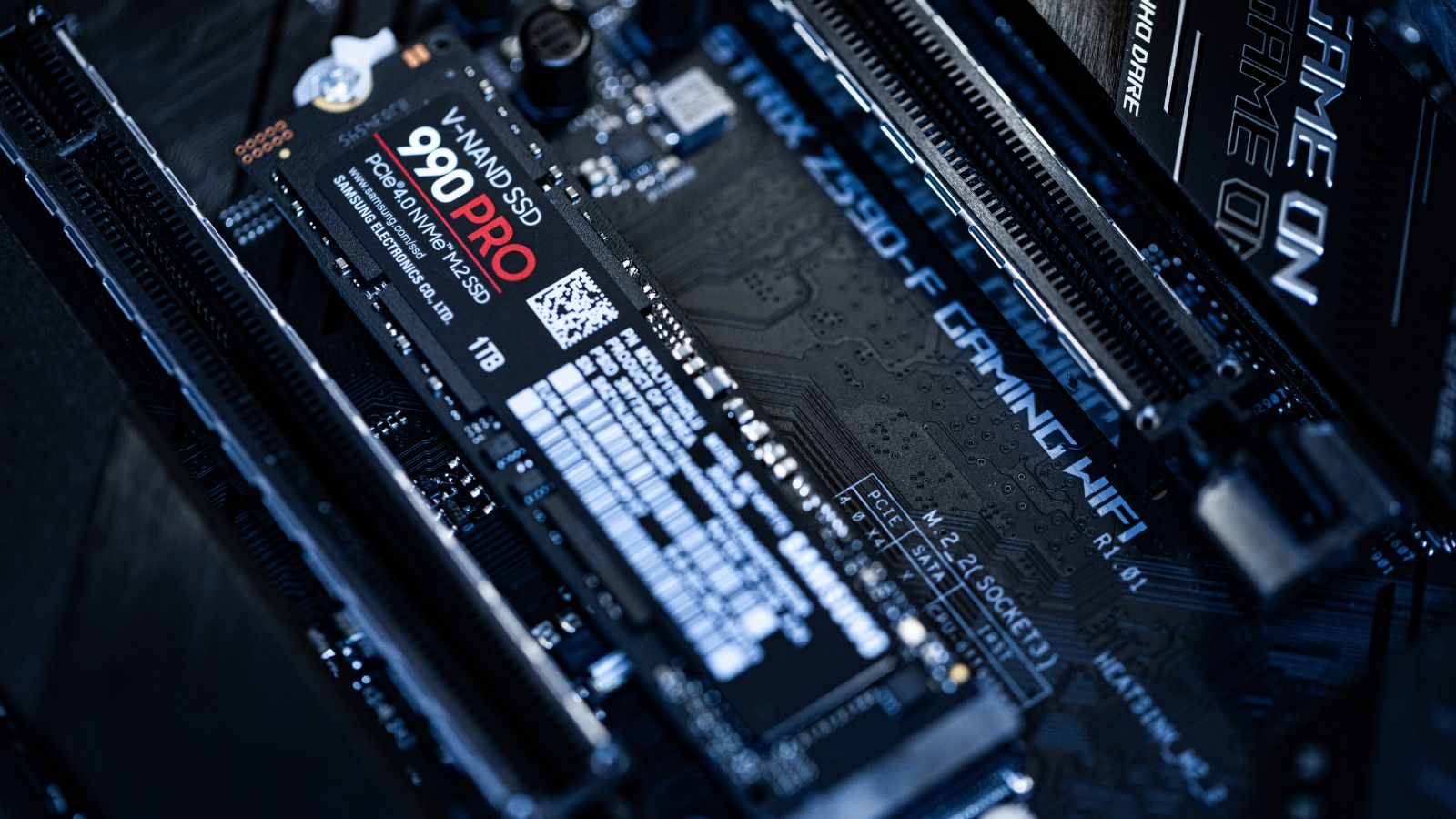
Few consumer upgrades look as dramatic on a spec sheet as a bleeding-edge SSD. Sequential read speeds soar, benchmark charts spike upward, and the product description starts to sound like the future arriving in an M.2 slot. For specialized workflows, that speed can absolutely matter. Large file transfers, heavy scratch-disk use, and certain creator workloads can benefit from the extra bandwidth. But everyday computing is not benchmark culture. Boot times, game loading, app launches, and routine system use often do not scale in the dramatic way the marketing implies. Beyond a certain point, the improvement becomes technically impressive and emotionally underwhelming at the same time.
That is why PCIe 5.0 drives remain a niche-value upgrade for many people. They are faster, but the real-world gap between a very good PCIe 4.0 drive and an elite PCIe 5.0 model is smaller than the raw throughput numbers suggest for ordinary use. Add the thermal considerations that still surround some top-end drives, and the category starts to feel like enthusiast territory rather than obvious mainstream value. There is something almost poetic about buying astonishing storage speed and then using it mostly to open a browser slightly faster. For people who move giant files all day, the math can work. For everyone else, it increasingly feels like paying for bragging rights.
8K Televisions
8K tele

visions remain one of the clearest examples of the market racing ahead of the ecosystem around it. On paper, the proposition is enormous: more than 33 million pixels, finer detail, and the prestige of owning the highest resolution available. In practice, the content story has never fully caught up. Most households still spend the bulk of their viewing time with streaming platforms, broadcast feeds, sports, and game consoles that make 4K the meaningful target, not 8K. That means a huge share of the 8K experience depends on upscaling rather than native material, which can look excellent but still changes the emotional calculation of what exactly the buyer paid for.
The pricing deepens that issue. Once a television costs several times more than strong 4K alternatives, the question is no longer whether 8K is technically superior. It is whether the premium creates a visible improvement in the real programs and movies people watch every week. In many living rooms, the more meaningful upgrade is not extra pixels at all. It is better contrast, stronger local dimming, higher brightness, or simply a larger screen bought for less money. Premium 4K sets have become so good that 8K now often feels less like the future of television and more like a luxury tier in search of enough real-world justification.
240Hz and 360Hz Gaming Monitors

High-refresh gaming monitors are one of the best examples of a genuine innovation gradually turning into a question of limits. The leap from 60Hz to 120Hz or 144Hz is obvious. Motion looks smoother, inputs feel more immediate, and fast games become easier on the eyes. But once refresh rates push into 240Hz and 360Hz territory, the gains become more conditional. Competitive players chasing every edge may notice them, especially in fast esports titles with hardware powerful enough to sustain those frame rates. For many other players, the improvement exists, but it no longer lands as a transformational jump. It becomes a refinement layered on top of an already good experience.
That is what makes these monitors feel less automatically worth the premium than their specs suggest. The most expensive options are increasingly built for a narrow use case: players who treat responsiveness as a performance variable, not just a comfort feature. Outside that circle, better contrast, sharper resolution, or a stronger overall panel can matter more than squeezing out another jump in Hertz. It is also telling that manufacturers and chipmakers market the fastest displays directly toward esports audiences. That is not an accident; it is a clue. The category is excellent, but its best use case is specialized enough that mainstream buyers should no longer treat it as a default “best” upgrade.
Halo-Class Gaming GPUs

At the very top of the GPU market, performance has become inseparable from excess. Flagship graphics cards are extraordinary pieces of engineering, and there is no honest way to discuss them without acknowledging that. They can push extreme resolutions, advanced ray tracing, demanding creative workloads, and AI-heavy tasks in ways lesser cards cannot. But the top tier has also become a place where pricing itself changes the emotional tone of the product. Once a graphics card costs what an entire gaming PC used to cost, the standard for “worth it” gets much harder to clear. The product can be incredible and still feel unreasonable.
That tension matters because the rest of the stack has improved too. Midrange and upper-midrange cards are more capable than yesterday’s enthusiast hardware, which makes the gap between “excellent” and “maximum possible” feel more financial than practical for most players. A halo GPU still has an audience, but that audience is narrower than the excitement around launch season can make it seem. Most people are not building for uncompromised 4K path tracing every night. They want strong performance, long life, and a sane budget. In that context, the flagship becomes less a smart buy and more a statement piece—an impressive one, but a statement piece all the same.
4K Security Camera Ecosystems

Home security cameras used to sell themselves on simple reassurance: see the front door, watch the driveway, check the backyard. Today’s upgraded camera ecosystems promise much more—higher resolution, sharper zoom, AI detection, package alerts, longer cloud history, facial recognition, and searchable footage. Those features can be genuinely useful, especially for larger properties or homes that receive frequent deliveries. But the category has also shifted from one-time hardware purchase to layered service relationship. A more expensive camera often unlocks its best value only when paired with a subscription, which changes the entire cost equation from upfront purchase to ongoing commitment.
That makes premium camera upgrades feel less straightforward than they once did. A sharper 4K image sounds compelling, but many households are already well served by a good 1080p feed with solid motion alerts and free live view. Once the upgraded model also nudges the buyer toward monthly fees for stored video, advanced alerts, or longer history, the camera starts behaving less like a device and more like a service endpoint. Over time, that can make the hardware feel strangely secondary. The real cost is not just the camera on the box. It is the system it pulls the buyer into. For many homes, that extra clarity and AI polish no longer justify the recurring bill that follows.
Robot Vacuums with Self-Washing Mega Docks

Robot vacuums have improved dramatically, and that success has created a new kind of luxury tier. The latest flagships are not merely vacuums; they are automated floor-care systems with self-emptying bins, mop washing, pad drying, refilling tanks, detergent management, advanced navigation, and increasingly theatrical suction claims. For busy households with pets, kids, and a lot of square footage, some of that automation can be truly helpful. But once prices climb into the territory of major appliances, the category stops being about convenience alone. It becomes a question of whether shaving off a few maintenance steps really merits paying two or three times more than a very competent midrange model.
That question has become harder for premium brands because cheaper models keep inheriting yesterday’s flagship features. Self-cleaning docks, decent mapping, anti-tangle brushes, and strong suction are no longer rare. So the top tier increasingly sells on refinement, edge cases, and a more hands-off experience rather than on basic capability. Those advantages are real, but the psychological jump from “this helps” to “this is worth a four-figure premium” has become more difficult. The first time a robot vacuum maps a room, it feels futuristic. The moment after it gets stuck on a cable anyway, the buyer remembers that convenience has limits. At the highest end, the price often forgets that.
19 Things Canadians Don’t Realize the CRA Can See About Their Online Income

Earning money online feels simple and informal for many Canadians. Freelancing, selling products, and digital services often start as side projects. The problem appears at tax time. Many people underestimate how much information the CRA can access. Online platforms, banks, and payment processors create detailed records automatically. These records do not disappear once money hits an account. Small gaps in reporting add up quickly.
Here are 19 things Canadians don’t realize the CRA can see about their online income.
