
The web has long been imagined as a sprawling public square: messy, searchable, linkable, and open enough for new voices to break through. That ideal has never been perfect, but it is becoming harder to ignore how many new systems are steering people away from it. Search engines now answer more questions themselves, platforms increasingly reward content that stays inside their walls, and publishers are building stronger gates around material that once circulated more freely.
The next version of the internet may still look familiar on the surface, but its rules are shifting underneath. These 18 signs point to a digital environment that is becoming more curated, more permissioned, and more dependent on gatekeepers than many people expected.
AI Answers Are Replacing Open Exploration

One of the clearest signs of a less open internet is that discovery is starting to happen without much exploration at all. Search engines used to act mainly as traffic directors, sending people outward to blogs, forums, local sites, and niche experts. Now, AI-generated summaries increasingly sit between the question and the open web. That may feel convenient, but it changes the basic rhythm of online discovery. Instead of browsing multiple sources, comparing voices, and following unexpected links, users are nudged toward a single synthesized response that keeps attention on the platform delivering it.
The shift is not theoretical anymore. Pew found that when Google users encountered an AI summary, they clicked traditional search results less often than users who did not. That matters because an open internet depends on referral flows that reward original publishing. If more questions are answered before a user ever leaves the search page, smaller sites lose not only traffic but also the chance to build a direct relationship with readers. The web becomes something people sample through intermediaries rather than enter on its own terms.
Smaller Publishers Are Losing the Traffic That Kept the Web Diverse

A more closed internet does not require outright censorship; sometimes it arrives through economics. Independent publishers, local outlets, and specialist sites have historically depended on search and social referrals to reach people outside their core audience. When those referrals weaken, the biggest brands usually survive longest because they already have loyal audiences, apps, or subscription businesses. Smaller operations do not have that cushion. The result is a web that still feels large, but becomes less diverse because fewer independent voices can afford to stay visible.
That concern has turned into measurable pressure. Chartbeat data reported in 2026 showed search referral traffic falling far more sharply for small publishers than for large ones over a two-year period. Reuters Institute research also found widespread publisher anxiety about future referral losses as AI-driven search expands. In practical terms, that means a recipe blog, neighborhood news site, or trade publication can do everything right and still disappear from public view. When distribution concentrates, openness narrows quietly. People may still have access to “the internet,” but they are less likely to encounter its full range.
Crawling the Web Is Becoming a Paid Negotiation
For decades, one of the web’s defining assumptions was that public pages could be discovered and indexed, even if imperfectly, through widely understood conventions like robots.txt. That expectation is being renegotiated. As AI companies scrape huge volumes of content, more site owners are treating access not as a default public good but as something to meter, block, or price. The open web begins to resemble a set of toll roads when publishers decide that being crawlable no longer benefits them unless compensation follows.
Cloudflare’s rollout of tools that let site owners block AI crawlers or charge them on a per-request basis is a striking sign of that turn. For publishers, those controls are understandable, especially when AI products may summarize their work without sending much traffic back. But the broader effect is still a step away from openness. Once large parts of the web are reachable only through negotiated technical and commercial agreements, discovery depends less on public accessibility and more on who has permission, money, or scale. The internet remains connected, yet far less universally traversable.
Login Walls Are Becoming the New Front Door

Another sign of closure is how often the modern web now asks for an account before offering much value. Registration walls used to appear mostly on banking sites, workplace tools, or premium services. Increasingly, they appear on mainstream platforms, community spaces, and even news sites that want first-party data, marketing permission, or stronger retention. The open web promised that a curious passerby could arrive, read, compare, and leave. Login-heavy design replaces that with identity-first browsing, where access is conditional from the start.
This matters because accounts are not just about convenience; they are instruments of control. Once people sign in, platforms can personalize feeds, restrict portability, track behavior across sessions, and make exit harder. Publishers under economic strain are also leaning more heavily on registration strategies as pure ad revenue becomes less reliable. In isolation, an email prompt may seem minor. Across the web, though, those prompts add up to a more enclosed experience where anonymous wandering is treated as low-value behavior. The internet starts to feel less like a public commons and more like a chain of private clubs.
Mobile Gatekeepers Still Shape What Reaches People

Many discussions about internet openness still focus on websites, but a huge share of digital life now runs through phones. That means operating systems and app stores act as gatekeepers to what people can install, pay for, or even hear about. Regulators in Europe have pushed Apple to loosen some restrictions, and alternative app distribution is now possible in some markets. Yet the fact that those changes required major regulatory intervention says a great deal on its own: open access on dominant devices is not the default condition.
The deeper issue is structural. If a small developer cannot easily reach users without passing through a platform’s technical rules, fees, review systems, or payment policies, the internet feels less open regardless of how many websites still exist. Even where alternatives are allowed, they may remain region-limited, operationally burdensome, or dependent on the original gatekeeper’s approval layers. That leaves users in a world where access often depends on a handful of companies deciding what is acceptable, secure, or commercially tolerable. The web once bypassed many traditional bottlenecks. Mobile ecosystems have rebuilt them in digital form.
Browsers Are Giving Users Less Power Over Their Own Experience

Browsers used to symbolize user control. A person could choose how pages loaded, which scripts ran, what got blocked, and which tools reshaped the experience. That freedom is increasingly constrained by technical changes that prioritize platform security models over user customization. Google’s Manifest V3 transition, for example, moved extensions toward more declarative rules and away from broader request interception. Google frames this as a privacy and security improvement, but critics have long argued that it reduces what sophisticated blockers and privacy tools can do.
The tension here is revealing. A more locked-down browser may be easier to govern, but it can also weaken the individual’s ability to defend against surveillance, clutter, or manipulation. That is one reason the original uBlock Origin became harder to maintain in Chrome while lighter, more limited variants took its place. When the browser’s architecture permits less user intervention, openness shrinks at the level of everyday experience. People still “access the web,” but increasingly on terms set by browser vendors rather than by their own preferences, experiments, or protective tools.
APIs Are No Longer Reliable Public Plumbing
A healthier internet once depended on a rough expectation that useful services would expose at least some interoperable pathways. APIs helped third-party developers build alternate clients, accessibility tools, moderators’ utilities, research products, and creative mashups. That world has been contracting. Companies now see APIs not just as developer resources, but as strategic assets to meter, monetize, or restrict when outside use threatens control of data, ad inventory, or AI value. The pipes are still there, but they are less public than they used to be.
Reddit’s 2023 API pricing changes became a high-profile example because they immediately destabilized third-party apps and sent a message across the industry. The company openly set new paid thresholds for heavier use, and the fallout showed how fragile outside innovation can be when one platform controls the interface. This pattern matters beyond Reddit. Once APIs become expensive, unstable, or narrow, the internet stops behaving like a composable network and starts behaving like a series of owned compounds. Developers can still build, but increasingly only in ways the host platform is willing to permit.
More Platforms Are Treating Scraping as Hostile by Default
The early web was built around linking, indexing, and machine-readable access, even if norms around those practices were always contested. That balance is tilting toward stricter enforcement. Major platforms increasingly describe unapproved automation as abuse, not participation. Some of that is a rational response to spam, fraud, and mass AI extraction. Still, the shift matters because it narrows the space for independent search, archiving, accountability work, and alternative interfaces. A web that is machine-readable only for approved insiders is a less open web, even if the pages remain public to human eyes.
Terms of service make that change explicit. YouTube, for instance, prohibits automated access such as scrapers unless it falls within specific exceptions like public search engines operating according to its rules. Similar attitudes appear across major platforms, where sanctioned access is increasingly distinguished from everything else. That creates a permission culture around public information. Researchers, watchdog groups, startups, and archivists can find themselves technically locked out unless they obtain approval or work through official channels. The result is a cleaner and more defensible platform environment, but also one that feels more fenced and less generative.
Paywalls Are Becoming Harder, Smarter, and More Common

When an internet becomes less open, one of the easiest signs to notice is simply this: more pages stop being readable without payment. Not all paywalls are a problem. In many cases, they are a rational attempt to fund reporting or specialized analysis in an ad market that no longer supports it. But their spread changes the civic texture of the web. Knowledge that once circulated broadly becomes stratified by purchasing power, and casual readers encounter more dead ends where links used to open into shared public discussion.
Reuters Institute’s 2025 findings show that digital news subscriptions remain limited overall, even as publishers keep searching for reader revenue. That combination encourages tougher conversion tactics, membership models, registration walls, and premium bundles. The internet then starts to split into tiers: the visible surface, the teaser layer, and the actual information behind a payment or identity gate. A teacher, student, or curious citizen can still “find” information, yet not necessarily enter it. Over time, that weakens the web’s role as a common reference space where strangers can encounter the same materials without negotiating access first.
Geography Is Starting to Decide What the Internet Looks Like
An older ideal of the internet treated geography as something digital networks could partially transcend. That was never completely true, but regional fragmentation is becoming harder to ignore. Regulations, platform responses, sanctions, licensing deals, and compliance rules increasingly determine what people in different countries can install, read, or verify. The same platform may offer alternative app distribution in one region, stronger age checks in another, and entirely different legal exposure somewhere else. The web is not vanishing; it is splintering into jurisdiction-shaped versions of itself.
The UK’s age-assurance rules show how this can work in practice. Ofcom required strong age checks for services allowing pornography from July 2025, and enforcement pressure pushed major sites and platforms toward age-gating for UK users. Supporters see that as overdue child protection. Critics worry about privacy, mission creep, and the normalization of identity hurdles for access. Both arguments can be true at once. What matters for openness is that location increasingly determines the amount of friction between a person and a webpage. The internet stops feeling singular and starts feeling like many regulated internets layered over one another.
Governments Are Still Pulling the Plug

Some signs of closure are subtle; this one is not. Internet shutdowns remain one of the most direct demonstrations that the network can still be switched off, throttled, or partitioned when power demands it. That reality cuts against any comforting belief that connectivity is now too essential or too decentralized to interrupt. In many places, governments continue to treat internet access as a lever for crowd control, election management, or wartime narrative control. A future web cannot be called truly open if basic connectivity remains so vulnerable to political command.
Access Now’s latest shutdown data shows the problem worsening rather than fading. The group documented 313 shutdowns in 52 countries during 2025, surpassing already alarming totals from prior years. Conflict-related shutdowns reached a record high. Those are not abstract numbers; they represent lost communication, blocked reporting, interrupted schooling, and severed access to payments, maps, and emergency information. Even people in relatively open societies should pay attention, because shutdowns reveal something fundamental about digital infrastructure: much of it remains centralized enough to be controlled. Openness means more than links and apps; it also means resilience against deliberate disconnection.
Internet Freedom Is Still Moving in the Wrong Direction

It is easy to think of openness mainly as a product issue, but political rights remain central to the question. Freedom House reported that global internet freedom declined for the 15th consecutive year in 2025, continuing a long downward trajectory. Earlier findings showed governments blocking sites, restricting platforms during elections, and tightening pressure on digital media. Those are signs not only of censorship, but of a broader shift in how states view the network: less as a public sphere to tolerate and more as a strategic terrain to manage.
That decline matters because open design can be hollowed out by closed governance. A platform may technically allow posting, sharing, and discovery, but those freedoms weaken quickly when users fear surveillance, legal retaliation, or abrupt removal of access. In many countries, the internet still exists as infrastructure while shrinking as a space for dissent or independent reporting. The pattern also travels. Rules introduced for one purpose, such as safety, misinformation control, or child protection, can become templates for more expansive monitoring later. The next internet may not look visibly censored in every market, yet still inherit a more controlled global logic.
News Is Moving Toward Video Platforms and Personality Channels

An open web depends in part on people reaching information through links, feeds, and searchable archives that are not tied to a single personality. That model is weakening among younger audiences. Reuters Institute’s 2025 work found stronger reliance on video platforms and greater fragmentation in how people find news, while its 2026 research on young audiences showed many pay more attention to individual creators than traditional brands on social and video networks. That does not automatically reduce quality, but it does concentrate trust and discovery inside platform-specific ecosystems.
When people receive news mainly through personalities on TikTok, Instagram, YouTube, or similar channels, information becomes harder to separate from algorithmic recommendation and creator identity. The web grows more dependent on who is surfaced rather than what is indexed. It also becomes less portable. A reported thread on a website can be linked, archived, and cited across contexts. A fleeting clip delivered by an opaque recommendation engine is much harder to recover as shared public knowledge. As distribution shifts from open pages to platform-native performances, the internet becomes more vivid and immediate, but also more enclosed.
Creators Are Building Direct, Closed Relationships Instead of Public Ones

Creators and publishers increasingly talk about “owning the relationship,” and that phrase tells its own story. Platforms such as Substack, Patreon, Discord, and similar services promise something many creators now value more than raw reach: dependable access to a paying audience. From the creator’s perspective, that makes perfect sense. Public platforms change algorithms, search traffic fluctuates, and ad-based businesses feel fragile. Private communities, email lists, subscriptions, and member-only spaces offer more stability. But when more cultural life moves into those environments, less of it remains openly browseable.
The change can be felt in everyday habits. A great essay may now circulate first to paid subscribers, a useful tutorial may live inside a gated Discord, and a lively niche discussion may unfold in a closed server rather than a searchable forum. Even Discord’s own positioning emphasizes customizable spaces for communities, while Patreon and similar services encourage monetized access layers. None of that is inherently harmful. Yet it does mean the internet is becoming less public by design. Knowledge, culture, and connection increasingly flow through circles that reward belonging, payment, or invitation rather than open discovery.
Verification and Identity Checks Are Expanding

For years, many internet users assumed anonymity or pseudonymity would remain a normal part of online life. That expectation is weakening. More services now ask for phone numbers, government IDs, payment verification, age estimation, or some other proof that a user is real, eligible, or low-risk. Supporters argue that these checks are necessary to combat bots, fraud, abuse, and underage access. They often are. But the wider consequence is that access to information and participation in online spaces becomes more conditional on identity systems that did not used to sit so close to the surface.
This shift is especially noticeable where safety regulation and platform incentives overlap. Age-assurance rules in the UK, verified developer programs, and stronger anti-bot measures all point toward an internet in which identity is increasingly part of the price of entry. That can improve accountability while also raising concerns about privacy and exclusion. People without trusted documents, compatible devices, or comfort with biometric checks may experience more friction than others. A less open internet is not always one that blocks content outright. Sometimes it is one that says the door is open, but only after identity has been formally established.
Search Is Becoming More of a Destination Than a Gateway

One of the web’s most important civic functions has been referral: helping users move from a question to a source, and from one source to another. That behavior is weakening as search pages absorb more functions that once belonged to the wider web. Datos and SparkToro data reported by Search Engine Land in 2025 showed organic clicks declining while zero-click behavior rose in both the United States and Europe. Layer AI answers on top of that, and the basic architecture of discovery starts to look different. Search becomes less of a bridge and more of a destination in itself.
That has cultural effects beyond publisher revenue. When users do not click through, they encounter fewer primary documents, fewer unexpected side paths, and fewer dissenting voices. They also miss the texture that comes from seeing how sources frame their own material. A summarized answer may be accurate enough, but it is not the same as entering the ecosystem that produced it. An internet dominated by zero-click habits can remain highly efficient while losing openness in a subtler sense: people are given the result, but denied the richer experience of wandering through the network that made the result possible.
The Rules of Access Are Being Outsourced to Security Layers

Content is no longer just protected by a website owner’s preferences; it is increasingly filtered through sophisticated security infrastructure that decides what counts as a legitimate visitor. CDNs, bot managers, anti-abuse systems, and rate-limiters now play a large role in who gets to fetch, index, archive, or analyze public pages. Those layers are crucial for defending sites against attacks and abusive scraping. Yet they also mark a shift from open-by-default publishing toward conditional access based on risk scoring, identity signals, and proprietary judgments made upstream.
Cloudflare’s recent messaging around AI bot management captures this evolution well. Site owners are being offered increasingly fine-grained control over which crawlers may enter, under what terms, and at what price. That may be exactly what many publishers need. But it also creates a more mediated internet where large infrastructure providers quietly shape the boundaries of openness. A student running a research tool, a small startup building a discovery service, and a major platform crawler may no longer face the same web. Access becomes negotiable, and negotiability is not the same thing as openness.
Device Ecosystems Are Steering People Toward Proprietary Assistants
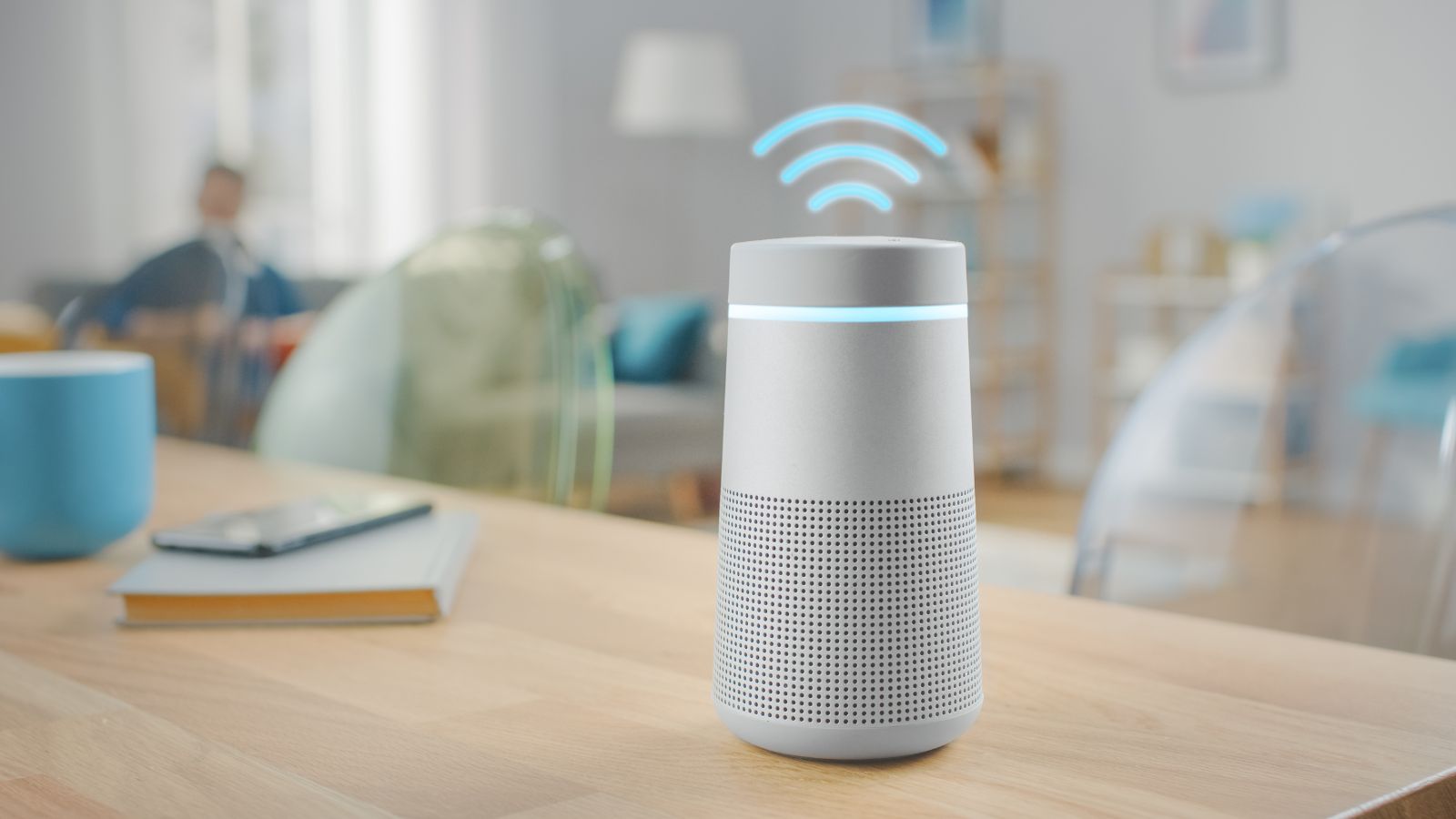
Another sign of enclosure is that access to the internet is increasingly routed through assistants, widgets, and built-in experiences that foreground certain sources and hide the broader web behind convenience. Phones, browsers, cars, smart speakers, and operating systems now encourage people to ask for answers rather than browse for them. That sounds like a simple interface shift, but it changes power. The assistant becomes the layer that decides which source is surfaced, whether a click-out is encouraged, and how much of the underlying web remains visible at all.
The trend links back to a larger pattern: when a device maker or platform controls the default way questions are asked and answered, openness depends on their incentives. A link-rich web rewards exploration; an assistant-led web rewards resolution. That can be excellent for simple tasks, but it compresses the experience of searching, comparing, and discovering. Over time, users may feel less need to visit independent sites directly because the device interface makes the open web seem slower or less necessary. The internet does not disappear in that model. It becomes background infrastructure for someone else’s curated front end.
Even “Openings” Now Come Wrapped in New Controls

Perhaps the most telling sign of all is that moments that look like greater openness often arrive bundled with new forms of control. Europe’s push to open mobile ecosystems has created alternative distribution paths, but those systems still involve notarization, region limits, compliance layers, and ongoing disputes over fees and terms. Age verification can widen trust while normalizing identity checks. AI bots can be blocked in defense of publishers while also making the web more permissioned. In other words, the next internet may still evolve in liberalizing directions, but almost never in the frictionless, universal way earlier internet culture imagined.
That is why so many people feel a strange tension in the current moment. The network is still vast, fast, and innovative, yet it increasingly behaves like a collection of managed zones rather than a commons. The important question is no longer whether the internet will remain technically available. It is whether it will remain easy to enter anonymously, simple to explore freely, feasible to build on independently, and worthwhile to publish to openly. On each of those measures, the warning signs are becoming harder to dismiss.
19 Things Canadians Don’t Realize the CRA Can See About Their Online Income

Earning money online feels simple and informal for many Canadians. Freelancing, selling products, and digital services often start as side projects. The problem appears at tax time. Many people underestimate how much information the CRA can access. Online platforms, banks, and payment processors create detailed records automatically. These records do not disappear once money hits an account. Small gaps in reporting add up quickly.
Here are 19 things Canadians don’t realize the CRA can see about their online income.
