
Digital life was sold as a cleaner, faster alternative to the old hassles of paperwork, waiting, and guesswork. Instead, many ordinary tasks now come wrapped in extra prompts, extra screens, extra verification, and extra decisions. Convenience still exists, but it often arrives with hidden mental overhead.
These 17 digital trends capture why everyday routines feel more layered than they used to. From logins and subscriptions to customer support, healthcare, payments, and privacy settings, the modern digital environment has become less about simple access and more about constant management.
Notification Overload Has Turned Attention Into a Battleground

The smartphone was supposed to streamline daily life, yet it has also become a delivery system for interruptions. News alerts, delivery updates, bank warnings, calendar reminders, loyalty offers, and app nudges now compete in the same tiny space. Research has shown that some users receive dozens of notifications in a day, and many turn them off because they feel irrelevant or excessive. What begins as helpful information often becomes a low-grade hum of obligation.
That shift changes behavior. A person checking one message can quickly be pulled into five more, not because any single alert matters, but because each one suggests something may be urgent. Even the useful ones create friction when mixed with noise. The result is not just distraction. It is the feeling that staying organized requires constant vigilance over a device that was meant to reduce effort, not multiply it.
Stronger Sign-Ins Have Made Basic Access More Demanding

Digital security has improved, but the path into an account is often more complicated than it was a few years ago. Passwords are being replaced or reinforced with passkeys, authentication apps, texted codes, biometrics, and backup recovery steps. Security experts support that direction because phishing and account theft remain serious problems. Still, the practical experience can feel like a maze, especially when an old phone number, a lost device, or a forgotten recovery key gets in the way.
That friction shows up in ordinary moments. Someone trying to pay a bill or join a video call may end up hunting for a six-digit code, approving a push prompt, or resetting access entirely. Industry research has found that forgotten passwords still derail purchases, even as new sign-in tools promise smoother experiences. In other words, the system is evolving for good reasons, but stronger protection has turned many everyday logins into mini identity exercises rather than quick acts of access.
Identity Checks Are Spreading Into Routine Services

Identity proofing used to be associated mostly with banks, border control, or large government transactions. Now it appears in much more ordinary settings: opening an online account, recovering access, verifying a payment method, or proving eligibility for a service. That change reflects real pressure to prevent fraud, synthetic identities, and impersonation. It also means more people are being asked to scan documents, record short videos, or match a face to an ID just to complete something simple.
The burden is not always technical, but it is often emotional. A quick digital errand can suddenly involve finding acceptable lighting, retrying a document scan, or wondering whether a selfie check failed because of the camera or the system. New work around mobile IDs and verifiable credentials suggests that identity checks will become even more embedded in digital life. The promise is faster trust. The reality, at least for now, is that routine services increasingly ask users to prove who they are with the rigor once reserved for far higher-stakes transactions.
Subscription Culture Has Made “Simple Monthly Costs” Harder to Track

The subscription model looked tidy at first: one fee, ongoing access, no large upfront cost. Over time, that clean logic has become harder to live with. Households often stack multiple streaming services, software plans, cloud storage tiers, and premium app memberships at the same time. Each charge may seem manageable on its own, yet together they create a shifting web of renewals, trial endings, bundle changes, and price increases that can be difficult to see clearly.
The complication grows when cancellation is harder than sign-up. Many people know the experience of enrolling in seconds, then clicking through a series of retention offers, account pages, and hidden settings just to stop paying. Regulators have taken aim at that imbalance because it has become so common. The deeper problem is cultural as much as technical. Digital life now treats recurring billing as the default. That turns everyday budgeting into a maintenance job, where the real task is not just choosing a service but remembering to keep managing it.
Privacy Pop-Ups Have Turned Consent Into Daily Housekeeping
Privacy controls are essential in principle, but the modern consent experience rarely feels empowering. Cookie banners, tracking notices, personalized ad settings, and location prompts now appear so frequently that many people click through them with barely a glance. Instead of offering calm, meaningful control, these notices often turn privacy into one more repetitive decision layered on top of whatever the person was actually trying to do.
That fatigue matters because consent is only useful when it is understandable. If a page presents multiple buttons, vague language, and a dense policy link, the easiest path often becomes the least private one. International consumer authorities and researchers have repeatedly warned that digital interfaces can steer people toward data sharing through design rather than clarity. So the average web visit now carries a strange tension: more privacy language than ever, but often less genuine comprehension. The digital world promises transparency, yet many people experience it as a stream of legalistic pop-ups standing between them and ordinary tasks.
Dark Patterns Have Made Digital Decisions Less Honest
Many modern interfaces do not simply present choices; they shape them. A checkout page may highlight the more expensive option, a cancellation flow may use guilt-laden language, or a consent screen may make the privacy-friendly button harder to find. These tactics are widely known as dark patterns, and they have become common enough that regulators across multiple countries now treat them as a serious consumer-protection issue rather than a minor design annoyance.
What makes dark patterns so exhausting is that they force people to read interfaces defensively. A person is no longer just buying, subscribing, downloading, or signing up. That person is also scanning for tricks. The mental question becomes: Which button is the honest one? Over time, that erodes trust in ordinary digital interactions. Even small moments, like closing a pop-up or declining an upsell, start to feel adversarial. The cumulative effect is a more suspicious form of everyday digital life, where convenience is still available, but only for those prepared to navigate design that may be working against their interests.
QR Codes and App-Only Systems Have Added Friction to Simple Tasks

A menu, parking meter, event ticket, transit pass, or product return now often begins with a scan. In many cases, the QR code is convenient. In many others, it quietly assumes a charged phone, a working camera, internet access, and enough confidence to trust that the code leads somewhere legitimate. What used to be a paper sign or a straightforward button now sometimes requires a chain of small digital dependencies.
That shift has also created new openings for scams. Consumer-protection agencies have warned that malicious QR codes can send people to spoofed sites or other dangerous destinations, especially when urgency is involved. The everyday result is oddly paradoxical. A tool designed to remove friction has introduced a new kind of caution. People are asked to scan first and verify later, even though the safe instinct is often the reverse. When basic errands require a phone, a camera, a compatible app, and a quick fraud assessment, routine convenience starts to feel less simple than advertised.
Scam Prevention Has Become Part of the Job of Being Online

Fraud used to feel like a special risk tied to unusual circumstances. Today it has become a routine layer of decision-making. People are expected to evaluate texts about missed deliveries, calls from “banks,” links in security warnings, payment requests from marketplaces, and urgent notices from agencies or employers. The modern digital citizen is not merely using services. That person is also constantly triaging what might be fake.
This burden has risen alongside more convincing impersonation tactics and the wider use of AI-enhanced deception. Authorities now openly discuss forged media and deepfake-related risks in identity systems, which shows how mainstream the concern has become. The practical consequence is that ordinary users must behave like investigators. They are told to slow down, inspect URLs, distrust urgency, confirm requests through another channel, and avoid reacting emotionally. All of that is sensible advice. It is also evidence of a more complicated daily environment, one in which safety depends less on the system catching fraud automatically and more on each individual spotting it in time.
AI Answers Save Time, but They Also Create More Verification Work

Generative AI has moved from novelty to default layer. Search engines summarize, apps rewrite, phones assist, and workplace tools increasingly draft before a human does. The appeal is obvious: fewer blank pages, faster overviews, quicker responses. Yet the hidden tradeoff is that polished output still needs checking. An answer that sounds fluent can still be incomplete, out of date, or simply wrong in ways that are not obvious at a glance.
That has created a new kind of cognitive tax. Instead of doing every task from scratch, people now spend more time deciding when to trust the machine and when to verify it. Research on AI use has shown both widespread exposure to generated answers and a tendency among some workers to rely on outputs without strong critical review. That combination explains the tension many people feel. AI may reduce effort at the start of a task, but it can add uncertainty at the end. Faster content is not the same thing as settled knowledge, and everyday digital life now requires more judgment, not less.
Communication Is Splintered Across Too Many Channels

A modern workday or school day can pass through email, chat, text, video meetings, project boards, document comments, learning platforms, and private messaging groups before lunch. Each tool is useful in isolation. Together, they can create a fragmented communication environment where the real challenge is figuring out where the important message landed. People are no longer only responding to information; they are also tracking the container it arrived in.
Large workplace studies have documented the scale of that overload, including heavy volumes of email and chat alongside constant interruptions. The human cost shows up in subtler ways: duplicated work, missed updates, meeting sprawl, and the sense that nothing is ever fully finished because another channel may still contain an unanswered thread. This is one reason digital life can feel busier even when some tasks are technically faster. The tools do not merely transmit communication. They multiply touchpoints, and with them the expectation that a responsible person should somehow remain current across all of them at once.
Healthcare Portals Have Improved Access While Fragmenting the Patient Experience

Digital healthcare has delivered real benefits. Patients can read test results, message clinicians, request refills, and schedule visits without waiting on hold. But convenience has often arrived in pieces rather than in one coherent system. Many patients now deal with separate portals for primary care, specialists, labs, imaging centers, insurers, pharmacies, and hospital networks. Access exists, yet it is distributed across multiple accounts, passwords, notification systems, and interfaces.
That fragmentation matters most when someone is already stressed. A person trying to compare results, retrieve records, or remember where a doctor posted instructions may have to move between platforms that do not talk to one another smoothly. Federal data in the United States shows that many patients now have multiple portals, while only a small share use tools that consolidate them. So digital access has indeed widened. The complication is that access is not the same as coherence. Healthcare has become more reachable on screen, but not always more organized from the patient’s point of view.
Personalized Pricing Has Made the Marketplace Feel Less Transparent

Digital commerce increasingly runs on data-rich systems that can sort consumers by behavior, location, timing, and other signals. In principle, personalization can improve relevance. In practice, it can also make pricing feel less stable and less legible. When people suspect that an offer is shaped not just by supply and demand but by what the platform knows about them, comparison shopping starts to feel murkier.
That uncertainty is no longer theoretical. Regulators have investigated so-called surveillance pricing, where firms use extensive personal or behavioral data to help determine what individuals see and potentially what they pay. Even when prices are not fully individualized, the broader effect is similar: the market feels less like a public shelf and more like a shifting interface. For consumers, that creates a new burden. The task is no longer simply finding the best value. It is also trying to judge whether the terms on screen reflect the product itself, the moment, or a deeper layer of invisible profiling operating behind the scenes.
Digital Wallets and Buy Now, Pay Later Have Complicated Checkout

The digital checkout was supposed to become frictionless: tap, confirm, done. Instead, many payment screens now offer a stack of competing paths—wallets, one-click cards, installment plans, stored balances, autofill tools, and app-based payment platforms—each with its own rules, protections, and consequences. The result is convenience mixed with complexity. Paying has become faster in the moment, but often less simple to evaluate.
Buy now, pay later services illustrate that tension well. They can make small purchases easier to absorb, which helps explain their rapid growth. But they also divide spending into separate streams that may sit outside a consumer’s main credit card view. Research has shown that users sometimes hold overlapping installment loans across multiple providers, which makes the overall picture harder to track. Add digital wallets to the mix, and a single household may be paying across several ecosystems without one clear dashboard. The checkout is smoother than ever. The aftercare—monitoring, reconciling, and remembering—often is not.
Smart Homes Still Require Too Much Translation

The connected home promised a future where devices would work together effortlessly. In reality, many people still find themselves checking whether a lock supports one ecosystem, whether a speaker prefers another, whether a light requires a separate hub, and whether a routine depends on Wi-Fi, Thread, Bluetooth, or a companion app. Even buying a simple bulb can feel like a compatibility puzzle rather than an appliance purchase.
The industry’s push toward shared standards shows how real that problem became. Matter, for example, was designed to improve interoperability across major smart-home platforms, which is a tacit acknowledgment that the earlier ecosystem model left consumers doing too much technical translation. The dream of the smart home was invisible computing. Too often, the reality has been visible troubleshooting. Pairing, firmware updates, platform support, and setup sequences turn convenience into a project. The devices can be useful, but many households still experience them less as seamless helpers and more as small systems that must be managed, interpreted, and occasionally coaxed into cooperation.
Entertainment and News Consumption Are More Fragmented Than Ever

Media abundance has brought choice, but choice at scale can become its own kind of burden. Movies, sports, podcasts, newsletters, creator videos, live streams, short-form clips, and traditional reporting now live across a crowded landscape of platforms. Keeping up often means juggling subscriptions, switching apps, and learning where a particular show, event, or source now resides. Discovery is easier in some ways and harder in others.
The same fragmentation affects news. Audiences increasingly encounter information through social feeds, video platforms, aggregators, and AI-generated summaries rather than through a small number of familiar homepages. That can widen access, but it also scatters context. People must decide not only what is true, but where it is best understood. In that environment, many end up fatigued rather than informed. Studies have found rising levels of news avoidance in several markets, a sign that too much digital choice can produce withdrawal instead of engagement. More content was meant to mean more empowerment. Often it feels like more sorting, more switching, and more mental clutter.
Delivery Apps Have Turned Convenience Into a Layered Price Tag
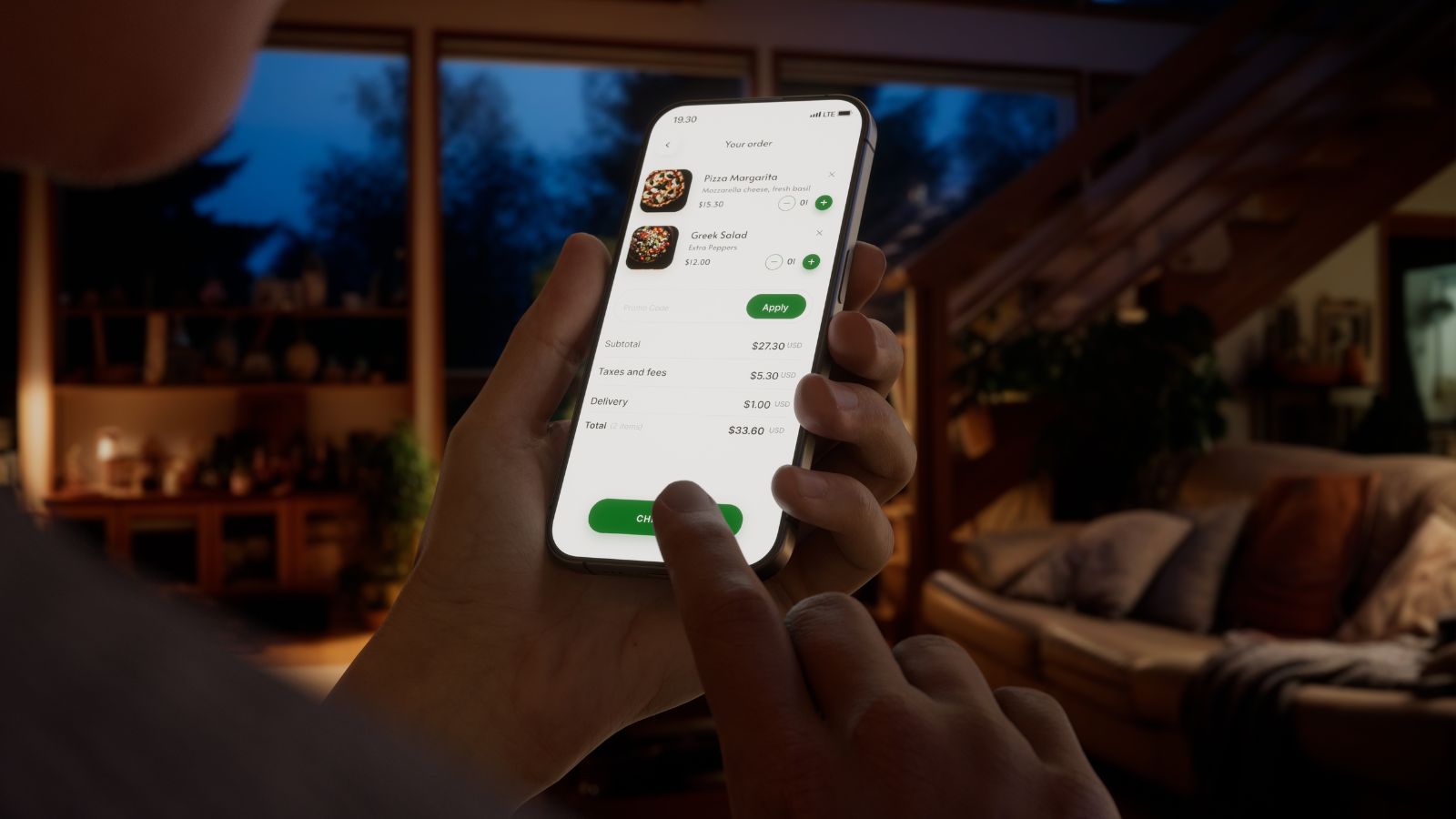
On-demand delivery changed expectations quickly. Meals, groceries, and household items can now appear at the door with astonishing ease. Yet the final bill often tells a more complicated story than the item list suggests. Service fees, small-order fees, priority surcharges, delivery charges, and tipped expectations can accumulate late in the process, making the true cost of convenience feel higher than it first appeared.
That gap between visible and full pricing has drawn regulatory scrutiny for a reason. Officials have argued that hidden or late-stage fees can distort comparison and mislead customers about what a service really costs. The human experience is familiar: the shopper who opens an app for a quick dinner and ends up debating whether the speed is worth the added layers on the receipt. Delivery apps still solve real problems, especially for busy families and people with limited mobility. But they also exemplify a broader digital pattern. What looks simple at the start often becomes more complicated by the time all the conditions, add-ons, and charges come into view.
Customer Service Bots Often Create a New Kind of Waiting

Self-service systems were meant to shorten support lines and resolve simple issues quickly. Sometimes they do. Too often, though, they trap people in rigid scripts, looping menus, and repetitive chatbot exchanges that never quite match the problem at hand. The user answers the same question three ways, re-enters the same account detail twice, and still struggles to reach a human who can interpret the situation.
Consumer watchdogs have warned that poorly designed chatbots can waste time, deliver inaccurate information, and leave people stuck when the stakes involve billing, access, or disputed charges. What makes this trend especially frustrating is that it disguises delay as efficiency. Traditional waiting was obvious: a hold tone and a queue. The new version looks interactive, yet it can consume just as much time while creating the impression that help is always one click away. In practice, many customers now navigate support as a system-design challenge. The problem is no longer only the issue they need fixed. It is also escaping the automated loop that stands between them and an actual solution.
19 Things Canadians Don’t Realize the CRA Can See About Their Online Income

Earning money online feels simple and informal for many Canadians. Freelancing, selling products, and digital services often start as side projects. The problem appears at tax time. Many people underestimate how much information the CRA can access. Online platforms, banks, and payment processors create detailed records automatically. These records do not disappear once money hits an account. Small gaps in reporting add up quickly.
Here are 19 things Canadians don’t realize the CRA can see about their online income.
