
For years, the most persuasive pitch in tech was simple: more convenience, more intelligence, less friction. Lately, that sales language has started to sound incomplete. The smarter the device or platform, the more often the fine print includes subscriptions, hidden infrastructure costs, repair headaches, privacy tradeoffs, or new layers of dependence.
That shift is what makes these 18 promises worth a closer look. None of them are entirely empty, and many still deliver real value in the right setting. But taken together, they reveal a broader pattern: the future being sold is increasingly bundled with bills, risks, and obligations that make the excitement feel more conditional than it once did.
AI Helpers for Every Task

The promise behind AI copilots is seductive because it sounds like a permanent productivity upgrade. A chat window appears in an office suite, browser, design platform, or customer system and suddenly routine work is supposed to move faster, cleaner, and with less mental drain. In some cases that is true. But what looked like a lightweight software improvement is turning out to be a very heavy industrial buildout. The convenience people see on-screen is being financed by enormous spending on chips, data centers, and power, which means the real price of “helpful AI everywhere” is not just a monthly fee. It is also an infrastructure race with serious economic and energy consequences.
That is why the tone around enterprise AI has changed from wonder to cost accounting. Executives are no longer just asking whether these tools are impressive; they are asking whether the gains justify the electricity, licensing, and capital intensity underneath them. A feature that writes emails faster can feel less magical when it is tied to hyperscaler spending in the hundreds of billions and rapidly rising data-center demand. The original promise was effortless assistance. The updated reality looks more like a giant utility bill hidden behind a polished interface.
Productivity Suites That Keep Adding Paid Intelligence

Office software once sold itself as a stable necessity: buy access to email, documents, spreadsheets, and presentations, then get on with work. AI changed that structure. The new pitch says the same familiar tools can now summarize meetings, draft reports, build slide decks, and turn scattered notes into polished outputs. On paper, that sounds like a bargain because the software already sits at the center of daily work. In practice, the pricing model has made many organizations pause. When an AI layer is sold per user, per month, even a seemingly manageable fee becomes a major budget line once it is rolled out across whole teams.
The expense feels especially sharp because the benefits are uneven. A senior manager buried in meetings may save real time, while a lightly administrative role may gain far less. Yet companies are still pushed toward broad deployment because nobody wants to look late to the AI transition. Even consumer plans are being reworked around this logic, with higher subscription prices and usage caps dressed up as added value. The old office-suite promise was predictability. The new one is that intelligence can be bolted on everywhere, but only after organizations accept that ordinary productivity software is turning into a recurring AI spend.
Creative Software That Charges for Inspiration in Layers

Creative software used to be expensive in a straightforward way. Designers, editors, and photographers paid for powerful tools, accepted the subscription burden, and worked within that bargain. The newer promise is more ambitious: creative platforms now say they can generate concepts, expand scenes, remove objects, write copy, create video, and accelerate almost every stage of production. That has genuine appeal, especially for freelancers and small teams under pressure to produce more with less. But the pricing structure is starting to make the promise feel less like empowerment and more like metered creativity.
What changes the mood is not just that AI features cost money. It is that they introduce an additional economy inside products that were already expensive. Plans come with generative credits, premium tiers, higher-priced bundles, and add-ons for those who run out. In other words, the software no longer simply rents access to tools; it increasingly rents access to outputs. For working creators, that can feel like paying twice: once for the core platform and again for the supposedly time-saving intelligence layered on top of it. A system marketed as creative liberation starts to sound more expensive than exciting when every shortcut comes with a counter ticking in the background.
Smart Homes That Need Constant Trust

The smart-home pitch has always been emotionally powerful. Lights that adjust automatically, locks that can be opened remotely, speakers that answer questions, and cameras that watch over a property all suggest a home that is more responsive and secure. It is an appealing vision because it recasts ordinary domestic life as something smoother and more controlled. But the longer these products stay in the market, the more obvious it becomes that convenience is only part of the transaction. Smart homes require software support, disciplined security practices, and a level of trust in manufacturers that many consumers never fully realized they were extending.
That trust has been shaken repeatedly. Security-camera scandals, weak account protections, and vague update policies have turned convenience products into long-term liabilities for some households. A device is no longer just a device when its usefulness depends on patch cycles, cloud services, and a company’s willingness to support it for years. That means every smart bulb, thermostat, or camera quietly carries a question that older appliances did not: how long will this still be safe and functional? The promise of a more intelligent home begins to feel less exciting when the house also becomes a networked dependency that can age, break, or expose private life in ways earlier technology never could.
Robotaxis and Self-Driving Freedom
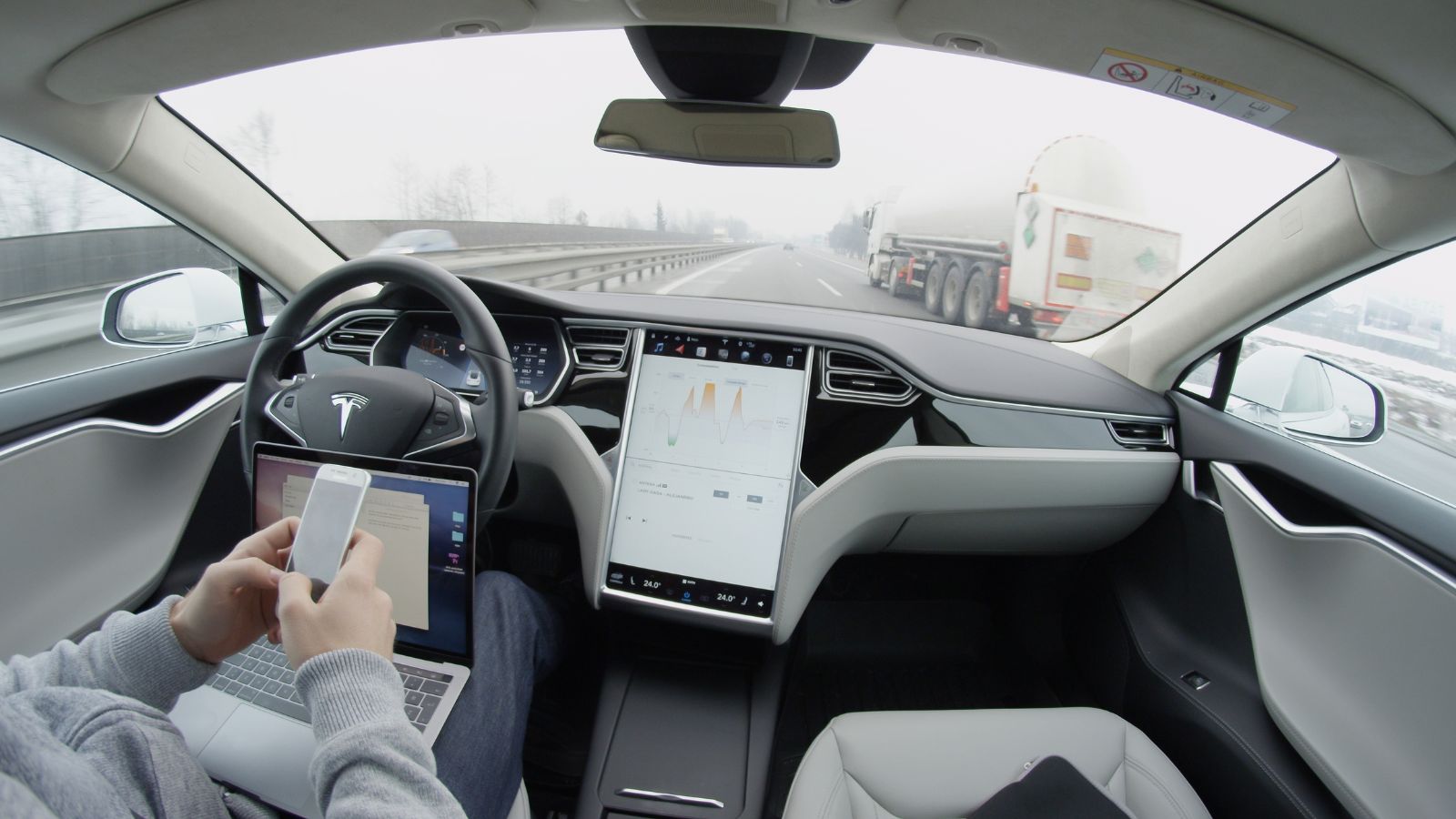
Self-driving cars were sold as one of the grandest consumer-tech promises of the century. The story was compelling: safer roads, reclaimed commuting time, cheaper transport, and eventually cities reorganized around autonomous mobility. Even now, the idea still carries enormous emotional power because it suggests freedom without the burden of driving. But the road from demonstration to durable business has been costlier and messier than early optimism implied. Regulation, liability, hardware complexity, crash investigations, and fleet-management expenses have turned the dream into a prolonged and expensive proving ground.
That is why the public mood around autonomy has shifted. The technology is no longer judged only by what it can do on a controlled route or in a polished demo. It is judged by how often it fails, how transparently companies respond, and whether the economics can survive real-world deployment. When a major automaker pulls back from a money-losing robotaxi bet after years of investment, it sends a clear signal that the future is not arriving on the original timeline or budget. The promise used to be that self-driving would remove the cost of human driving. The reality, at least for now, is that it has introduced a new category of technical, legal, and capital expense.
AI Phones That Justify Ever-Higher Upgrades

The smartphone market has learned how to rename maturity as innovation. Once annual improvements in cameras, battery life, and performance became less dramatic for ordinary users, handset makers needed a new argument for why people should keep paying flagship prices. AI became that argument. Now the pitch is that phones are not merely faster or sleeker; they are more personal, more predictive, and more capable of turning everyday tasks into automated experiences. It is a clever repositioning because it makes the upgrade cycle sound less like consumption and more like entering a smarter era of computing.
Yet the cost story is getting harder to ignore. Premium pricing keeps moving upward, the ultra-premium tier keeps growing, and rising component costs are making cheaper devices harder to sustain. AI features may be useful, but they also function as justification for devices that increasingly live in four-figure territory. That creates an awkward gap between the marketing message and the lived experience. Many consumers do not feel their current phone is broken; they are being told it is insufficiently intelligent. A phone that summarizes notifications or cleans up photos can be genuinely helpful, but it becomes less thrilling when the upgrade attached to that convenience looks more like a luxury tax than a necessary leap forward.
Streaming That Was Supposed to Simplify Entertainment

Streaming originally felt like a relief from the bloated cable bundle. Viewers could pay for what they wanted, avoid long contracts, and enjoy a more flexible entertainment experience. It was one of tech’s cleanest consumer victories because the value proposition was obvious and immediate. Over time, though, the promise of cheaper and simpler entertainment has frayed. Catalogs splintered, exclusive rights multiplied, ad tiers returned, and prices rose across the industry. The result is a landscape where convenience still exists, but the savings and simplicity that once made streaming feel revolutionary are much harder to find.
That shift matters because it exposes how often tech disruption circles back to the same old economics. Consumers now juggle multiple subscriptions, rotate services to chase a single show, or accept ads to keep costs manageable. Platforms keep experimenting with higher prices, tighter bundles, and more monetization layers because the original low-cost model was never guaranteed to last. Streaming is still better than many of the alternatives in terms of access and usability. But the emotional tone has changed. What once felt like liberation now often feels like subscription management, and a promise built on choice begins to sound expensive when the only way to follow modern entertainment is to keep stacking monthly charges.
Cloud Everything as the Default Answer

Cloud computing was pitched as a financial and operational breakthrough. Instead of owning hardware, businesses could rent exactly what they needed, scale up on demand, and avoid the capital burdens of traditional infrastructure. That logic still works in many cases, especially for fast-growing teams and unpredictable workloads. But the confident assumption that the cloud is automatically the cheaper, more flexible answer has weakened. More organizations are discovering that convenience at scale can come with difficult surprises: spend creep, complex billing, egress charges, and architecture decisions that are expensive to reverse later.
This is why “cloud first” sounds less like a universal truth and more like a situational strategy than it once did. The cloud is not failing; rather, its hidden frictions are becoming easier to see. Data movement costs matter. Waste matters. Governance matters. Once teams start layering AI workloads or running large, steady-state systems for years, the monthly rental model can lose some of its shine. What made the cloud exciting was the sense that it turned infrastructure into a utility. What makes it feel expensive now is the realization that utilities still produce ugly bills, especially when usage is hard to predict and leaving the platform is not nearly as effortless as joining it.
Cashless Convenience That Keeps Adding Fees

Digital payments are one of the most successful examples of friction reduction in modern tech. Tapping a phone, scanning a code, or saving a card on file removes small annoyances from daily life and makes money feel instantly mobile. That convenience is real, and consumers have clearly embraced it. But the cashless future has also exposed a quieter cost structure that is easier to ignore when payments feel seamless. Every frictionless moment sits inside a network of interchange fees, platform dependencies, merchant expenses, and potential outage risks that do not disappear just because the payment looks effortless on the surface.
That tension explains why cash remains stubbornly relevant even in increasingly digital economies. It is not only about habit. It is also about backup, resilience, and the avoidance of certain fees or system dependencies. Merchants still care about swipe costs, regulators still worry about competition, and consumers are reminded during disruptions that an entirely digital payment chain can fail all at once. The promise of cashless life was that money would become simpler. Instead, it often becomes more abstract while the costs move elsewhere: into merchant pricing, financial infrastructure, and a growing expectation that every purchase must pass through an ever more mediated technical system.
Health Wearables That Quietly Become Membership Programs

Wearables are marketed as preventive care in consumer form. A ring, watch, or band tracks sleep, recovery, heart rhythm, activity, stress, and sometimes more, then turns that data into the reassuring feeling that health is being observed continuously. This is one of the most appealing tech promises because it combines self-knowledge, discipline, and control. In many cases, these devices genuinely help people notice patterns and make better decisions. But the wellness promise increasingly comes with a financial structure that looks less like a one-time purchase and more like a long-term subscription relationship.
That matters because the emotional appeal of health technology makes recurring charges easier to normalize. Hardware costs are only part of the story. Memberships unlock insights, premium features, or advanced analysis, and new services keep expanding what “complete” tracking supposedly requires. At the same time, researchers have warned that false alerts and ambiguous readings can create anxiety or send users toward medical follow-up that may not always be necessary. So the wearable bargain is becoming more complicated. It can be useful, even impressive, but it can also turn health awareness into a paid ecosystem where reassurance is rented monthly and the line between empowerment and worry grows thinner over time.
Smart Appliances That Can Age Before They Break

Appliances used to have a reassuring kind of durability. A refrigerator, washer, or oven might wear out eventually, but it was still understood as a physical object whose lifespan depended mainly on mechanics and maintenance. Smart appliances disrupted that expectation by adding apps, connectivity, remote controls, sensors, and software-driven features. The sales pitch was straightforward: the kitchen and laundry room could become more efficient, more informed, and more integrated with daily routines. But the cost of that shift is becoming harder to miss because software does not age like steel, glass, or motors do.
A connected appliance can become frustrating long before its physical components are finished. If update policies are unclear, app support changes, or repair materials are restricted, the product’s useful life can shrink in ways consumers did not anticipate when paying a premium for “smart” features. That creates a strange form of depreciation. A washing machine may still wash perfectly well, yet feel compromised because the digital layer around it is decaying. When buyers begin to wonder whether a refrigerator will lose software support before it loses cooling power, the promise of intelligence stops sounding futuristic. It starts sounding like another way ordinary household objects are being pushed into the same fragile upgrade cycle as consumer electronics.
Connected Cars That Keep Monetizing Ownership

For decades, buying a car implied a fairly simple exchange: pay the big upfront cost, then deal with fuel, insurance, and maintenance. Connected vehicles have changed that relationship. Automakers now pitch cars as evolving software platforms that can add features, improve through updates, and deliver ongoing services like advanced navigation, hands-free driving, safety tools, and personalized settings. On the surface, that sounds modern and even generous. Instead of becoming outdated the moment they leave the lot, vehicles can supposedly improve over time. But this model also creates a powerful incentive for automakers to keep charging long after the sale is complete.
That is where the excitement starts to cool. Consumers increasingly sense that ownership is being redefined into a layered subscription experience, one where desirable functions may sit behind trials, packages, or recurring fees. Add privacy concerns around vehicle data collection and the bargain becomes even more uneasy. A connected car can be impressive, but it can also behave like a rolling service contract. The result is a new kind of consumer suspicion: the feeling that hardware already paid for is being deliberately turned into a platform for extracting more revenue. What was supposed to feel futuristic instead risks feeling like the logic of the smartphone app store installed in a two-ton machine.
AI Search That Saves Time by Keeping People on the Page

Search is being reshaped around an appealing promise: less clicking, faster answers, and a cleaner path from question to result. For users trying to compare products, settle a fact, or get a quick explanation, AI-generated summaries can feel undeniably useful. But the same efficiency raises an uncomfortable question about what happens to the broader web when fewer people leave the search page. If answers are increasingly synthesized before users ever reach an original source, the sites that produced the reporting, expertise, and analysis underneath those answers may see less traffic, less revenue, and less reason to keep publishing openly.
That is why AI search has started to sound expensive in a societal rather than personal sense. The user saves time, but the information ecosystem may lose oxygen. Publishers already facing weak ad markets and volatile platform traffic are now confronting the possibility that even search referrals, once relatively stable, will keep shrinking. This is not just a media-industry complaint. It is a structural concern about what kind of internet remains if the reward for producing useful public information keeps falling. The original search promise was discovery. The newer promise is completion inside the interface itself, and that convenience begins to feel costly when it weakens the very web it depends on.
AR and VR as the Next Normal Interface

AR and VR have been sold in waves. First, they were the future of gaming, then remote work, then education, then shopping, then the metaverse, then spatial computing, and now increasingly a bridge to AI-driven wearables and smart glasses. The promise always has a familiar shape: richer digital interaction, more presence, and a more natural relationship with computing than flat screens can offer. There is still truth in that vision. In specialized environments, immersive technology can be genuinely useful. But the consumer story has struggled because the path to mainstream adoption keeps relying on expensive hardware, awkward form factors, and benefits that feel more potential than habit-forming for many buyers.
That tension shows up clearly in the market. Growth in some XR categories is real, especially around lighter smart-glasses formats, yet traditional VR and MR headsets have continued to face demand challenges. The industry keeps finding ways to reframe the promise, which is often a sign that the original proposition has not fully landed. Consumers are not rejecting the idea of immersive computing outright; they are hesitating at the price of admission and the unclear everyday payoff. A technology can be impressive and still not feel worth the bulk, the battery tradeoffs, or the money. That is why the dream persists while the enthusiasm stays selective.
Facial Recognition as the Price of Safety and Speed

Facial recognition systems are often introduced with a pragmatic argument. They can identify threats faster, reduce human workload, streamline access, and make public or commercial spaces more secure. For institutions under pressure to do more with fewer people, that is an appealing promise. But biometric technologies carry an unusually heavy burden because their errors are personal and their spread tends to be quiet. A false match is not a minor inconvenience when it affects policing, security decisions, or who gets flagged in a retail or transportation setting. The technology may be improving, but the cost of mistakes is still hard to wave away.
What makes the promise sound more expensive now is that the price is not measured only in software budgets. It is measured in bias concerns, oversight gaps, public unease, and the possibility that ordinary movement through physical spaces becomes continuously machine-readable by default. Once systems are installed, their use can expand beyond the original justification, and the burden of transparency often falls behind the pace of deployment. The sales pitch focuses on speed and deterrence. The public concern focuses on fairness and accountability. When those two things do not align, facial recognition stops sounding like an efficiency upgrade and starts sounding like a costly gamble with trust.
Personalized EdTech That Costs More Than It Proves

Education technology has long been marketed with an almost moral confidence. Personalized platforms, adaptive lessons, dashboards, and digital tools are supposed to meet students where they are and help schools modernize at scale. It is an attractive promise because it suggests that better learning can be engineered through better interfaces and better data. In the right context, some tools clearly help. But the broader evidence base has remained more mixed than the marketing often implies, especially when large investments are made before schools have clear proof that the technology improves learning enough to justify the cost.
That gap matters because education budgets are finite and schools do not buy technology in a vacuum. Money spent on devices, platforms, and licensing is money not spent elsewhere. Researchers and international agencies have repeatedly warned that the costs of digital adoption are often underestimated and that outcomes depend heavily on how tools are used, by whom, and for what type of learning task. Personalized edtech sounds powerful because it promises both scale and care at once. But when the evidence is uneven, distraction risks remain, and even reading comprehension can differ by medium, the promise begins to feel less like a breakthrough and more like an expensive act of optimism.
Ten-Minute Delivery as Everyday Convenience Infrastructure

Quick commerce is one of those ideas that feels obviously brilliant from the user side. Groceries, medicine, snacks, and household basics appear almost instantly, turning errands into taps. The promise is not just speed but a new expectation of urban life: almost anything can be summoned on demand. That can feel exciting in the same way ride-hailing once did, because it collapses waiting time and reframes convenience as a default service layer. But businesses have had to spend heavily to make that expectation feel normal, and the underlying economics still look fragile in many markets.
The problem is that extreme convenience often depends on a mix of subsidy, dense logistics, labor pressure, and fierce competition that can punish profitability. Fast delivery is easy to love when the app absorbs the inefficiency, but much harder to sustain when growth slows or rivals force constant promotions. Some companies are improving results, yet many still face the tension between expansion and margins. That makes the promise feel more expensive than exciting because the real cost does not vanish; it moves into investor expectations, merchant terms, delivery fees, or workers’ conditions. Ultra-fast commerce is impressive, but it may be one of those innovations that people enjoy most when someone else is still paying for the fantasy.
AI Customer Service That Was Supposed to Fix Support

Customer service looked like one of AI’s most immediate commercial wins. The case seemed simple: chatbots never sleep, can handle large volumes cheaply, answer routine questions instantly, and free human staff for harder problems. Few promises in enterprise tech sounded more straightforward. Yet this is precisely where the limits of automation have become especially visible. Customers often do not need only speed. They need judgment, flexibility, reassurance, and someone who can understand a messy exception without forcing the issue through a script. Those are the moments when the cost-saving story starts to wobble.
That is why companies that once celebrated bold chatbot gains have begun speaking more carefully. AI can triage, summarize, and reduce simple workload, but it does not automatically create a satisfying support experience. In many cases it merely moves frustration earlier in the interaction if escalation paths are weak or empathy is missing. The promise was that customer service would become faster and cheaper at the same time. The reality is more mixed: efficiency gains exist, but organizations are learning that bad automation can quietly damage loyalty, trust, and brand value. A support system that makes people feel trapped inside a machine may save money in one column while creating losses in another.
19 Things Canadians Don’t Realize the CRA Can See About Their Online Income

Earning money online feels simple and informal for many Canadians. Freelancing, selling products, and digital services often start as side projects. The problem appears at tax time. Many people underestimate how much information the CRA can access. Online platforms, banks, and payment processors create detailed records automatically. These records do not disappear once money hits an account. Small gaps in reporting add up quickly.
Here are 19 things Canadians don’t realize the CRA can see about their online income.
