
The shift is no longer just a burst of patriotic noise or a few viral shopping posts. In 2026, the conversation around U.S. products in Canada has moved into grocery aisles, liquor stores, travel bookings, and even the way companies label their shelves. What once felt like a routine cross-border habit now carries more economic, political, and emotional weight.
These 19 reasons help explain why Canadians are taking a harder look at what they buy, where it comes from, and what that purchase supports. Some of the change is about price. Some of it is about trust. And some of it comes down to a broader feeling that the old Canada-U.S. shopping relationship no longer feels as automatic as it once did.
Tariff Uncertainty Changed the Mood

One of the biggest reasons Canadians are rethinking U.S. products is that trade tension stopped feeling abstract. Once tariffs and countermeasures entered everyday conversation, buying American-made goods no longer felt like a neutral habit. Even after Canada removed many retaliatory tariffs in September 2025, duties tied to steel, aluminum, and autos remained in place, keeping the dispute visible and unresolved.
That lingering uncertainty matters because shoppers tend to react not only to prices, but to instability. A product can still be sitting on the same shelf and yet feel different when headlines keep raising questions about policy swings, retaliatory measures, and economic fallout. In that kind of climate, consumers often start simplifying their choices. For many Canadians, that has meant leaning toward products that feel safer, closer to home, and less entangled in a trade fight that has dragged on longer than many expected.
This Is Showing Up in Real Spending Data

What makes this moment different is that the shift is no longer based only on anecdotes. Bank of Canada researchers found measurable changes in both travel and grocery spending, showing that Canadians did, in fact, move some spending away from U.S. goods and services. In food, the share going to Canadian products rose by about two percentage points in March 2025 relative to January, while the share going to U.S. products fell by a similar amount.
That may sound modest, but in consumer behavior, a visible shift across thousands of households is meaningful. It suggests a broad-based change in habits rather than a passing social-media gesture. Polling in early 2026 added to that picture, with more than half of Canadians saying they were still avoiding U.S. goods when a non-American alternative was available. Taken together, the data point to something more durable than a momentary protest: a real reconsideration happening at the cash register.
Groceries Became the Easiest Place to Switch
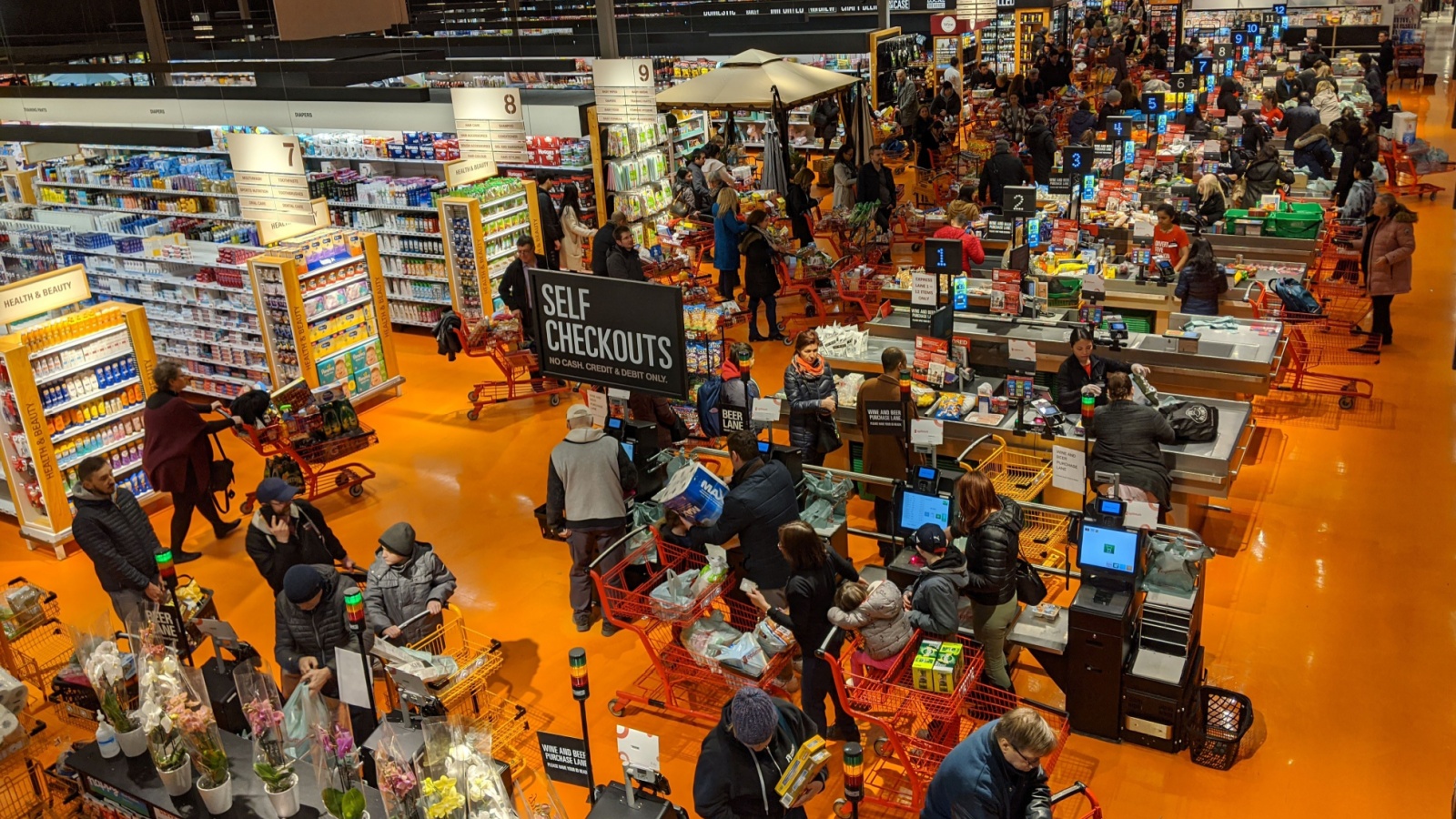
The grocery store is where many Canadians have found it easiest to act on their intentions. Food is bought frequently, alternatives are usually nearby, and substitutions can happen without much disruption. That helps explain why grocery categories became the front line of the Buy Canadian shift. Angus Reid found that among Canadians making changes, nearly all said they were looking for “Made in Canada” when shopping for food.
There is also a practical reason groceries moved first: food is one of the few parts of daily spending where domestic options are often visible and accessible. Bank of Canada research noted that outside food, where Canadian substitutes are harder to find, there was no comparable spending shift. That contrast says a lot. Canadians are not rejecting U.S. products in some sweeping ideological way. They are starting where the switch feels possible, immediate, and realistic, and the supermarket makes that easier than most other parts of the economy.
Some Food Categories Became Flashpoints

Not all grocery categories moved in the same way. Bank of Canada researchers found that the shift away from U.S. products was especially noticeable in categories such as coffee and fruit juice. That matters because these are everyday items people notice quickly when labels, prices, or country of origin suddenly become part of the decision.
Fruit juice, in particular, became symbolic because products such as orange juice were explicitly caught up in Canada’s 2025 tariff response. When a familiar breakfast item starts carrying new political and pricing baggage, it becomes a visible reminder of a broader dispute. Coffee played a similar role because it sits in a frequent-purchase category where shoppers often have multiple brands in front of them. Once those products became part of a national conversation, routine shopping turned into a small act of judgment. For many households, the rethink began not with luxury items, but with the most ordinary things in the cart.
Cross-Border Travel Slumped, and That Changed Shopping Too

Travel and shopping are closely linked, and the pullback in U.S.-bound travel has reinforced the broader rethink around American spending. Statistics Canada reported that in January 2026, Canadian return trips from the United States were down 22% from a year earlier, marking the 13th straight year-over-year monthly decline. Compared with January 2024, trips were down even more sharply.
When fewer Canadians are driving across the border, flying south for weekends, or planning quick U.S. getaways, the emotional connection to American consumption starts to cool as well. That matters because travel often normalizes other types of spending: outlet purchases, restaurant visits, gas stops, duty-free habits, and brand familiarity. Once the trip itself feels less appealing, the surrounding spending can start to feel less automatic too. Polling has shown that a meaningful share of Canadians have cancelled or delayed U.S. trips, and that shift has clearly fed into how people think about U.S. products at home.
Spending at Home Started to Feel More Purposeful

As U.S. travel weakened, more Canadians started redirecting money inward. Bank of Canada research found that Canadians took close to 10 million fewer trips to the United States in 2025 than in 2024, while domestic trips rose and spending on travel and tourism in Canada increased. In the second quarter of 2025, those domestic gains became especially noticeable, with strong year-over-year increases in both trips and expenditures.
That kind of redirection changes the tone of consumer behavior. Spending inside Canada begins to feel like more than routine consumption; it starts to resemble economic participation. A weekend in Muskoka, a meal at a local restaurant, or a purchase from a homegrown producer begins to carry a sense of purpose. RBC’s recent analysis has pointed to the same broad pattern, with travel and tourism spending shifting more toward Canada as U.S. cross-border demand softened. In other words, rethinking U.S. products is not just about avoidance. It is also about where Canadians increasingly want their money to land.
Labels Suddenly Matter Much More

A year ago, many shoppers likely glanced at brand names more than origin labels. That has changed. KPMG found that a large majority of Canadians are paying more attention to where products are made and want retailers to identify and promote Canadian goods more clearly. In practical terms, this means shoppers are now reading packaging, checking fine print, and pausing over details that once would have been ignored.
That change is important because labels shape behavior long before price becomes the deciding factor. Once consumers begin actively scanning for origin, shelf choices slow down. The habit becomes less automatic and more deliberate. A package that once blended into the aisle now gets examined for wording, qualifiers, and country cues. That level of attention naturally puts U.S. products under more scrutiny. It does not guarantee rejection, but it does mean fewer effortless purchases. And when buying becomes more conscious, domestic alternatives often gain an advantage simply because they better match the mood of the moment.
Better Shelf Signage Made Substitution Easier

Consumers are not doing all of this work alone. Retailers have made origin and tariff exposure more visible, which has made switching more practical. Loblaw said in 2025 that products affected by tariffs would be marked with a “T” symbol, and Reuters later reported that the number of items carrying that symbol was set to rise into the thousands. That kind of in-store cue turns a vague concern into a concrete shopping tool.
The effect is simple but powerful. When a shopper can immediately see which items are tariff-affected or compare them to domestic alternatives in the same aisle, hesitation becomes action. It reduces the friction of having to search, guess, or check later at home. In many consumer categories, convenience determines behavior more than ideology does. Better signage changed that convenience equation. It made patriotic purchasing easier to act on in real time, which helps explain why this shift spread beyond online talk and into everyday stores where seconds, not speeches, decide what ends up in the basket.
Maple Leaves No Longer Automatically Win Trust

Another reason Canadians are rethinking U.S. products is that they have also become more skeptical of labels that look Canadian without clearly being Canadian. The Competition Bureau warns consumers not to assume a product is Canadian just because it uses red colouring or a maple leaf. That alone says something about the current mood: symbolism is no longer enough.
The rules also reveal why shoppers are pausing. For non-food products, “Product of Canada” generally requires at least 98% of direct production or manufacturing costs to be Canadian, while “Made in Canada” has a lower threshold of 51% and must be accompanied by a qualifying statement if imported content is involved. Once people learn that distinction, the shelf starts to look more complicated. A product can feel national in branding while being far more mixed in origin. That has not only made consumers more cautious about Canadian claims; it has also made them more likely to question U.S. brands and compare them more carefully before buying.
Origin Claims Became a Real Trust Issue

The rise in attention to labels has been matched by rising concern about misleading claims. The Canadian Food Inspection Agency said complaints about origin claims increased, particularly around food labels, bulk produce, and advertising. By March 2026, the agency had issued $47,000 in financial penalties to businesses over inaccurate or misleading country-of-origin claims, including fines involving major grocery banners.
That kind of enforcement changes consumer psychology. It tells shoppers that the confusion they feel is not imagined and that some of the labels prompting suspicion were serious enough to trigger penalties. In a market where people are already trying to avoid mistakes, trust becomes a valuable currency. Once consumers feel that labels need double-checking, they often respond by simplifying the decision: choosing the product with the clearest domestic identity or skipping the uncertain one altogether. In that environment, U.S. products can lose ground even when they are not the specific problem, simply because the overall shopping atmosphere has become more cautious.
Retailers Are Reworking What Gets Attention

Another force behind the rethink is that Canadian retailers have adjusted their own behavior. Reuters reported that some U.S. consumer companies saw Canadian expansion plans stall or shrink as retailers became more cautious about American assortments. One distributor halted work on bringing a California diaper brand into more Canadian stores, citing anti-American sentiment, while other suppliers said Canadian chains were ordering fewer U.S. products amid the uncertainty.
That matters because consumer behavior and shelf strategy often reinforce each other. When shoppers start asking more questions, retailers become more selective. When retailers become more selective, shoppers see more local options and fewer American defaults. The result is a feedback loop. Metro told Reuters it prioritizes local Canadian products whenever possible, which reflects how mainstream the shift has become. This is no longer only about a vocal minority seeking out obscure alternatives. It is increasingly built into the way large chains think about assortment, value, and the public mood.
Canadian Alternatives Are Getting a Fresh Look

One of the most human reasons Canadians are rethinking U.S. products is that the process has introduced them to domestic brands they previously overlooked. Reuters highlighted how one Quebec shopper switched to Canadian-made Royale diapers after realizing how few homegrown options existed in that category. Irving Personal Care, the New Brunswick manufacturer behind the brand, said its weekly shipments had quadrupled as retailers across Canada reached out.
That kind of story captures how habits change in real life. Many people are not abandoning U.S. products because they suddenly disliked them; they are discovering Canadian substitutes they never had a reason to try before. The same Reuters report described a Canadian hand-cleaner company gaining new optimism as retailers considered reducing a U.S. rival’s shelf presence. These are not abstract market shifts. They are moments when a Canadian product that once sat in the background suddenly gets a serious look. Once that alternative proves acceptable or even better, the old buying habit becomes much easier to break.
Even Online U.S. Spending Is Under More Scrutiny

The rethink is not limited to physical stores. Angus Reid found that two in five Canadians said they would seek to buy elsewhere than Amazon while tariff threats and broader Canada-U.S. tensions were in the spotlight. That is striking because online convenience has long been one of the biggest advantages American retail giants hold in Canada.
What makes this especially notable is that online habits are usually sticky. People build routines around subscriptions, saved payment methods, fast shipping, and algorithm-driven recommendations. Breaking that pattern requires stronger motivation than simply noticing a price difference on a store shelf. The fact that a meaningful share of Canadians said they were prepared to pull back anyway suggests the mood runs deeper than a few point-of-sale substitutions. Once the broader relationship feels strained, some consumers start to question where their online dollars go too. That does not mean the shift will be total, but it does show that American products are now being reconsidered in digital spaces as well as physical aisles.
Alcohol Became a High-Visibility Symbol

Few categories made the shift more visible than alcohol. In March 2025, the LCBO said it had ceased the purchase of all U.S. products and removed them from retail channels in response to tariffs. Quebec’s SAQ later confirmed that its ban on ordering new U.S. products and selling those not meeting special criteria remained in effect into 2026. These were not small or symbolic moves tucked away from public view. They were direct hits to familiar American brands in highly visible provincial systems.
The commercial impact was hard to miss. Reuters reported that sales of U.S. spirits in Canada fell 66.3% between March 5 and the end of April 2025, according to Spirits Canada. Alcohol matters here because it sits at the intersection of retail, identity, and messaging. Removing bourbon from shelves sends a sharper cultural signal than quietly swapping one packaged food for another. It told consumers that the rethink around U.S. products had moved beyond personal preference and into institutional response, making the broader shift feel even more real.
More Canadians Are Willing to Pay for the Alternative

Price still matters, but many Canadians appear more willing than before to accept a premium for domestic or non-U.S. options. KPMG found that more than three-quarters of Canadian consumers said they would buy Canadian products even if they cost more. It also found that many shoppers would actively look for a non-U.S. version when no Canadian equivalent was available. Angus Reid similarly found that a large group of Canadians wanted to replace U.S. products, even if price and quality still had to be weighed.
That willingness changes the competitive landscape. U.S. products have often benefited from scale, distribution, and familiarity. But when consumers are ready to pay a little extra for local production, political comfort, or national solidarity, the old advantage narrows. The decision becomes less about squeezing every cent and more about what the purchase represents. In periods of economic or political tension, symbolic value can become part of the value equation. That is a major reason the rethink has lasted: for many Canadians, the tradeoff no longer feels purely financial.
Currency Swings Add Another Layer of Uncertainty

Exchange rates are not the only reason Canadians are rethinking U.S. products, but they add another layer of discomfort. Global Affairs Canada noted that in early 2025 the Canadian dollar was fluctuating around 0.696 U.S. dollars and hit a 22-year daily low in February amid tariff uncertainty. By April 13, 2026, Reuters reported the loonie at roughly 72.49 U.S. cents. That is an improvement, but it still reflects a period of sharp movement tied to broader instability.
For consumers, volatility often matters as much as the level itself. When the exchange rate swings, U.S.-linked goods can feel harder to evaluate. Imported prices seem more exposed, cross-border purchases become less predictable, and even ordinary items can start to feel vulnerable to forces outside the shopper’s control. Most consumers are not tracking foreign-exchange markets in detail, but they notice the result when product prices feel jumpier or when familiar U.S. goods no longer seem like the obvious value choice. In that atmosphere, domestic products benefit simply by feeling more anchored and less exposed to outside shocks.
The Trade Relationship No Longer Feels Automatic

The broader numbers help explain the mood. Statistics Canada reported that in 2025 the U.S. share of Canada’s merchandise imports fell from 62.3% to 58.8%, while the share of exports going to the United States dropped from 75.9% to 71.7%. Those are still huge figures, but the direction matters. It suggests a relationship that remains dominant while becoming a little less automatic than it was.
That shift has a psychological effect beyond trade tables. For decades, many Canadians treated U.S. products as the natural default because the economic relationship felt stable, deep, and convenient. When the numbers start bending, even gradually, that assumption weakens. Consumers do not need to study trade policy to sense that something has changed. They feel it when more alternatives appear, when fewer trips go south, and when familiar U.S. brands seem slightly less central than before. A rethink becomes easier when the surrounding system already looks like it is quietly rebalancing away from old patterns.
Businesses Are Diversifying for the Same Reason Consumers Are

Canadian companies are also adjusting, and their logic mirrors what consumers are doing. Export Development Canada reported that 40% of businesses exporting to the U.S. said orders had declined over the previous six months, up sharply from 16% in the prior survey. In response, firms said they were absorbing costs, increasing domestic focus, sourcing locally, and planning to enter new markets beyond the United States.
That matters because consumer behavior rarely changes in isolation. When companies themselves start reducing dependence on the U.S., the idea of looking elsewhere begins to feel less emotional and more strategic. Businesses are not making these moves out of patriotism alone. They are doing it because concentration risk suddenly looks more obvious. That same logic lands with households. If exporters, suppliers, and retailers are trying to lower exposure, ordinary consumers often take the hint. Rethinking U.S. products starts to feel less like a boycott and more like a version of the same resilience strategy playing out on a smaller scale.
The Shift Is Selective, and That May Make It Last
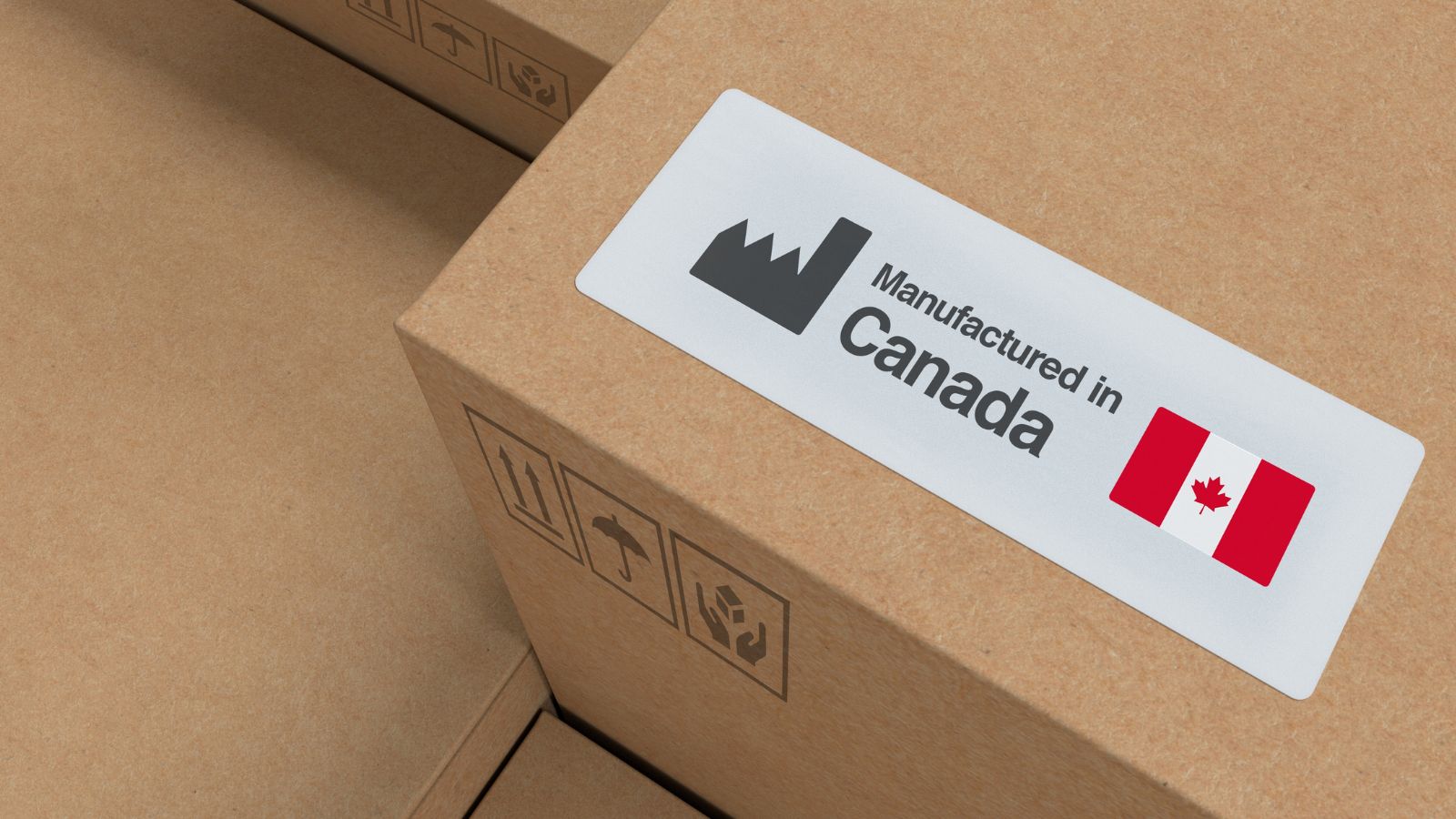
The final reason Canadians are rethinking U.S. products is that the change has become more selective than sweeping. Bank of Canada researchers found a clear shift in food spending but no comparable movement outside food, where Canadian substitutes are often harder to find. That nuance is important. It suggests consumers are not acting impulsively across every category. They are making targeted decisions where alternatives are visible, practical, and meaningful.
Paradoxically, that may make the shift more durable. Broad boycotts often burn out because they demand too much all at once. Selective rethinking is easier to sustain. Polling in February 2026 still showed 55% of Canadians avoiding U.S. goods when another option was available, a year after the earliest tariff shock. That is not a sign of fading attention. It is a sign that the behavior has settled into a more realistic form. Canadians are not rejecting everything American. They are simply asking harder questions than they used to, and that may be the biggest change of all.
22 Things Canadians Do to Their Cars in Spring That Mechanics Hate

Spring brings relief to many Canadian drivers after months of snow, freezing temperatures, and icy roads that put serious strain on vehicles. As temperatures rise across the country, drivers begin washing cars, switching tires, and preparing vehicles for warmer weather and upcoming road trips. However, mechanics across Canada notice the same mistakes every spring when drivers attempt to recover from winter damage. Road salt, potholes, and harsh winter driving conditions often leave vehicles with hidden problems that drivers ignore. Some spring habits even create new mechanical issues that could have been avoided with proper maintenance. Here are 22 things Canadians do to their cars in spring that mechanics hate.
