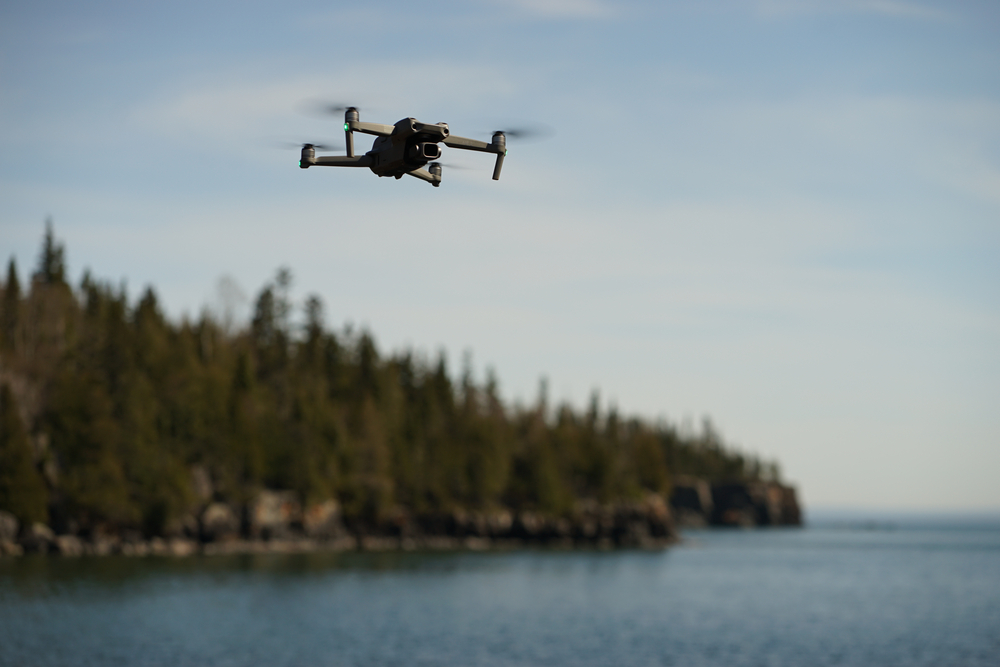
A tool meant to help officers see more from the sky has suddenly become a debate about what might be seen from the ground. Ontario has moved to stop Chinese-made drones from being used in highly sensitive Ontario Provincial Police operations and says broader restrictions will follow across government. The decision reflects an anxiety now spreading across Western governments: the most efficient equipment is not always the most trusted, especially when it can capture video, mapping, location and infrastructure data in real time.
For police services, drones have become practical workhorses for missing-person calls, collision scenes and disaster response. For policymakers, those same flying cameras now raise a harder question—who controls the data they collect, the software they run and the systems that update them.
A Targeted Restriction With Broader Ambitions
Ontario’s move is politically sharp because it starts with a narrow operational ban and quickly widens into a broader policy shift. The province says Chinese-made drones are now immediately barred from highly sensitive OPP operations, while future government purchases of those drones will be cut off and existing use across ministries is set to be phased out. That matters because it shows this is not being treated as a procurement tweak or a symbolic gesture. It is being framed as a security decision tied to the handling of sensitive public-sector information. In practical terms, the province is trying to avoid a sudden frontline gap while still sending a clear message that certain devices are no longer considered acceptable in more sensitive policing environments.
The broader ambition is just as important as the immediate restriction. Ontario says the phase-out will be tied to Canadian-made drones and systems from other approved jurisdictions, a detail that turns the policy into more than a headline-grabbing ban. It becomes part security measure, part industrial signal, part geopolitical positioning. The government is effectively saying the province should not depend on lower-cost foreign hardware if it believes the data chain behind that hardware is vulnerable. That is a meaningful shift for police and public agencies that have often chosen drone platforms for reliability, ease of use and price. It also suggests Ontario expects this issue to grow, not fade, as more policing tools become connected, cloud-linked and software-driven.
Why Data Security Became The Core Issue
The argument behind the restriction is not simply that a drone has a camera, but that modern drones are part aircraft, part sensor platform and part software ecosystem. A police drone can capture aerial video, thermal imagery, mapping data, geolocation details and other operational information in the middle of live incidents. In isolation, none of that sounds extraordinary. Together, however, it can create a detailed picture of infrastructure, police tactics, emergency responses and vulnerable locations. That is why the concern is less about one dramatic leak and more about cumulative exposure. Officials are increasingly focused on whether data could be accessed through software updates, remote services, maintenance pipelines or legal demands placed on companies tied to foreign jurisdictions.
That broader legal and technological backdrop helps explain why the issue has intensified. Security analysts and government bulletins have warned that Chinese national security, cybersecurity and data laws can create uncertainty about when firms may be required to assist state authorities or provide access to information. For governments already nervous about critical infrastructure, that uncertainty alone can be enough to change policy. Ontario’s case appears to reflect that logic. The province is not claiming a proven breach in a specific police operation; it is acting on the belief that the downside risk is too high when sensitive law-enforcement work is involved. In security policy, that kind of reasoning is increasingly common: a system does not have to fail publicly before it is judged too exposed to trust.
Why Police Depend On Drones In The First Place
The political drama around the ban can make it easy to forget why police embraced drones so quickly. In Ontario, they are not niche gadgets flown for publicity clips. They are now woven into everyday operational work. A recent Ontario privacy-linked review of police drone use found that among Ontario police services with drone programs, missing persons and search-and-rescue work were the most commonly identified uses, while collision reconstruction and crime-scene evidence collection were also widespread. That pattern matters because it shows drones are often used in situations where speed, visibility and scene documentation can directly affect outcomes. A bird’s-eye view can shorten a search, preserve evidence before weather changes a scene, or help officers assess risk without sending people blindly into danger.
Police services are also pushing the technology even further. Durham Regional Police’s 2026 Drone as First Responder pilot says remotely piloted drones can arrive at some emergency calls in about 60 seconds, giving officers real-time situational awareness before cruisers reach the scene. That kind of speed helps explain why services are reluctant to lose capability even when security concerns are real. In many cases, drones reduce risk rather than add it: they can scan ravines, shorelines, highway crashes and unstable environments without immediately placing officers or civilians in harm’s way. For an officer searching for a missing senior in fading daylight or documenting a fatal collision on a major roadway, a drone is not a futuristic extra. It is increasingly a normal tool.
Ontario Is Following A Wider Security Shift
Ontario’s policy did not emerge in a vacuum. The province itself has pointed to a wider pattern already underway among other government bodies, including the RCMP, the Canadian Armed Forces and U.S. regulators. That matters because it suggests the debate has moved beyond partisan talking points and into the realm of institutional risk management. Once multiple security-focused agencies begin restricting a class of technology, provincial governments face pressure to explain why they would keep using it in their own sensitive operations. Ontario’s answer appears to be simple: it does not want to be the outlier still relying on a technology category others have already flagged.
The United States offers the clearest example of that broader shift. In late 2025, the U.S. Federal Communications Commission barred new imports of foreign-made drone models and critical components, including from major Chinese manufacturers, after concluding they posed national security risks. That was not a blanket grounding of everything already in the sky, but it showed how far concerns about surveillance, data exfiltration and supply-chain exposure had moved into formal policy. Ontario’s move fits neatly into that same trajectory. It reflects a moment when governments across North America are deciding that cheap, widely used technology can still become strategically expensive if trust in the data chain behind it begins to erode.
Replacing Them Will Not Be Simple
The hardest part of policies like this is rarely the announcement. It is the replacement. Chinese drone makers became dominant for a reason: they offered capable systems, strong cameras, user-friendly software and pricing that many competitors struggled to match. Reuters reported that DJI sells more than half of U.S. commercial drones, while broader policy analysis has estimated the company’s global share at roughly 70 percent. That level of market concentration creates a practical dilemma for public agencies. If a province decides those systems are too risky for sensitive work, it must then find alternatives that can match performance, training familiarity, parts availability and procurement timelines. Security policy may move quickly; equipment ecosystems usually do not.
Ontario is clearly trying to soften that blow by linking the shift to domestic and allied supply. The province says replacement systems will come from Canada and other approved jurisdictions, and that aligns with a wider national push to develop secure drone capability at home. The National Research Council’s Drone Innovation Hub, for example, says it is working with Canadian firms to accelerate mission-ready systems that support defence and industry. That is encouraging, but it does not automatically solve a police service’s near-term reality. Officers still need platforms that work in wind, darkness, cold and time-sensitive emergencies. Building trust-based supply chains is possible. Building them at scale, fast enough to replace entrenched systems, is the real test.
Public Trust Now Matters As Much As Performance
There is a second lesson buried inside Ontario’s decision: even good technology can lose legitimacy if the rules around it do not keep pace. Privacy researchers in Canada have been warning for years that drones bring special concerns because they combine mobility, persistence and quiet surveillance capacity in a way older tools did not. Ontario’s own privacy-linked research now argues that police drone use is shifting from occasional deployment in specific incident types toward more routine use in everyday policing. That does not automatically mean misuse, but it does raise the stakes for governance. The public tends to accept powerful tools when the purpose is obvious, like finding a missing child. Acceptance becomes more fragile when those tools feel normalized without equally visible guardrails.
That is why the next phase of this story is not only about where drones are made, but how they are governed. Durham Regional Police, for example, says its first-responder drone program is not used for general surveillance, does not use facial recognition and operates under Transport Canada authorizations and a privacy impact assessment. Those kinds of safeguards are no longer optional details. They are central to whether the public sees drone policing as legitimate. Ontario’s restriction on Chinese-made systems may satisfy one layer of concern, but it will not end the broader debate. In the years ahead, police agencies will be judged on two fronts at once: whether their tools are secure, and whether their use of those tools remains transparent, limited and explainable.
